A truck tyre puncture never turns up at a good time. It hits when you are loaded, on a deadline, parked on a rough site, or stuck on the roadside trying to work out whether it is a quick fix or a bigger problem. If you are wondering how to repair truck tyre puncture damage properly, the first thing to know is this – not every puncture should be repaired on the spot, and not every tyre is safe to keep running.
For owner-drivers, fleet operators and site managers, the real goal is not just getting air back into the casing. It is getting the vehicle moving again without risking a second failure a few kilometres down the road. A proper repair depends on the size of the damage, the position of the puncture, the condition of the tyre, and whether the tyre has already been driven on while flat.
When a truck tyre puncture can be repaired
Some punctures are straightforward. A clean nail or screw hole in the centre tread area is often repairable if the internal structure of the tyre is still sound. In those cases, a qualified technician can remove the object, inspect the inside of the casing, and carry out a proper repair that restores safe service.
That said, a repair is only worth doing if the tyre has not suffered hidden damage. Heavy vehicles put serious weight through every wheel position. If the tyre has been run underinflated, even for a short distance, the sidewall may have flexed too far and weakened. From the outside, it can look minor. Inside, the casing can be cooked.
As a rule, punctures in the tread are more likely to be repairable than punctures in the shoulder or sidewall. Damage near the edge of the tread, splits, exposed cords, bulges, and large penetrations usually point to replacement rather than repair.
When not to attempt a repair
There is a big difference between a temporary measure and a safe heavy vehicle repair. If the tyre has sidewall damage, a blowout, multiple punctures close together, or signs of casing fatigue, do not treat it like a standard quick patch job.
You also need to be realistic about location. If the truck is stopped on a narrow shoulder, in poor light, near traffic, or on unstable ground, safety comes first. A roadside repair on a truck or trailer is not the same as changing a passenger vehicle tyre in a car park. If the scene is unsafe, the right move is to wait for a mobile truck tyre technician with the proper gear, safety setup and replacement options.
How to repair truck tyre puncture damage the right way
If the puncture is minor, the vehicle is in a safe place, and the tyre appears repairable, the correct process starts with a full inspection, not a plug pushed in from the outside. That kind of shortcut might seem faster, but on a truck tyre carrying heavy loads, shortcuts can cost far more in downtime and damage later.
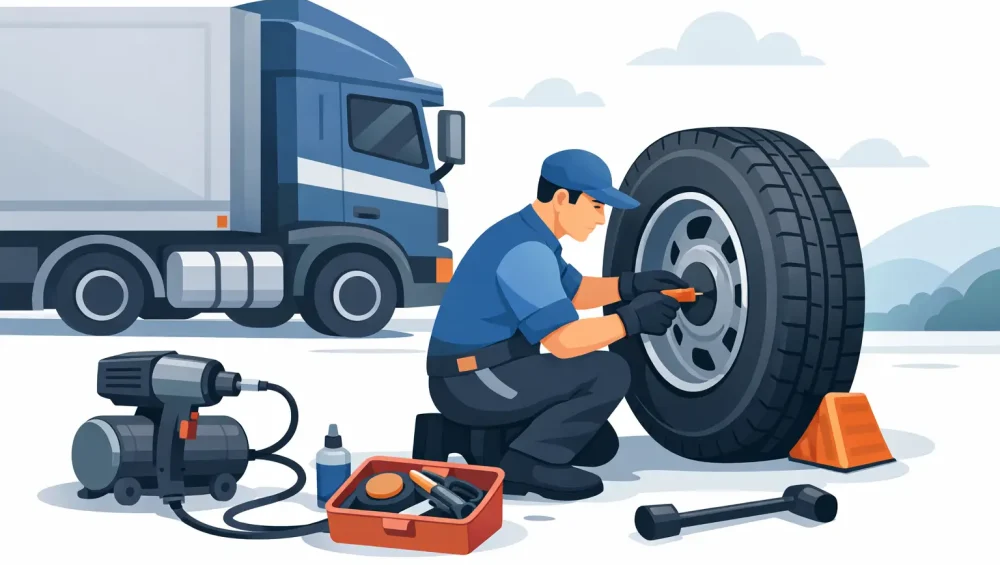
The tyre should be removed from service and deflated safely before inspection. The cause of the puncture needs to be identified, and the inside of the casing checked for moisture, liner damage, heat separation or structural weakness. If the casing is sound, the damaged area can be prepared properly and repaired using an approved patch or patch-plug method suited to the tyre and injury size.
Once the repair is complete, the tyre needs to be reinflated to the correct pressure, checked for leaks, and refitted with attention to overall wheel condition. On steer positions in particular, repair standards matter even more. Many operators prefer replacement over repair on steering axles because the risk profile is higher.
Why external plug repairs are a gamble on trucks
A lot of drivers have seen basic plug kits used on smaller vehicles. On a heavy truck, that approach is risky. It may stop the air loss for the moment, but it does not tell you what is happening inside the tyre. If there is internal liner damage or the puncture channel is larger than it looks, you are relying on luck.
That matters on highways, loaded trailers and regional runs where heat build-up and weight can turn a weak repair into a roadside failure. The cheapest option at the time is not always the cheapest by the end of the job. Lost hours, missed delivery windows and a damaged casing can quickly wipe out any saving.
The steps to take before help arrives
If you are dealing with a puncture on the road or at a worksite, keep the immediate response simple. Pull up in the safest available spot, get clear of traffic where possible, and avoid driving further on a deflated tyre. The more distance you cover while flat, the less chance there is of saving the casing.
Check the tyre visually if it is safe to do so. Look for obvious penetration in the tread, sidewall tearing, or signs the tyre has collapsed under load. If you have a tyre pressure monitoring system or manual gauge reading, note the pressure loss. That information helps a technician judge whether a repair may be possible or whether replacement is more likely.
Then think beyond the one tyre. A puncture can point to a bigger issue – poor pressure maintenance, worn tyres across the axle set, debris exposure on a site, or overloading. For fleets, this is where proper tyre management saves money. One puncture is annoying. A pattern of punctures means there is something else to fix.
Repair or replace – what makes the decision
The decision comes down to safety, casing condition and operating demands. If the puncture is small and central, and the casing is clean internally, repair can be a sound option. If the tyre is already near the end of its service life, replacement may make more sense than paying for repair on a tyre with limited kilometres left in it.
Wheel position matters too. A trailer tyre with a simple tread puncture may be a straightforward repair. A heavily loaded drive tyre may still be repairable, but it needs careful assessment. A steer tyre often attracts stricter judgement because failure there has more serious consequences.
There is also the question of time. Sometimes a proper on-site repair is the fastest way back on the road. Other times, especially after-hours or on remote runs, replacing the tyre immediately is the smarter move because it avoids repeat downtime. It depends on the condition of the tyre and the urgency of the job.
Why mobile truck tyre service makes sense
For heavy vehicle operators, the biggest cost in a puncture is often not the tyre itself. It is the delay. Sending a truck to a workshop, waiting in a queue, and losing productive hours can cost more than the repair.
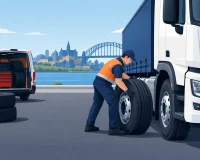
That is why mobile service works so well for transport, earthmoving and agricultural operators. The technician comes to the truck, trailer or machine, checks whether the puncture is safely repairable, and gets the job sorted on-site where possible. If the tyre cannot be saved, replacement can be handled then and there, which keeps downtime under control.
For operators moving through the Hunter, Newcastle, Maitland, Singleton or out along the M1 and regional routes, that fast response can be the difference between a manageable delay and a full day blown apart.
How to reduce the chance of another puncture
Punctures cannot always be avoided, especially on rough roads, construction areas and rural access tracks. But many tyre failures are made worse by low pressure, worn tread, poor matching across duals, or missed inspections.
Regular pressure checks, visual inspections and early removal of damaged tyres make a real difference. So does keeping tyres suited to the load, road conditions and application. Fleets that stay on top of rotations, balancing and casing condition usually have fewer roadside dramas and better tyre life overall.
If you run multiple vehicles, it pays to treat puncture response as part of your maintenance plan, not just an emergency problem. Quick callouts are valuable, but preventing repeat failures is where the long-term savings sit.
The smart approach when a puncture hits
Knowing how to repair truck tyre puncture damage starts with knowing when not to guess. A proper inspection, a repair only where it is genuinely safe, and fast replacement when it is not – that is what keeps trucks moving and drivers protected.
If you are dealing with a puncture and need a practical answer fast, get it checked properly rather than trying to force a short-term fix. Getting back on the road matters, but getting back on the road safely matters more.