A tyre issue never turns up at a good time. It happens loaded, behind schedule, on the shoulder, at a depot gate, or halfway through a job that cannot wait. That is why a truck tyre repair kit gets talked about so often by drivers and fleet operators. It sounds like a simple answer. Sometimes it is useful. Sometimes it is the wrong move entirely.
For heavy vehicles, the real question is not just whether you carry a kit. It is whether the damage is minor, whether the tyre is still safe, and whether a quick fix will save time or create a bigger problem 50 kilometres down the road. When you are dealing with truck, trailer or tipper tyres, there is a big difference between getting moving again and risking a failure under load.
What a truck tyre repair kit is actually for
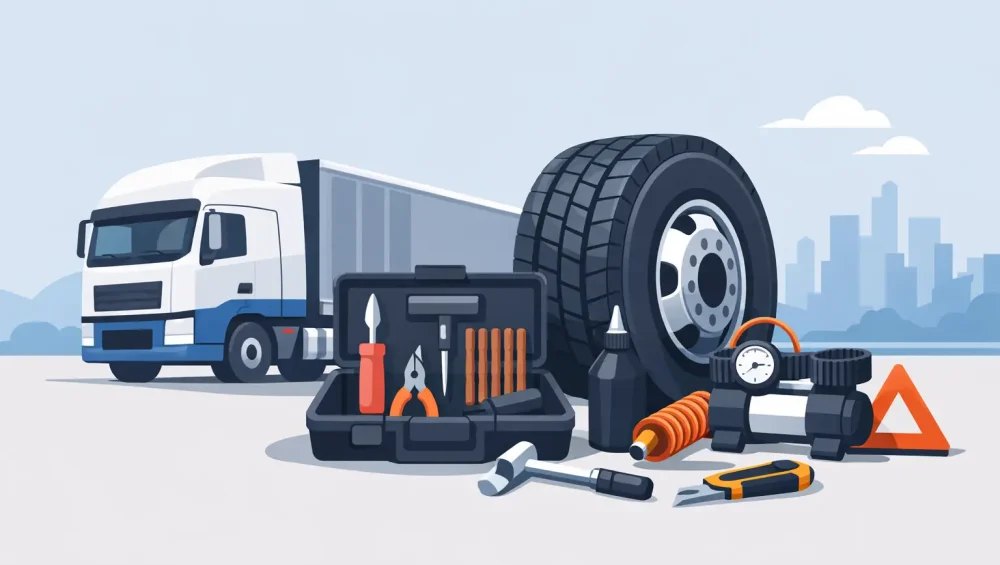
A truck tyre repair kit is generally designed for minor punctures, usually in the tread area, where the damage is small and straightforward. Most kits include plugs, insertion tools, a reaming tool, rubber cement and sometimes basic inflation gear. They are made to provide a temporary repair or, in some cases, help get the vehicle to a safer location for proper inspection.
That last part matters. A kit is not a magic fix for every tyre problem. It will not solve sidewall damage, bead leaks, shredded rubber, casing separation, major cuts or a tyre that has been run flat. If the tyre has taken serious damage, forcing a repair can waste time and make the tyre unsafe.
For owner-drivers, a repair kit can be handy insurance. For fleets, it can be one part of a broader downtime plan. But the bigger and heavier the vehicle, the less room there is for guesswork.
When a truck tyre repair kit might help
There are situations where a kit makes sense. If a tyre has picked up a nail or similar object in the tread and the casing has not been badly damaged, a temporary repair may help get the vehicle off the roadside or back to base. That can be valuable if you are in a remote area, outside normal workshop hours, or waiting on mobile support.
It can also help with trailers parked in yards or on job sites where moving the unit a short distance is the priority. In those cases, the kit is buying time and improving access, not replacing a proper repair process.
The key is keeping expectations realistic. A kit may get you out of immediate trouble, but it does not automatically mean the tyre is road-ready for the rest of the shift, especially if the vehicle is carrying weight or travelling at highway speed.
Good repair candidate or bad one?
A puncture in the centre tread area is a better candidate than anything near the shoulder or sidewall. A small, clean hole is better than a split or tear. A tyre that still has structural integrity is different from one that has been driven underinflated and damaged internally.
That is where experience counts. What looks minor from the outside can hide bigger casing damage inside the tyre. On a heavy vehicle, that matters more than most people realise.
When not to use a truck tyre repair kit
If the tyre has blown out, gone flat under load, suffered sidewall damage or shows obvious signs of serious wear, heat damage or shredding, do not rely on a kit. The same goes for duals where one failed tyre may have overloaded the other, and for steer tyres where safety margins are tighter and mistakes are costly.
There is also the issue of location. Repairing a tyre on the roadside sounds practical until you are parked in a dangerous position with traffic moving past. In that situation, safety comes first. A fast mobile callout is often the better option than trying to sort it yourself with limited space, poor light and a loaded truck.
If you are managing a fleet, the wrong temporary repair can cost more than the original puncture. Delays, missed delivery windows, tyre replacement, wheel damage and recovery costs add up quickly.
The limits of DIY tyre repairs on heavy vehicles
A lot of drivers are practical people. They solve problems every day. But truck tyres are not the same as fixing a small puncture on a ute or passenger vehicle. Load ratings are higher, heat build-up is more severe, and tyre condition affects braking, handling and fuel use.
There is also compliance and duty of care to think about. If a tyre repair is not suitable and the vehicle goes back on the road anyway, the consequences can go well beyond inconvenience. That is why many operators treat a truck tyre repair kit as a short-term tool rather than a full solution.
Proper assessment matters. So does correct inflation. So does checking for hidden casing damage. Without that, you are making a call based on what you can see from the outside, and that is not always enough.
What should be in a decent truck tyre repair kit?
If you are going to carry one, make sure it is fit for purpose. Cheap kits with weak tools and poor-quality plugs are false economy. You want durable repair strings or plugs, solid insertion and reaming tools, quality rubber cement, valve tools and a reliable way to check and restore pressure.
For many operators, the better setup is not just the kit itself but the backup around it. That means a pressure gauge that reads accurately, access to inflation equipment, good lighting for night work, and a clear process for when the repair stops and a professional callout starts.
A kit without training can be almost as bad as no kit at all. If your drivers are carrying repair gear, they should also know what not to touch.
What matters more than the kit
The best result usually comes from decision-making, not from the bag of tools. Drivers should know how to inspect the tyre, where punctures can and cannot be repaired, and when to stand down and call for on-site help. That saves time, protects the casing and avoids risky roadside improvising.
Why mobile tyre support still matters
This is where many operators get caught. They carry a truck tyre repair kit thinking it covers every emergency, then end up stranded with a tyre that cannot be safely patched. A proper mobile service can assess the damage on-site, carry out a suitable repair if possible, or replace the tyre and get the vehicle moving with less delay.
That is especially important for trucks working through the Hunter, along the M1, on the Hunter Expressway, or out toward regional job sites where losing hours can throw off an entire day. The value is not just the repair. It is the speed, the convenience and the fact the truck stays where it is.
For busy operators, that often makes more sense than hoping a temporary fix will hold.
Truck tyre repair kit or callout service?
It depends on the damage, the location and the job ahead. If it is a minor tread puncture in a controlled setting, a kit may help as a short-term measure. If the tyre is damaged, the truck is loaded, the roadside is unsafe or there is any doubt about the casing, callout support is the smarter play.
That is not being overly cautious. It is protecting uptime. A tyre that fails again an hour later costs far more than getting it handled properly the first time.
Many fleets work best with both options. Carry a kit for minor issues and delays, but back it up with a trusted mobile tyre service for proper repairs, replacements and emergency response. That gives drivers flexibility without asking them to make risky calls under pressure.
A smarter way to reduce downtime
A truck tyre repair kit has its place, but it should never be your whole plan. The operators who stay on schedule are usually the ones who prepare properly. They monitor tyre condition, check pressures, replace worn casings before they fail and have mobile support ready when things go wrong.
If you are running trucks, trailers or earthmoving gear, the smartest approach is practical, not optimistic. Carry the right gear. Know its limits. And when the tyre damage is more than a quick puncture, get the right help on-site fast.
That is how you keep the vehicle safer, protect the load and give yourself the best chance of getting the day back on track.