A cheap tyre is only cheap until it costs you a load, a delivery window, or a truck sitting on the side of the road. When operators look for used truck tyres for sale, the goal is usually simple – get a safe, serviceable tyre fitted fast without blowing the budget. That can be a smart move, but only if you know what you’re buying and where it’s going on the vehicle.
For owner-drivers, fleet managers, earthmoving operators and trailer owners, used tyres can be a practical option when cash flow matters and downtime hurts more than anything else. The key is not chasing the lowest price. It’s finding the right tyre for the job, with enough life left in it to keep your vehicle moving reliably.
When used truck tyres for sale make sense
Used truck tyres are not a second-best option in every case. Sometimes they are exactly the right call. If you have a trailer needing a replacement, a truck that needs to get back on the road quickly, or a unit nearing the end of its service cycle, a quality used tyre can be a sensible and cost-effective solution.
They can also work well for temporary replacements, lower kilometre applications, paddock and site work, or when matching a tyre on a non-steer axle. For some operators, especially smaller businesses watching every dollar, used tyres help keep vehicles earning while avoiding the upfront cost of a full set of new rubber.
That said, it depends on the vehicle, the axle position, the load, the route and how critical the tyre is to daily operation. A truck running long highway distances under heavy loads has different demands from a local tipper or a trailer doing shorter runs.
Where used tyres can save you money – and where they can cost you
There is real value in buying used, but there is also risk if the tyre has uneven wear, hidden damage or the wrong specification for the job. Saving money at the start means very little if the tyre wears out too quickly, runs hot, causes handling issues or fails early.
The biggest mistake is treating all used tyres as equal. They are not. Two tyres may look similar at a glance and perform very differently once they are under load. Tread depth matters, but it is not the whole story. Casing condition, previous repairs, age, wear pattern and fitment suitability all count.
For steer positions, many operators prefer to be more cautious, and for good reason. Steering axle tyres have a direct effect on handling, braking and driver confidence. On drive and trailer axles, a quality used tyre may be a stronger value option if it has been properly assessed.
What to check before buying used truck tyres for sale
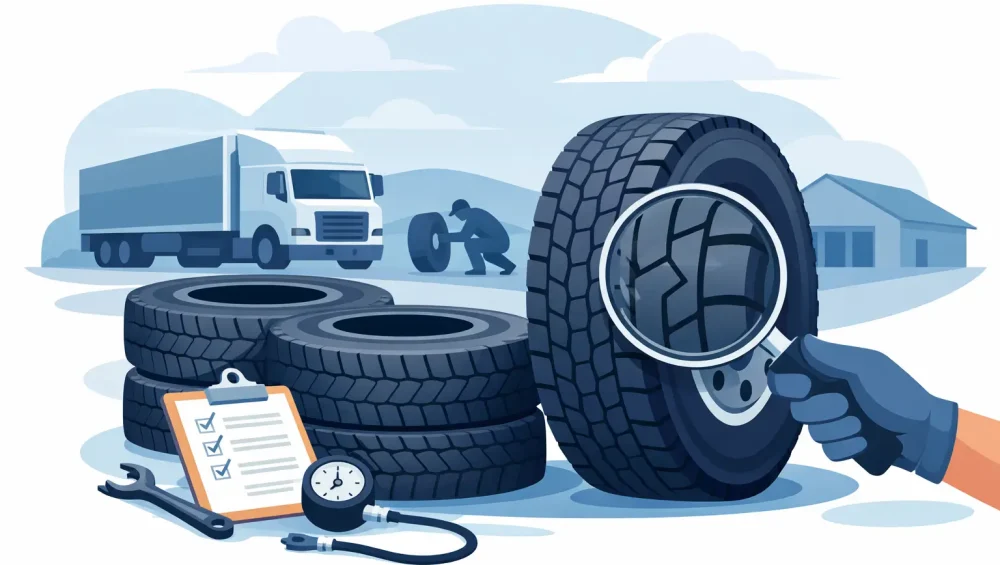
The first thing to check is tread depth, but do not stop there. Tread can make a tyre look healthy when the real problems are in the casing or sidewall. Look closely for cuts, exposed cords, bulges, cracking and signs of impact damage. If the tyre has worn unevenly, ask why. Irregular wear often points to previous inflation issues, alignment problems or suspension faults.
Then check the age of the tyre. Even if it still has decent tread, an older tyre may not give the service life you expect. Heat cycles, storage conditions and previous use all affect the tyre’s condition over time.
Repairs are another factor. A professionally repaired puncture is not automatically a problem, but the repair must be sound and in the right area of the tyre. A tyre with multiple repairs or questionable patchwork is often false economy.
Load rating and size must match the vehicle and application. This is where rushed buying causes trouble. A tyre that is technically the right size may still be the wrong fit if its construction or rating does not suit the work your truck or trailer does every day.
The role of proper fitment and pressure
A decent used tyre can still perform poorly if it is fitted badly or run at the wrong pressure. This is one of the biggest reasons transport operators end up replacing tyres earlier than expected. The tyre itself gets blamed, when the real issue is inflation, balancing, wheel condition or installation.
Pressure checks matter more than most people think. Underinflation creates heat, increases wear and raises the risk of failure. Overinflation can reduce contact with the road and create uneven wear across the tread. If the tyre is going onto a working truck, not just sitting in the yard, those details matter every day.
That is why mobile fitting is more than a convenience. It helps operators get the tyre fitted where the vehicle is, checked properly, and back into service without the extra time and cost of sending the truck to a workshop.
Used tyres for fleets versus owner-drivers
Fleets and owner-drivers often buy for different reasons. An owner-driver may need one fast replacement at the best possible price to keep a job moving. A fleet manager is usually looking at whole-of-life cost, downtime exposure and consistency across multiple vehicles.
For fleets, used tyres can be useful in selected roles, especially for trailers or interim replacements while keeping budgets under control. But they need to be managed properly. Random tyre purchasing usually leads to mixed results, uneven wear and more breakdowns over time.
For owner-drivers, the decision is often more immediate. When a tyre lets go on a job or shows damage before a run, getting a safe replacement quickly is the priority. In those moments, access to a quality used tyre and on-site fitting can make the difference between finishing the day’s work and losing it.
Why local, mobile supply matters
When you need a replacement, speed matters. Not just because the truck is off the road, but because every hour of delay can affect customers, schedules and the next load. Having access to used truck tyres through a mobile service means the tyre can be assessed, supplied and fitted on-site instead of adding workshop travel and waiting room time to an already expensive problem.
That is especially valuable for operators moving through the Hunter, along the M1, on the expressway, or working out of depots and job sites where leaving the vehicle is not practical. The faster the issue is sorted, the sooner the truck is earning again.
A good supplier will also tell you when a used tyre is not the right option. That honesty matters. Sometimes the safest and most economical choice is new, particularly if the tyre position, load demand or casing condition leaves too much risk on the table.
Red flags to avoid
If a seller cannot clearly explain the tyre size, condition or intended application, walk away. The same goes for tyres with sidewall cracking, exposed damage, suspiciously low pricing or no clear inspection process. A rushed sale is often a warning sign.
Be careful with tyres that have sat unused for long periods, even if the tread looks fine. Storage conditions matter. Heat, weather exposure and poor handling can shorten tyre life before the tyre ever goes back into service.
It is also worth avoiding a bargain that creates a mismatch across an axle set. Pairing tyres with very different wear levels or patterns can affect performance and wear, especially on working commercial vehicles.
Getting value, not just a lower price
The best used tyre purchase is not the one with the smallest invoice. It is the one that gives dependable service for a fair price and keeps your truck out of trouble. That means buying based on condition, suitability and support, not just cost.
If you are running commercial vehicles, it helps to deal with people who understand truck work, not just tyre sales. There is a big difference between selling a used tyre and supplying one that is right for a loaded trailer, a tipper on site, or a truck trying to stay on schedule.
Hunter Mobile Truck Tyres works with operators who need practical answers, fast response and tyre options that fit the job. That includes used tyres when they are the right choice, fitted on-site so the delay stays as short as possible.
If you are looking at used truck tyres for sale, slow down just enough to ask the right questions. A tyre with honest condition, proper fitment and the right application can save you money. A poor one will charge you back later. When your vehicle makes money on the road, the smart buy is the one that keeps it there.