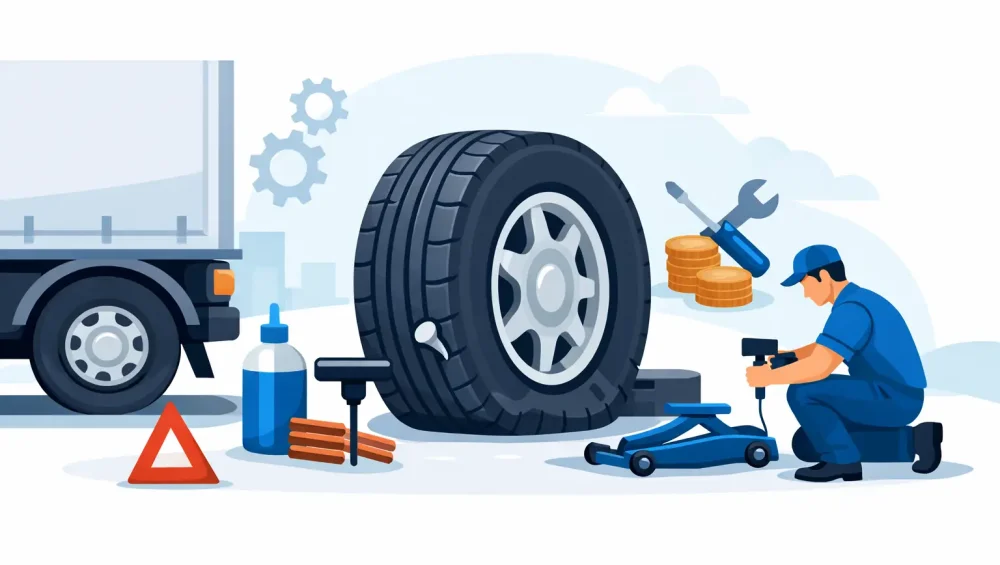
A puncture at the wrong time does more than flatten a tyre. It can throw out delivery schedules, leave a truck stranded on the shoulder, and turn a simple repair into a bigger operating cost if the vehicle sits too long. That is why truck tyre puncture repair cost matters to owner-drivers, fleet managers and transport operators – not just the price of the repair itself, but the full cost of downtime.
What affects truck tyre puncture repair cost?
There is no one fixed price for a truck tyre puncture repair, because the job changes from one vehicle to the next. A slow leak picked up in the yard is very different from a shredded casing on the highway at 2 am.
The biggest factor is the type and location of the damage. A clean puncture in the tread area is often more straightforward to repair if the tyre casing is still sound. Damage in the shoulder or sidewall is another story. In many cases, that sort of damage cannot be safely repaired at all, which means replacement becomes the only real option.
Tyre size also affects cost. Larger commercial tyres take more handling, more labour and sometimes different repair materials. A steer tyre, drive tyre and trailer tyre can each bring slightly different considerations depending on load, wear and how critical that position is for safe operation.
Then there is the service setting. If the truck is already at a depot or parked somewhere safe with easy access, the repair is usually more straightforward. If a technician needs to attend a roadside location, remote site, or busy transport corridor, the total cost can increase because you are paying for a mobile response, travel time and urgency as well as the repair work itself.
Repair cost versus replacement cost
This is where plenty of operators get caught. They focus on getting the cheapest immediate fix, when the smarter move is often the one that gets the truck reliably back to work.
If a puncture can be professionally repaired, that will almost always cost less upfront than fitting a new tyre. But repair is only worth it when the tyre is still a good candidate for safe continued use. If the casing is compromised, the puncture is too large, the tyre has been run flat, or there is internal damage, pushing for a repair can end up costing more later through another breakdown, uneven wear or a complete failure under load.
A good mobile truck tyre technician will not just patch and go. They will assess whether the tyre is actually worth saving. That matters because an unsafe repair is not a bargain – it is a delay waiting to happen.
When a puncture repair is usually worth it
A repair often makes sense when the puncture is in the tread, the damage is limited, and the tyre still has usable life left in it. If the truck has not been driven too far on low pressure, the casing may still be in good condition, which improves the chances of a successful repair.
This is especially relevant for fleets trying to manage tyre budgets without sacrificing uptime. A sound repair on the right tyre can extend service life and avoid the immediate hit of replacement.
That said, there is always an it depends factor. If the tyre is already close to replacement depth, or there are multiple old repairs in the same casing, spending more money on another repair may not stack up. In that case, replacement may be the better commercial decision.
What can push the price up?
Truck tyre puncture repair cost can rise quickly when the job becomes urgent, difficult or unsafe to access. After-hours callouts, motorway breakdowns and remote site work generally cost more than a standard daytime depot visit. That is not price padding – it reflects the reality of sending a fully equipped mobile technician to your location fast.
The condition of the tyre can also add to the bill. If the puncture has caused further internal damage, or the wheel needs extra work before the tyre can be safely returned to service, labour time increases. Sometimes balancing, pressure correction or valve replacement may also be needed as part of the job.
For operators in regional areas or along major freight routes, response time matters just as much as the repair itself. A cheap workshop price is not much help if the truck cannot safely get there. That is why many businesses choose mobile support. It cuts towing risk, reduces idle time and gets the job handled on site.
Why mobile service changes the value equation
A mobile repair may not always look like the cheapest line item on paper, but it often works out cheaper once real-world operating costs are factored in.
If a truck leaves the road, you are not just dealing with the tyre. You may be paying for lost delivery time, missed slots, driver delays, rescheduling, customer complaints and knock-on disruption across the day. For fleets, one immobilised vehicle can affect more than one job. For an owner-driver, it can wipe out a day’s earnings.
That is why mobile tyre support has become the practical option for many heavy vehicle operators. Instead of trying to limp to a workshop or wait until business hours, the repair or replacement is handled where the truck is. In busy areas across the Hunter region and on major routes used by freight operators, that convenience is often the difference between a manageable delay and a very expensive one.
Truck tyre puncture repair cost and fleet planning
If you manage more than one vehicle, puncture costs should not be treated as random bad luck. They are part of tyre management.
Recurring punctures can point to bigger issues such as worn tyres, underinflation, site hazards, overloading or poor rotation practices. If the same vehicles are repeatedly needing emergency repairs, the real cost is probably not the puncture itself. It is the lack of a proper tyre maintenance plan.
Routine pressure checks, casing inspections and scheduled replacements help prevent emergency callouts from becoming a regular expense. That does not eliminate punctures completely, especially in transport, construction, agricultural and heavy haulage work. But it does reduce the chance of a minor issue turning into a roadside failure.
For fleets, the best approach is usually a balance. Repair tyres when it is safe and commercially sensible to do so. Replace them when the condition says it is time. And use a responsive mobile provider when speed matters more than trying to shave a few dollars off the job.
How to know if you are getting fair value
Price matters, but clarity matters more. A fair truck tyre puncture repair quote should reflect the actual condition of the tyre, the location of the job, the urgency of the callout and what work is needed to return the vehicle safely to service.
If a price seems low, ask what is included. Is it just the repair, or does it also include callout, inspection, refitting and testing? If a price seems high, ask what made the job more complex. A reliable service provider should be able to explain the reason without dressing it up.
For most operators, the best value comes from quick, honest assessment and the right fix the first time. That could mean a repair. It could mean a replacement. What matters is avoiding the second breakdown, the extra delay and the cost of doing the same job twice.
The real question is not just the repair price
When people ask about truck tyre puncture repair cost, what they usually want to know is this: how fast can I get moving again, and will this fix hold up under real work?
That is the right question. A truck tyre is not just another part to patch on the cheap. It carries load, affects handling and directly impacts safety, scheduling and operating costs. The right repair has value because it protects uptime. The wrong one becomes expensive fast.
For drivers and fleet operators, the smartest move is to act early. A slow leak, visible damage or pressure drop is easier and cheaper to deal with before it turns into a roadside failure. And when the job cannot wait, having access to a dependable mobile truck tyre team can save far more than the cost of the callout.
If your truck is off the road, the cheapest option is rarely the one that gets printed on the invoice. It is the one that gets you safely rolling again with the least disruption to the day.