A trailer tyre failure never turns up at a good time. It happens loaded, under schedule pressure, on the roadside, in a depot yard, or halfway through a job where every lost hour costs money. That is exactly why mobile trailer tyre repair matters. Instead of organising a tow or trying to limp to a workshop, you get the tyre issue handled on-site so your trailer can get back to work faster.
For owner-drivers, fleet operators, earthmoving businesses and agricultural operators, that convenience is not a luxury. It is often the difference between staying on schedule and blowing out the rest of the day. When a trailer is stuck, the load is stuck too.
Why mobile trailer tyre repair matters
A damaged trailer tyre is more than a flat. It can affect load stability, braking performance, tyre wear on the remaining wheels and the overall safety of the combination. If one tyre has failed because of underinflation, impact damage or uneven wear, there is a fair chance the rest of the set needs a proper look as well.
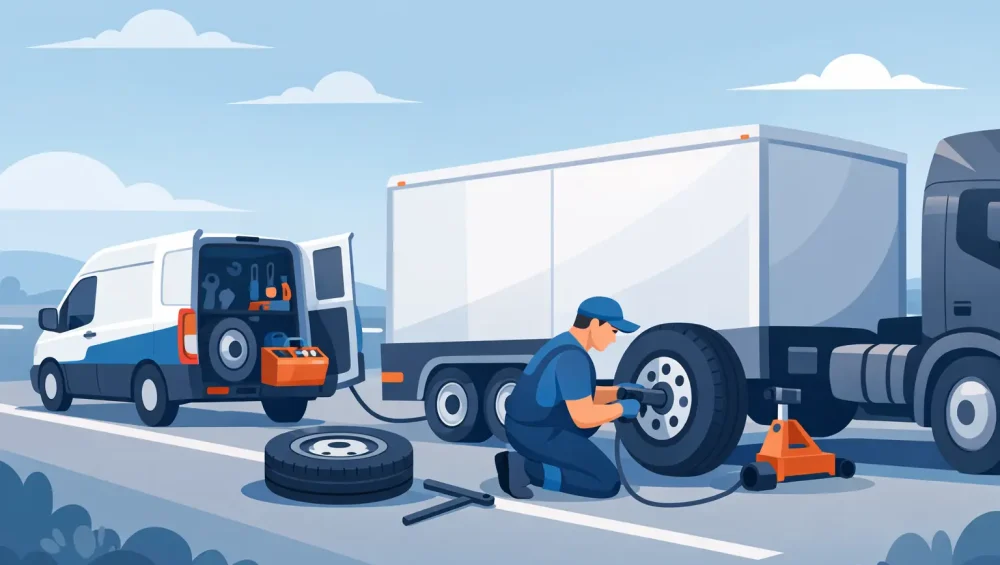
That is where mobile service makes practical sense. A qualified technician comes to the trailer, checks the tyre condition on-site and works out whether the issue can be repaired safely or whether replacement is the smarter option. You save the time of moving the trailer off-site, and you reduce the risk of making the damage worse by dragging it further than you should.
For businesses running tight schedules, mobile repair also means less disruption to drivers, dispatch and customers waiting on a load. One call can solve the problem where it happened.
What can be fixed on-site and what cannot
Not every damaged tyre should be repaired, and any honest service will tell you that straight away. A clean puncture in a repairable area may be fixed safely if the tyre casing is still sound. In those cases, on-site repair can be the quickest and most cost-effective outcome.
But it depends on the damage. A sidewall split, major tread separation, severe heat damage, a run-flat tyre, or damage caused by driving too far after pressure loss often means repair is off the table. In that case, replacement is the right move.
This is one of the biggest advantages of mobile trailer tyre repair. You get a practical assessment on the spot, not guesswork. If the tyre can be repaired safely, it is done there and then. If not, the technician can fit a suitable replacement and get the trailer moving again without extra stuffing around.
Common trailer tyre problems seen in the field
The same faults come up again and again across commercial trailers. Road debris punctures are common, especially on busy freight routes. Blowouts can result from heat, underinflation or overloading. Uneven wear often points to pressure issues, suspension faults or alignment problems. Slow leaks can come from valve issues, bead leaks or hidden damage that is easy to miss during a quick visual check.
The point is simple – the flat tyre you can see is not always the whole story. A proper mobile inspection helps catch the cause, not just the symptom.
When to call for mobile trailer tyre repair straight away
If the trailer is carrying weight, sitting low on one side, showing visible sidewall damage, or has suffered a blowout, stop and get it looked at. The same applies if you can smell burnt rubber, see shredded tread, or notice the trailer handling differently behind the truck.
Some drivers try to nurse a damaged tyre to the nearest workshop to save time. In reality, that can turn a repairable puncture into a full replacement, or worse, create wheel damage and safety risks. The smarter play is usually to deal with it where the trailer is parked.
Urgent mobile service is especially valuable after hours, on long-haul routes and in regional areas where workshop access is limited. A fast roadside response can stop a bad delay from becoming a full-day problem.
The real business cost of tyre downtime
Tyre damage is never just about the cost of rubber. The bigger cost is downtime. A delayed delivery, a missed slot, an idle driver, a parked trailer and a rescheduled load all add up quickly. For fleet managers, one tyre failure can ripple through the rest of the day’s work.
That is why mobile support is such a strong fit for commercial operators. It cuts out unnecessary transport, waiting room time and workshop queues. The job gets handled on-site, and the vehicle returns to service faster.
For fleets, there is another benefit. Repeated trailer tyre failures usually point to a bigger maintenance issue. Pressure checks, rotation planning, matching the right tyre to the work, and replacing worn tyres before they fail all help reduce emergency callouts. Reactive support is important, but prevention saves more money over time.
Mobile trailer tyre repair for fleets and working operators
If you manage more than one trailer, speed matters, but consistency matters too. You want the repair done properly, the right tyre fitted, the pressure checked, and the rest of the wheel position inspected before the trailer goes back into service.
That is why experienced mobile tyre support is valuable for fleets, tippers, linehaul work and site-based operations. The job is not just to fix one failed tyre. It is to keep the asset productive and reduce the chance of the next failure.
For local operators across the Hunter region, this is particularly important. Trailers are working across highways, industrial sites, quarries, depots and rural properties where getting back to a workshop can chew up serious time. On-site repair or replacement keeps the interruption short and the job moving.
What a good mobile service should include
A proper mobile callout should be about more than swapping rubber. The technician should inspect the damaged tyre, assess whether repair is safe, check surrounding tyres for related wear or low pressure, and confirm the trailer is fit to get back on the road. If balancing, rotation or replacement is needed, that should be addressed clearly and without fluff.
Drivers and fleet managers also need straight answers. If the tyre is finished, say so. If it is a repairable puncture, fix it. If the wear pattern suggests another mechanical issue, flag it early. That kind of honesty saves money and prevents repeat breakdowns.
Choosing the right response in an emergency
In a genuine roadside tyre problem, the priority is safety first and speed second. Pull up in a safe location if you can, keep clear of traffic, and do not keep pushing on a failed trailer tyre. Once the tyre has come apart, every extra metre can cause more damage.
After that, the best response is a mobile technician who can come to you with the right gear and a commercial mindset. Time matters, but so does making the correct call between repair and replacement. A cheap temporary fix that fails again next week is not a win for anyone.
This is where a service like Hunter Mobile Truck Tyres earns its keep. Commercial operators need fast response, honest advice and work that gets done properly the first time. Whether the trailer is at the roadside, in the yard or on a job site, the goal is always the same – get you moving with as little downtime as possible.
Preventing the next trailer tyre failure
Emergency response is vital, but the best tyre repair is the one you never need. Regular pressure checks, visual inspections, timely rotation and replacing tyres before they are at the end of their life all make a difference. So does matching tyre choice to the trailer’s actual work, whether that is highway freight, quarry access, farm use or metro delivery.
There is no single rule for every operator because usage varies. A trailer doing long highway runs has different tyre demands from one working rough access roads every day. That is why practical advice matters more than generic recommendations.
If your trailers are seeing repeat punctures, shoulder wear, heat damage or blowouts, do not brush it off as bad luck. Usually there is a cause, and catching it early is cheaper than another breakdown on the side of the road.
When a trailer tyre lets go, you need a fix that is fast, safe and suited to the job in front of you. Mobile support gives you exactly that – help where the problem happens, so the trailer is not sitting still any longer than it has to.