A blown steer tyre on the highway does not just slow the day down – it can throw off delivery windows, upset the whole run sheet and leave money parked on the shoulder. That is why mobile truck tyre replacement matters. When the service comes to you, whether you are at a depot, roadside breakdown, job site or regional route, the priority is simple: get the vehicle safe, fitted and back to work with as little downtime as possible.
For owner-drivers, every hour off the road hurts. For fleet managers, one tyre issue can ripple through schedules, customer commitments and labour planning. Taking a heavy vehicle into a workshop is not always practical, and in some cases it is not even possible. On-site support changes that. Instead of waiting for a tow or trying to nurse a damaged tyre to the nearest shop, you get a technician and the right equipment sent to your location.
Why mobile truck tyre replacement makes sense
The biggest advantage is time. A workshop visit means pulling the vehicle out of service, travelling to the site, waiting your turn, then getting back on route. With mobile truck tyre replacement, the work is done where the truck already is. That could be on the side of the M1, at a transport yard in Newcastle, on a rural property near Singleton or at a work site outside Maitland.
That convenience also reduces risk. Driving on a tyre that is losing air, showing sidewall damage or starting to come apart can turn a manageable problem into a full blowout. It can also damage the rim, affect neighbouring tyres and create a bigger repair bill than the original issue. Fast on-site replacement helps stop that slide.
There is also the practical side of heavy vehicle operations. Trucks, trailers and commercial units do not always fail in easy places. A puncture at a depot is one thing. A shredded tyre on a highway shoulder at night is another. Mobile support is built for those situations. The point is not just replacing rubber. It is restoring safe movement with the least possible disruption.
What happens during a mobile truck tyre replacement call-out
A good call-out starts with clear details. The more accurate the information, the quicker the response. Tyre size, vehicle type, location, axle position and the nature of the damage all help the technician arrive prepared. If the tyre can be repaired safely, that may be the best option. If it cannot, replacement is the right move.
Once on site, the technician checks the damaged tyre and the surrounding setup. That includes the wheel, valve, tread condition and often the wear pattern across the axle. This matters because a single failed tyre can point to another issue such as underinflation, overloading, misalignment or irregular wear.
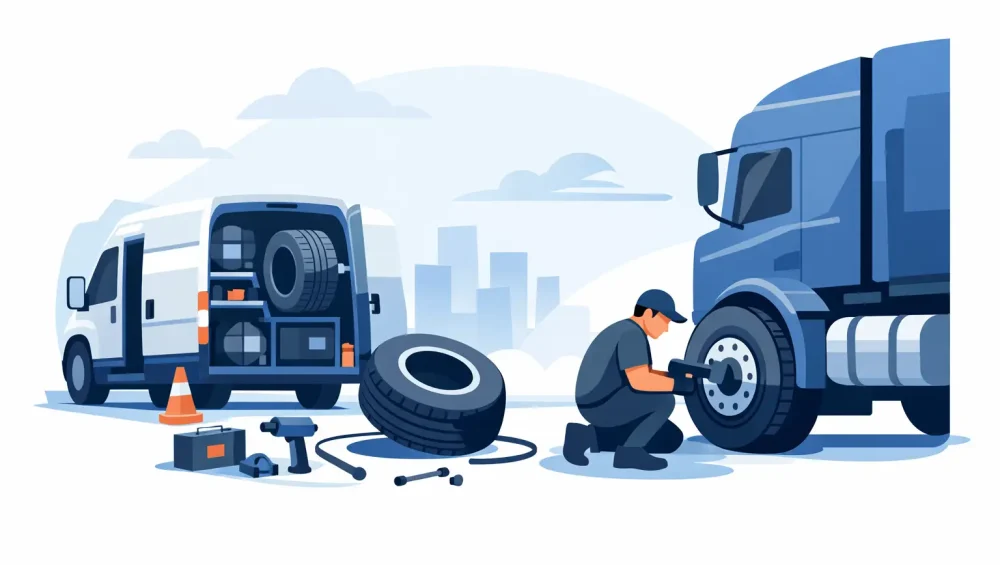
The damaged tyre is removed, the replacement is fitted, and the assembly is checked before the vehicle returns to service. Depending on the job, that may also include pressure checks, balancing, rotation advice or a quick look at the other tyres to help avoid the next call-out. For fleets, this extra attention can save plenty over time.
Emergency roadside jobs versus planned tyre support
Not every tyre replacement happens in an emergency. Many transport businesses now use mobile tyre services as part of regular operations because it keeps their trucks in the yard and their drivers on task. Scheduled on-site fitting for new tyres, rotation programs and tyre pressure checks can be done without sending vehicles across town to a workshop.
Emergency work is still a major part of the picture. Blowouts, punctures and roadside damage do not wait for business hours. That is why 24/7 support matters. When a truck is stuck after dark or before dawn, operators need someone who answers the phone, knows the region and can get moving quickly.
There is a trade-off here. A planned replacement gives more flexibility on tyre choice, timing and axle matching. An emergency replacement is about restoring service safely and fast. Both are valuable, but they serve different operational needs.
When replacement is the smarter option
Not every damaged tyre should be repaired. If there is major sidewall damage, a casing failure, exposed cords, bead damage or severe tread separation, replacement is usually the safer and more cost-effective choice. Trying to stretch one more run out of a tyre in that condition can lead to a second breakdown, more damage or a safety incident.
For fleets, the decision also depends on vehicle role. A local tipper on short runs may have different tyre priorities from a linehaul prime mover spending hours at highway speeds. Some operators prefer a premium new tyre in all positions. Others use a mix of new and quality used truck tyres where it suits the application. The right answer depends on load, route, budget and compliance needs.
That is where experienced advice matters. Mobile technicians who work day and night across highways, depots and rural sites see the patterns. They know when a repair is reasonable, when a replacement is necessary and when the bigger issue is pressure management or tyre wear across the fleet.
Mobile truck tyre replacement for fleets
For fleets, tyre problems are rarely one-off events. They are usually signs of a system that needs tighter management. If multiple vehicles are having punctures, premature wear or roadside failures, the problem may be inconsistent pressure checks, poor rotation timing, overloaded axles or delayed replacements.
A mobile provider can do more than answer breakdown calls. On-site fleet support helps businesses stay ahead of problems before they become expensive. Pressure inspections, scheduled replacements and tyre condition reporting all help reduce avoidable downtime. It also gives fleet managers a clearer picture of tyre spend instead of dealing with constant surprises.
This is especially useful for operations running across the Hunter region where vehicles move between depots, job sites and long stretches of road. Bringing the service to the truck saves time, keeps drivers focused on the job and reduces the admin around workshop bookings.
Choosing the right provider
Speed matters, but it is not the only thing that matters. A fast response is no good if the wrong tyre turns up or the job is not done properly. The best mobile tyre support combines response time with practical know-how, solid stock access and genuine heavy vehicle experience.
Look for a provider that handles emergency roadside work, on-site fitting and ongoing fleet support. That mix usually means they understand both the urgency of breakdowns and the planning side of tyre maintenance. It also helps if they cover the routes your vehicles actually use, from major freight corridors to regional roads and industrial areas.
Straight answers matter too. Busy operators do not need fluff. They need to know what has failed, what can be repaired, what needs replacing and how quickly the vehicle can be back in service. That direct approach builds trust, especially when the call comes in the middle of the night.
Keep trucks moving with faster on-site support
When a tyre fails, the real cost is not just the rubber. It is missed time, delayed loads, disrupted schedules and extra pressure on the rest of the day. Mobile truck tyre replacement cuts through that by bringing the fix to the truck, whether it is an urgent roadside breakdown or a planned on-site service.
For transport operators, trailer owners and fleet managers, that kind of support is not a luxury. It is part of keeping the business moving. Hunter Mobile Truck Tyres is built around that reality, with 24/7 on-site service for heavy vehicles across key freight and work routes in the region. If a truck is down, fast action makes all the difference – and the right tyre service helps turn a major delay into a short stop.
The smartest tyre job is the one that gets done before downtime spreads any further.