A truck off the road is not a small problem. It means missed delivery windows, frustrated customers, lost driver hours and pressure building by the minute. That is exactly why on site truck tyre fitting matters. Instead of sending a heavy vehicle to a workshop and wearing the downtime, the tyre service comes to the truck, trailer or fleet vehicle and gets the job sorted where it stands.
For owner-drivers, that can be the difference between salvaging a shift and losing a day. For fleet operators, it can mean keeping schedules intact and avoiding a flow-on effect across multiple jobs. When you are running freight, construction, agriculture or local deliveries, convenience is not the main benefit – continuity is.
Why on site truck tyre fitting makes sense
Traditional tyre work still has its place, especially for major workshop jobs or planned maintenance that suits a depot schedule. But when the vehicle is already loaded, parked at a job site, stuck roadside or due out again in a few hours, taking it off to a tyre shop is often the slowest and most expensive option.
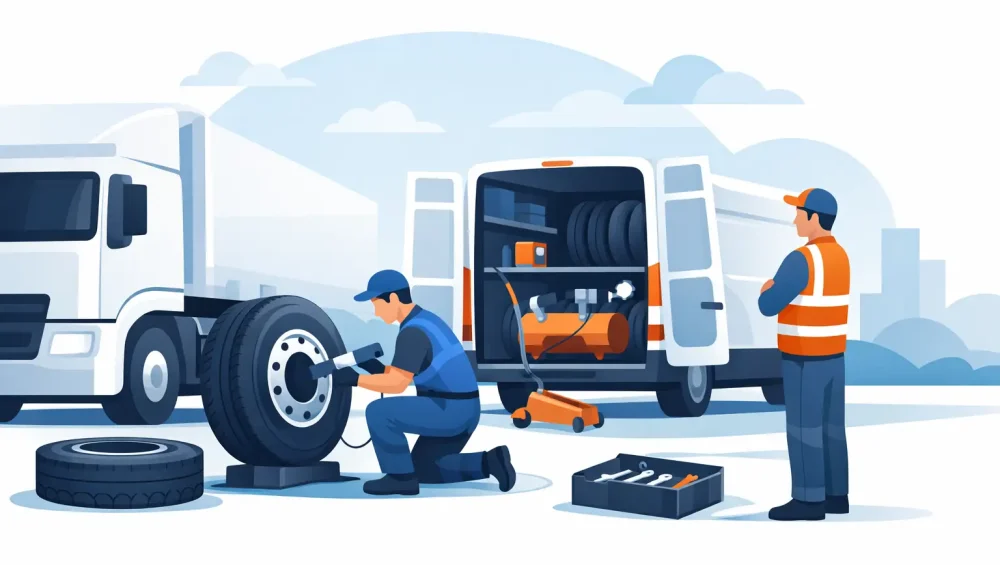
On site truck tyre fitting cuts out the unnecessary legwork. A qualified technician arrives with the tools, stock and experience to assess the tyre, remove it safely, repair or replace it, and get the vehicle ready to move again. That could be a steer tyre with a puncture, a drive tyre that has worn down faster than expected, or a trailer wheel that has failed at the worst possible time.
There is also a safety angle that should not be ignored. Driving on a damaged or underinflated truck tyre to reach a workshop can turn a manageable issue into a blowout, wheel damage or suspension trouble. Getting the job handled on site reduces that risk and gives drivers a clearer path forward.
What happens during on site truck tyre fitting
The process is straightforward because it needs to be. When a truck is down, nobody wants a drawn-out booking process or vague arrival windows.
A proper mobile tyre service starts with the basics – location, vehicle type, tyre size and the issue at hand. From there, the technician attends the site with the right equipment to inspect the tyre condition and confirm whether a repair is safe or a replacement is the better call. Some punctures can be repaired efficiently. Others, especially where sidewall damage, severe wear or casing failure is involved, need a new tyre fitted on the spot.
The value is not just in changing rubber. It is in making the right decision quickly. A cheap short-term fix that leaves the truck at risk of another breakdown a few hours later is rarely a saving. A reliable on-site service looks at tread condition, pressure, matching requirements across the axle and the practical demands of the route ahead.
If balancing, rotation or pressure checks are needed as part of the job, those can often be handled during the same visit. That is especially useful for operators trying to avoid repeated downtime across the week.
Emergency call-outs versus planned tyre support
Not every on-site job is a roadside emergency. Some are, and they need urgent action. A blowout on the highway, a flat at a loading yard or a damaged trailer tyre at night cannot wait until business hours. In those cases, 24/7 mobile support is what keeps freight moving and drivers safe.
But planned on site truck tyre fitting can be just as valuable. If a fleet manager knows several vehicles are due for tyre replacement, rotation or pressure checks, booking the work at the depot makes more sense than sending vehicles back and forth to a workshop. It saves time, reduces fuel waste and keeps maintenance around the business schedule, not the other way around.
That matters even more for regional operators, earthmoving businesses and agricultural vehicles working away from town. When equipment is spread across sites, mobile service is often the most practical option, not the premium one.
The real cost of tyre downtime
A lot of operators compare tyre pricing line by line, which is fair enough. But the cheaper tyre bill is not always the cheaper outcome.
If a truck has to leave its route, queue at a workshop, sit idle and then return to the job, the hidden cost stacks up quickly. Driver wages continue. Deliveries shift. Customers wait. In some cases, another vehicle has to cover the run. That is before you account for missed opportunities later in the day.
On site truck tyre fitting changes the maths. You are paying for speed, convenience and less interruption to operations. For businesses with tight margins and tighter schedules, that can make more sense than chasing the absolute lowest upfront tyre price.
There is a trade-off, of course. Some complex wheel or mechanical issues may still need workshop attention. Mobile fitting is built for practical tyre service where the vehicle is, not every possible repair under the sun. The key is having an experienced team that can tell the difference and not waste your time.
When a repair is enough and when it is not
This is where experience counts. Not every puncture means a full replacement, but not every damaged tyre should be repaired just to save a few dollars.
A sound assessment looks at where the damage is, how deep it runs and whether the tyre can safely return to service under load. A nail through the tread area may be repairable. A cut in the sidewall or signs of heat damage are a different story. The same goes for tyres that are already close to the end of their working life. Repairing a badly worn tyre can be false economy if it is likely to fail again soon.
That honest advice matters to busy operators. You want the job done once, done properly and done with your workload in mind. A service that supplies both new and used truck tyres can also give customers more choice depending on urgency, budget and application.
On-site support for fleets, owner-drivers and heavy equipment
The reason mobile tyre work keeps growing is simple – it fits how transport businesses actually operate. Owner-drivers need fast help without the red tape. Fleet managers need dependable support across multiple vehicles. Construction and earthmoving operators need tyre work done where the machines are. Trailer owners need someone who can attend the yard, site or roadside without turning a small issue into a full-day drama.
That is why strong regional coverage matters. Whether the vehicle is on a highway shoulder, parked at a depot in Beresfield, working out near Singleton or delayed on a site outside Maitland, response time and local knowledge both count. Knowing the roads, the freight pressure and the conditions across the Hunter makes a practical difference when every hour matters.
Hunter Mobile Truck Tyres is built around that reality – getting to heavy vehicles quickly, working safely on site and helping operators keep moving with less disruption.
Choosing the right on site truck tyre fitting service
Speed is a major factor, but it should not be the only one. A quick arrival means little if the technician does not have the right tyre, cannot assess the issue properly or leaves you with a temporary fix that creates another stoppage down the line.
Look for a provider that handles emergency replacements, puncture repairs, blowout recovery and routine fleet work. That range usually tells you they understand the pressure of commercial transport, not just passenger tyre jobs. It also helps if they can supply different tyre options and give straightforward advice based on the vehicle’s use, load and route.
Availability matters too. Tyre failures do not care whether it is midday, midnight or a public holiday. A true mobile truck tyre service is ready when the problem happens, not when it suits a workshop roster.
Most of all, you want a team that respects your time. Clear communication, realistic arrival updates and work completed properly on site are what build trust in this industry.
Keeping trucks moving with less fuss
There is no good time for a tyre issue, but there is a smarter way to handle one. On site truck tyre fitting gives operators a practical option when every delay hurts. It reduces unnecessary travel, lowers downtime and gets heavy vehicles back to work faster, whether the job is urgent or planned.
If your truck, trailer or fleet cannot afford to sit around waiting for workshop time, mobile tyre support is not an extra. It is part of running a more reliable operation. When the pressure is on, the best service is the one that turns up, gets the tyre sorted and helps you get on with the job.