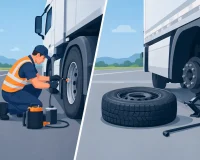
A tipper tyre can look fine at the start of a shift and fail before the load is tipped if pressure, damage or heat has been missed. Knowing how to maintain tipper truck tyres is not about adding paperwork to an already busy day. It is about spotting small problems before they turn into a roadside blowout, a damaged wheel, a missed load or an expensive recovery.
Tipper trucks work in conditions that punish tyres. Loose rock, sharp demolition material, mud, rough haul roads, kerbs, changing loads and frequent stop-start work all add stress. A practical routine keeps tyres safer, extends casing life and helps keep your truck earning.
Start Every Shift With a Proper Walk-Around
The fastest tyre check is the one done before the truck moves. Walk around the vehicle on level ground and look at every tyre, including inner duals and trailer tyres where fitted. Use a torch if light is poor. A quick kick is not enough to confirm pressure, but it can alert you to a tyre that is obviously soft.
Look for cuts, chunks missing from the tread, exposed cords, sidewall bulges, stone drilling, nails, screws and embedded metal. Pay close attention to the shoulder and sidewall. Tipper tyres regularly pick up damage when reversing around stockpiles, construction sites and quarry roads, where sharp material can slice a sidewall without causing an immediate flat.
Also check for signs of rubbing. A tyre that is contacting a mudguard, suspension component or bodywork will quickly overheat and wear through. If you find fresh damage, a bulge, visible cords or a rapidly deflating tyre, take that vehicle out of service until it has been assessed. Continuing to run it can turn a repairable issue into a tyre and wheel replacement.
Keep Tipper Truck Tyre Pressures Right
Pressure is the foundation of tipper tyre maintenance. Under-inflation creates excessive flexing and heat, particularly when the truck is loaded. That heat damages the casing from the inside and raises the chance of a sudden failure. It also increases shoulder wear, fuel use and the risk of damage when the tyre hits a rock or pothole.
Over-inflation has its own cost. The tyre rides harder, centre tread can wear faster, traction may drop on loose surfaces and the casing is more vulnerable to impact damage. There is no one pressure that suits every tipper. The right setting depends on tyre size, axle loads, single or dual fitment, load distribution, road speeds and the manufacturer’s load-and-pressure data.
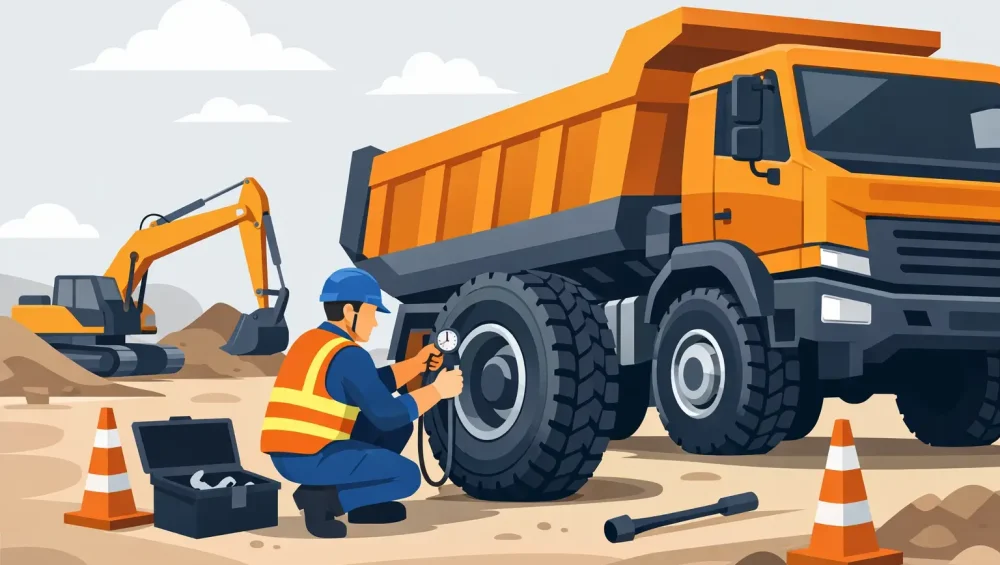
Check pressures when tyres are cold, ideally before the first run of the day. Use a reliable calibrated gauge, not guesswork. Record readings for fleet vehicles so recurring losses are easy to identify. A tyre that needs air every few days may have a puncture, damaged valve, leaking rim or bead issue that needs attention.
Never bleed air from a hot tyre just because its pressure has risen during work. Pressure rises naturally as the tyre heats up. Let it cool, then investigate if readings remain outside the recommended cold pressure. If your operation moves between highway work and soft-site conditions, speak with a tyre professional before changing pressures. Lowering pressure for traction can be useful in specific conditions, but it must be managed carefully to avoid heat and casing damage.
Match the Tyre to the Work It Does
A tipper that spends most of its time on sealed roads needs a different tyre approach from one hauling aggregate through a quarry all day. Using the wrong tread pattern or casing construction can lead to fast wear, poor grip and repeated punctures.
Drive tyres need traction, but an aggressive tread may wear faster on long highway runs. Steer tyres need stable handling and resistance to irregular wear. Trailer and tag axle tyres face their own scrubbing forces, especially on tight site turns. The lowest purchase price is not always the lowest operating cost if the tyre does not suit the route, load or surface.
Check that tyre sizes, load ratings and speed ratings are correct for the truck and its legal operating requirements. Do not mix incompatible tyre types across an axle. For dual wheels, tyres should be closely matched in size and tread depth so they share the load evenly. An unmatched dual pair forces one tyre to work harder, leading to heat, uneven wear and early failure.
Manage Loads, Speed and Site Conditions
Tyres carry the real cost of overloading. Even a short overloaded run adds heat and stress to the casing, particularly on hot days or rough roads. Confirm axle weights rather than assuming a load is evenly distributed. A tipper body can place more weight on particular axles depending on material type, loading method and body position.
Speed matters just as much. Running quickly over corrugations, potholes, rubble or washouts creates sharp impacts that can crack belts, damage beads and bruise casings. Slow down before entering rough sections instead of braking hard at the last moment. Avoid climbing kerbs where possible, and take care when turning tightly on hard surfaces, as tyre scrub is especially hard on steer and trailer axles.
Keep site roads as clean as practical. Removing scrap metal, broken concrete, sharp rock and debris protects every vehicle using the area. If one route continually damages tyres, report it. Changing a haul path or repairing a rough access point may save far more than another set of tyres.
Watch the Tread for What It Is Telling You
Tread wear is a useful diagnostic tool. Even wear across the tyre generally indicates that pressure, alignment and wheel position are under control. Uneven wear usually means there is a problem worth fixing before the tyre is worn out.
Centre wear can point to excessive inflation. Shoulder wear often indicates low pressure or heavy cornering. Feathering, scalloping or one-sided wear may suggest wheel alignment, suspension, steering or balance issues. On a tipper truck, worn bushes, loose components and damaged shock absorbers can chew through tyres surprisingly quickly.
Measure and record tread depth at several points across each tyre. This helps you plan replacements before a tyre becomes unsafe or unserviceable. It also makes it easier to decide whether a tyre is suitable for rotation, repair or retreading. Do not wait until cords are showing or the tyre is bald in one area. By then, the casing may already be lost.
Rotate, Balance and Align When Needed
Rotation can help spread wear and get more life from a tyre set, but there is no universal rotation pattern for every tipper. It depends on axle configuration, tyre type, wear pattern and whether the truck is mainly road-based or site-based. Rotating a tyre with an unresolved alignment or suspension problem simply moves the problem elsewhere.
Wheel balancing is particularly worthwhile where vehicles travel regularly at highway speed. It can reduce vibration, improve ride quality and help prevent irregular wear. Alignment should be checked after major pothole strikes, kerb impacts, steering repairs or whenever a tyre begins wearing unevenly.
Have wheel nuts, rims and valve hardware inspected by trained personnel during scheduled maintenance. A cracked rim, loose wheel nut or damaged valve can create a serious safety risk. Never work on wheel assemblies without the right equipment and procedures.
Repair Punctures Early and Properly
A slow puncture is not a minor inconvenience on a loaded tipper. Low pressure can quickly destroy a casing, especially in dual assemblies where the adjacent tyre may mask the problem. If you find a nail, screw or suspected puncture, arrange an inspection before the next loaded run.
Not every tyre is repairable. Repairs depend on the location, size and nature of the injury, plus whether the tyre has been run flat or overheated. Sidewall damage, exposed cords and major impact injuries commonly mean replacement is the safer option. A professional repair should address the damage from inside the tyre, not just plug the outside and hope it holds.
For operators across the Hunter, Hunter Mobile Truck Tyres can inspect punctures, fit replacement tyres and provide mobile support at depots, job sites or roadside locations when downtime cannot wait.
Build a Simple Fleet Tyre Record
For a single truck, a notebook or mobile checklist may be enough. For a fleet, record tyre position, pressure readings, tread depth, repairs, rotations, replacements and the reason each tyre came off. The goal is not paperwork for its own sake. It is finding patterns.
If the same axle keeps wearing tyres on one edge, book an alignment inspection. If one job site causes repeated punctures, review site conditions and tyre choice. If a particular route overheats tyres, assess load, speed and pressure practices. These records turn tyre spending from an emergency cost into something you can control.
A tipper truck earns when it is loading, hauling and tipping – not parked beside the road with a flat. Make the walk-around part of every shift, act on pressure losses early and get unusual wear checked before it becomes a failure. That small routine can keep your tyres, your schedule and your operation moving.