A blown steer tyre on the side of the highway is not the moment to start weighing up convenience. For truck operators, the real question in the mobile tyre service vs workshop decision is simple – what gets the vehicle safe, legal and back to work with the least downtime?
For some jobs, a workshop still makes sense. But for emergency breakdowns, on-site replacements, fleet maintenance and vehicles that cannot afford wasted hours travelling in and out of town, mobile service often wins on speed and practicality. If your truck, trailer or commercial vehicle earns its keep on the road, this choice affects more than comfort. It affects delivery times, driver schedules and the bottom line.
Mobile tyre service vs workshop – what is the real difference?
The biggest difference is not just location. It is disruption.
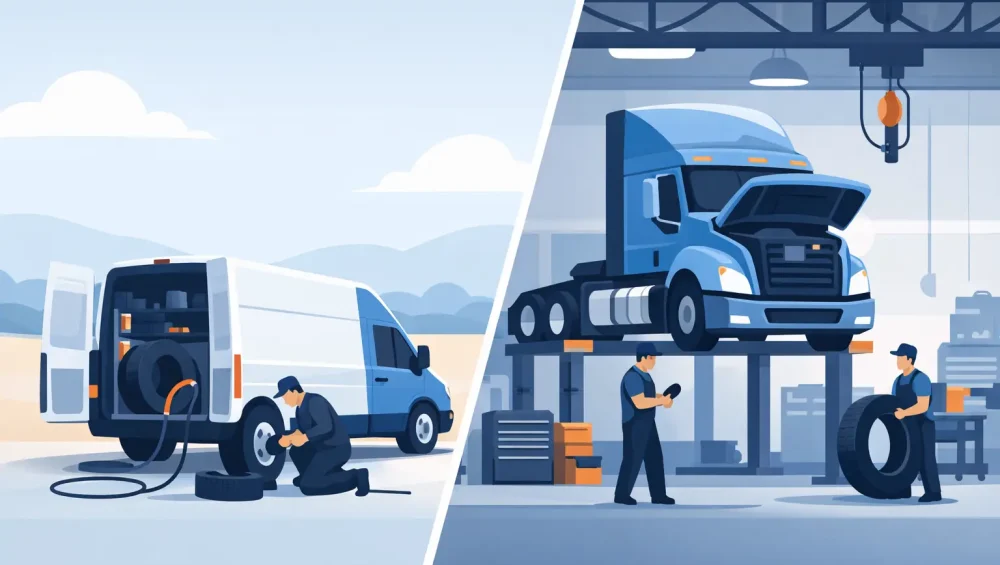
A workshop requires the vehicle to come to the tyre shop. That means driving there if the tyre is still roadworthy, arranging towing if it is not, waiting in line, getting the work done, and then sending the truck back out. On paper, that can look straightforward. In practice, it often means half a day gone, sometimes more.
A mobile tyre service brings the technician, equipment and replacement tyre to the truck. That could be roadside, at a depot, on a civil site, in a yard or at a farm gate. For heavy vehicles, that changes everything. You are not moving the problem. You are solving it where it happened.
For owner-drivers, that can mean getting back on schedule instead of losing the whole run. For fleet managers, it can mean keeping delivery windows intact and avoiding a chain reaction of delays across multiple vehicles.
When a mobile tyre service makes more sense
If a truck is stranded, running a damaged tyre, or parked on a site with limited access, mobile service is usually the practical option. The same applies when a vehicle is carrying a load, working to a tight shift, or operating far from a town-based workshop.
This is where mobile support earns its value. A fast callout for puncture repairs, tyre replacement, pressure issues or blowout recovery can save hours of lost operating time. That matters even more after hours, on weekends, or early in the morning when workshop availability is limited.
For businesses around the Hunter, this can be the difference between a minor interruption and a full-day setback. A truck stopped on the Hunter Expressway, the M1 or at a remote worksite does not need another job added to the list. It needs the tyre sorted properly and quickly.
Mobile service is also a strong fit for routine fleet work. Pressure checks, wheel rotations, on-site fitting and tyre inspections can be done at the yard, which reduces the need to send multiple vehicles off-site one by one. Instead of your operation working around the workshop, the service works around your operation.
When a workshop is still the better option
There are jobs better handled in a workshop. If the vehicle needs broader mechanical work alongside tyre replacement, or there is a more complex wheel or suspension issue to inspect, a workshop can be the right place. It may also suit operators who are already nearby, have flexible scheduling and do not face major downtime costs.
A workshop can be useful for planned tyre changes when the truck is already off the road for other maintenance. In that situation, combining jobs in one place may be efficient.
The key point is this – a workshop is often best for scheduled maintenance when time pressure is low. Mobile service is often best when time pressure is high, access is difficult, or the truck should not be driven.
Cost is not just the invoice
A lot of operators compare the callout fee against a workshop price and stop there. That is only part of the cost.
In a straight price comparison, a workshop may sometimes look cheaper because there is no travel charge built into the service. But that does not include fuel to get there, driver time, missed runs, delayed unloads, late penalties, towing if required, or the cost of a truck sitting idle when it should be earning.
For heavy vehicles, downtime is usually the bigger expense. One delayed truck can affect a trailer, a driver allocation, a depot booking or a customer deadline. That is why mobile tyre service often delivers better value, even when the upfront ticket looks higher.
The smartest way to assess cost is to ask one question: what does this option do to operating time? If the cheaper option keeps the truck off the road longer, it may not be cheaper at all.
Safety changes the decision fast
Tyres are one area where pushing on can turn a manageable problem into a dangerous one. If a tyre has failed, gone flat under load, or shows serious damage, driving to a workshop may not be worth the risk.
A mobile technician can assess the tyre on site, fit the right replacement, and help make sure the vehicle is safe to move. That matters for compliance, but it also matters for drivers making decisions under pressure. No one wants to gamble on whether a damaged tyre will hold long enough to limp into town.
This is especially true for long-haul work, loaded trucks and trailers, and vehicles operating on mixed road conditions. A fast on-site response removes the temptation to take chances just to save time.
What fleet operators should think about
For single vehicles, the choice is usually obvious once downtime is factored in. For fleets, the decision is bigger because tyre support affects planning across the whole business.
A workshop-only approach means every tyre issue pulls a vehicle out of rotation and sends it elsewhere. That can work for small, non-urgent maintenance tasks, but it is harder to manage across a busy fleet.
Mobile tyre support gives fleet operators more control. Vehicles can be serviced at the depot before a shift, checked between runs, or repaired on site without the usual workshop shuffle. It also helps with preventative maintenance. Catching uneven wear, pressure loss or casing damage early can stop a roadside failure later.
That is why many transport businesses use both. They may rely on workshops for some planned maintenance but keep a mobile provider ready for urgent callouts, after-hours support and yard-based fleet servicing. It is not always an either-or decision. Often, the best system is using each option where it performs best.
Response time matters more than convenience
Convenience sounds nice, but for commercial vehicles, the bigger issue is response time. If a truck is down, every hour counts.
Mobile service is built around that urgency. A good provider is set up to respond quickly, carry the right tyre options, and handle common truck and trailer issues on the spot. That is a very different service model from booking into a workshop and waiting your turn.
For operators working odd hours, this becomes even more important. Tyre failures do not stick to business hours. A 24/7 mobile service gives drivers and fleet managers a backup plan when the problem hits at the worst possible time.
That reassurance has real value. It keeps pressure off drivers, shortens delays and gives businesses a practical answer when the schedule suddenly goes sideways.
So which one should you choose?
If the truck is safe to drive, the job is planned, and downtime is not a major issue, a workshop can still be a solid option. If the vehicle is stranded, loaded, working remotely, or needed back on the road fast, mobile service is usually the stronger choice.
For most heavy vehicle operators, the mobile tyre service vs workshop question comes down to one thing – how much does disruption cost you? When every missed hour affects delivery, labour and customer commitments, on-site tyre support is not just convenient. It is operationally smarter.
That is why practical operators keep mobile tyre support close at hand, especially for emergency breakdowns, fleet servicing and after-hours work. Businesses such as Hunter Mobile Truck Tyres are built around that reality, bringing tyre repairs, replacements and roadside help straight to where the vehicle is.
The best tyre solution is the one that keeps your truck safe, your schedule moving and your business earning.