A trailer tyre failure can stop far more than one vehicle. It can hold up a delivery, leave a machine stranded at a job site, delay a load heading through Maitland, or put a driver in an unsafe roadside position. When you need mobile trailer tyre service Maitland operators can rely on, the priority is simple: get the problem assessed, repaired or replaced on site, and get the trailer moving safely again.
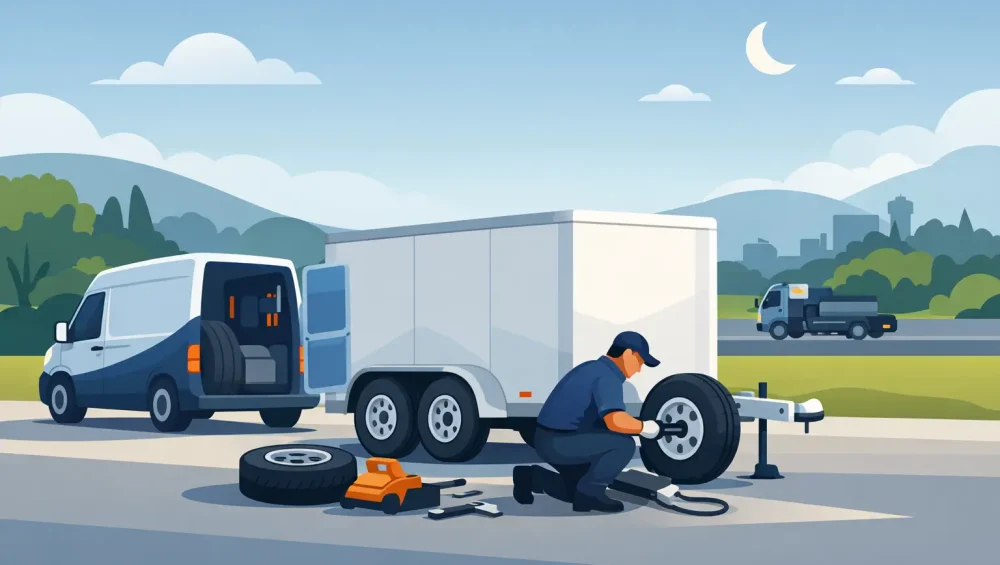
Hunter Mobile Truck Tyres brings qualified tyre support to trailers where they are – on the road, at a depot, on a farm, at a construction site or parked at your customer’s yard. With 24/7 availability for urgent tyre issues, there is no need to wait until business hours or organise a difficult tow to a tyre workshop.
When a trailer tyre problem cannot wait
Not every tyre issue looks dramatic at first. A slow leak, an ageing sidewall or uneven wear can quickly become a blowout once the trailer is loaded and travelling at highway speed. Heavy trailers place serious demand on their tyres, particularly when they are carrying equipment, aggregate, livestock, freight or machinery across the Hunter region.
A mobile service is the practical choice when the trailer cannot safely travel, the load cannot be delayed, or removing it from site would cost more time than the repair itself. It is also useful when a truck and trailer combination is already staged for an early start. Instead of disrupting the run to find a workshop, tyre work can be handled where the equipment is parked.
Call for assistance straight away if you notice a flat tyre, visible tyre damage, a bulge in the sidewall, cords showing through the tread, repeated pressure loss or a wheel that has been damaged after a pothole or roadside impact. Continuing to run a compromised tyre can damage the rim, affect handling and turn a straightforward replacement into a bigger recovery job.
Mobile trailer tyre service in Maitland for working equipment
Maitland operators use trailers for a wide range of work, and the right tyre solution depends on what the trailer does every day. A box trailer used locally has different needs from a tandem plant trailer, a tipper trailer, a refrigerated trailer or a long-haul semi-trailer. Load rating, axle configuration, tyre size, road surface and distance travelled all matter.
A capable mobile technician starts by checking the condition of the tyre and wheel, not just fitting the first available replacement. If a puncture is safely repairable, a repair may be the most cost-effective option. If the casing is damaged, the tread is too low or the tyre has been run flat, replacement is generally the safer call.
For operators managing costs closely, there can be a place for quality used tyres in the right application. For high-speed work, heavy loads, long distances and fleet-critical trailers, new tyres may offer better service life and greater confidence. The best choice depends on the work, the budget and how much downtime a future tyre failure could create.
On-site help for punctures, blowouts and replacements
A proper mobile trailer tyre response covers more than changing a wheel. The job may involve puncture repairs, new or used tyre supply, tyre fitting, tyre pressure checks, wheel balancing where appropriate, tyre rotation and blowout recovery. The aim is to deal with the immediate problem while identifying anything likely to cause the next one.
After a blowout, for example, the remaining tyres deserve attention. They may have been overloaded after the damaged tyre failed, or they may show matching wear that points to a pressure, alignment, suspension or loading issue. Replacing only the failed tyre without checking the others can leave the operator exposed to another roadside stop not far down the road.
For trailers carrying heavy or uneven loads, correct pressure is particularly important. Underinflation creates heat and flex in the tyre, accelerating wear and increasing the risk of failure. Overinflation can reduce the contact patch and make the tyre more vulnerable to impact damage. The correct pressure is based on the tyre, axle load and manufacturer recommendations – not guesswork.
Why mobile support saves time for fleets and owner-drivers
Taking a trailer to a workshop is not always a quick job. The vehicle may need to be unloaded, another driver may be required, and the trip itself adds fuel and lost working hours. If the tyre has failed completely, moving it may not be safe or possible.
Mobile tyre support removes that extra leg of the job. It helps drivers stay with their equipment, allows site teams to continue planning around a known repair time, and reduces the admin involved in arranging recovery. For fleet managers, it also gives a clearer way to respond to an after-hours issue without leaving drivers to source help on their own.
The value is not only in the emergency callout. Regular on-site tyre inspections and fleet tyre management can help spot uneven wear, low pressures and ageing tyres before they create an urgent problem. This is especially worthwhile for businesses with multiple trailers operating from a Maitland depot, moving between job sites, or travelling regularly on the Hunter Expressway and surrounding freight routes.
What to have ready when you call
Clear information helps a mobile tyre technician prepare the right equipment and tyre options before arriving. You do not need to diagnose the fault, but a few details will make the response more efficient:
- Your exact location, including the safest access point if you are on a site or roadside.
- The trailer type, number of axles and whether it is loaded or unloaded.
- Tyre size and load rating, if visible on the tyre sidewall.
- A brief description of the issue, such as puncture, blowout, damaged rim or slow leak.
- Any access restrictions, including soft ground, tight gates, low-clearance areas or traffic conditions.
If you are on a road, put safety first. Pull over as far as practical, use hazard lights and keep clear of moving traffic. Do not attempt to change a heavy trailer tyre without the right equipment, stable ground and a safe work area. A rushed roadside repair can cause injury or further damage to the trailer.
Preventing the next trailer tyre failure
Tyres wear out, and road hazards cannot always be avoided, but many breakdowns have warning signs. A quick walk-around before departure can prevent a costly delay later in the day. Check for low tyres, nails or cuts, cracked sidewalls, irregular tread wear and loose wheel nuts. Pay close attention after the trailer has been parked for a long period or has worked through rough ground.
Loading discipline matters as well. Overloading one side of a trailer, placing weight too far rearward or exceeding axle limits will put extra strain on tyres and suspension. Even a good-quality tyre will not perform properly if it is asked to carry more than its rating allows.
For commercial operators, build tyre checks into normal maintenance rather than treating them as an emergency-only issue. Keeping a record of tyre age, repairs, pressures and replacements makes it easier to see patterns across a fleet. If one trailer repeatedly wears tyres on the same edge, the answer may be mechanical rather than another replacement tyre.
Reliable support when the schedule is tight
A tyre problem does not need to write off the day. Whether you are hauling equipment across town, running freight through the Hunter, working a rural property or managing a fleet from a Maitland yard, fast on-site help keeps disruption under control.
When a trailer tyre lets you down, do not risk driving on it or lose hours trying to get it to a workshop. Arrange mobile assistance, get the right repair or replacement for the job, and give your trailer the best chance of finishing the run safely.