A tyre can look fine at the depot and still be well below its required pressure. On a loaded truck, tipper or trailer, that small miss can turn into excess heat, rapid shoulder wear, poor fuel economy or a failure on the highway. Knowing how to test tyre pressure properly is one of the quickest checks an owner-driver or fleet manager can make to protect tyres, payloads and schedules.
For heavy vehicles, pressure is not a rough guess based on how firm a tyre feels. It needs to match the tyre size, construction, axle position and actual load. Check it cold, use a reliable gauge and act on readings that are outside the recommended figure. That is how you keep a minor maintenance job from becoming an expensive roadside callout.
Why correct pressure matters on trucks and trailers
Tyres carry the load, absorb road shock and transfer braking and steering forces to the road. When pressure is too low, the sidewalls flex more than they should. That flex creates heat. On a long haul run, especially in hot conditions or under a heavy load, heat can damage the casing and raise the risk of a blowout.
Under-inflation also wears the outer shoulders faster, increases rolling resistance and can add to fuel use. A tyre that is only slightly low may not cause an immediate problem, but day after day it can cut tyre life significantly.
Over-inflation has its own cost. An overfilled tyre has a smaller contact patch, can wear through the centre of the tread and may give a harsher ride. It is also more vulnerable to impact damage from potholes, rough access roads and debris. The right pressure is the pressure specified for that tyre and the work it is doing, not simply the highest number printed on the sidewall.
How to test tyre pressure accurately
The best time to check pressure is before the vehicle starts work. A cold tyre means it has been parked for at least three hours, or has travelled only a very short distance at low speed. Driving builds heat, and heated air expands, giving a higher reading that does not reflect the tyre’s cold inflation pressure.
Start by confirming the required cold pressure for each axle. Check the vehicle manufacturer’s tyre placard, fleet maintenance records, tyre supplier load and inflation data, or the specification for the tyre fitted. Steer tyres, drive tyres, lift axles and trailer tyres may all need different pressures. If the vehicle’s load changes regularly, the required setting may also change.
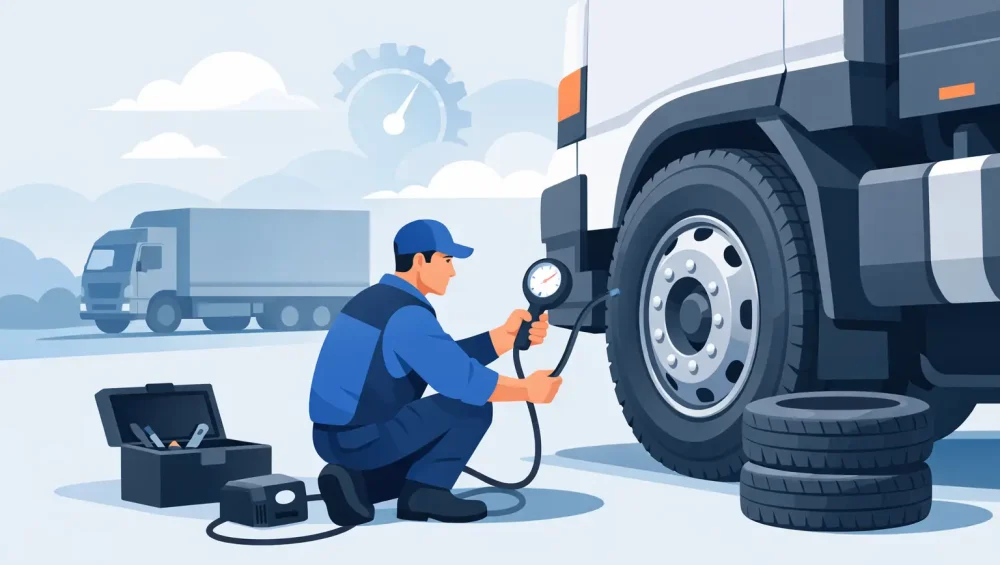
Remove the valve cap and keep it clean. Push the gauge firmly and squarely onto the valve stem until the hissing stops. Hold it for a second, remove it, then read the result. For a dependable reading, test the same tyre twice. If the readings differ, reseat the gauge and try again.
Record the pressure before adding or releasing air. This gives drivers and maintenance teams a useful history, particularly when a tyre repeatedly loses pressure. Refit the valve cap tightly after checking. A missing or damaged cap allows dirt and moisture into the valve and can contribute to a slow leak.
Use a gauge built for commercial tyre pressures
A cheap passenger-car gauge is not the right tool for a truck tyre. Use a quality analogue, digital or dial gauge with a range suitable for the pressures on your vehicle. It should be easy to read, protected from workshop damage and checked for accuracy regularly.
A dual-head truck gauge is practical for reaching inner and outer tyres on dual-wheel assemblies. An inflator with a built-in gauge can speed up the job, but do not assume it is accurate forever. If a gauge has been dropped, is difficult to read or gives questionable numbers, replace or calibrate it.
Check every tyre, including the ones you cannot easily see
It is tempting to test only steer tyres or the visible outer tyres, but every tyre matters. A low inner dual can go unnoticed while the matching outer tyre carries more of the load. The result can be overheating, uneven wear and damage to both tyres.
Work around the vehicle in the same order every time. For example, begin at the front nearside, check each axle and finish at the rear trailer axle. This simple routine reduces missed tyres during an early-morning pre-start check.
As you test pressure, look for cuts, exposed cords, bulges, lodged stones, uneven tread wear, valve damage and signs of rubbing. Check the gap between dual tyres for trapped debris. Two tyres touching or rubbing under load can fail quickly. A pressure check is the right moment to spot these issues before the truck leaves site.
What to do when a tyre is low
If a tyre is below its specified cold pressure, inflate it to the correct figure with clean, dry air from suitable equipment. Do not inflate every tyre to one universal number. Tyre pressure must be matched to the application, load and tyre maker’s data.
Then find out why it was low. A tyre that has lost a small amount of pressure over many weeks may simply need routine attention. A tyre that has dropped noticeably since the last check needs investigation. It could have a puncture, leaking valve core, cracked valve stem, damaged rim, bead leak or a problem caused by an impact.
Do not keep topping up a tyre that repeatedly loses air and send the vehicle back on the road. A slow leak can become a sudden failure when the tyre heats up under load. Mark the tyre, remove the vehicle from service if required and arrange a proper inspection.
Never try to repair a puncture with a temporary plug on a commercial tyre and assume the job is finished. Heavy vehicle tyres need assessment from the inside to confirm whether the casing is safe to repair. Sidewall damage, large punctures and run-flat damage may mean replacement is the only safe option.
Avoid adjusting pressure on hot tyres
After a run, a tyre’s pressure will naturally rise as it heats up. This is normal. Do not bleed air from a hot tyre just because the gauge shows a higher number than the cold setting. Once the tyre cools, it may be dangerously under-inflated.
If you need to inspect tyres during a trip, look for major differences between tyres on the same axle rather than chasing an exact cold number. A tyre running much hotter or showing a much different pressure than its matching tyre may point to a developing problem. Stop in a safe location and have it checked before continuing if there is any concern.
Build pressure checks into the working week
For trucks running daily, a cold pressure check should be part of the pre-start routine, not something reserved for a service interval. It takes only a few minutes and is especially valuable before long runs, heavy loads, rough-site work and hot-weather travel.
Fleet operators should keep a simple pressure record by vehicle and axle. Trends matter. If the same position keeps losing pressure, or one tyre needs more air than the others, maintenance can deal with the cause before it affects deliveries or safety.
Tyre pressure monitoring systems can help, particularly on long-haul and high-utilisation fleets, but they do not replace physical inspections. Sensors may alert drivers to a fast loss, while a manual check still reveals valve condition, tread damage and debris between duals.
When to call for mobile tyre support
A tyre with visible structural damage, rapid pressure loss, a suspected bead issue or a puncture on a loaded vehicle should be assessed by a qualified tyre technician. The same applies if a wheel is hot, the tyre has been run flat, or the vehicle is stranded where it cannot safely travel to a workshop.
Hunter Mobile Truck Tyres provides on-site pressure checks, puncture repairs, tyre replacement and emergency support for trucks, trailers and working fleets across the Hunter region. Mobile help can keep the job moving without adding an unnecessary workshop trip to an already tight day.
Make pressure checks part of the routine before the wheels start turning. The right reading, taken cold with the right gauge, is a small action that helps keep your driver safe, your tyres working longer and your vehicle earning instead of sitting on the side of the road.