A truck tyre can look serviceable from a few metres away and still be heading towards failure. Ageing happens gradually, often inside the rubber and around the sidewall before it becomes obvious. Knowing how to identify tyre ageing gives drivers and fleet managers the chance to act before a roadside blowout, a missed delivery or an unsafe trip.
For heavy vehicles, tyre age is never just a number stamped on the sidewall. The tyre’s working conditions matter just as much. Heat, load, pressure, storage, road surfaces and long periods parked up can all speed up deterioration. A proper check looks at the date code, the tyre’s condition and how it has been used.
Why tyre ageing matters for trucks and trailers
Tyres are made from rubber compounds, reinforcing materials and adhesives that naturally change over time. Exposure to oxygen, ozone, sunlight and heat slowly dries the rubber out. On a working truck, repeated flexing under heavy loads adds more stress to the casing, sidewall and tread area.
A tyre with good tread depth is not automatically a good tyre. That is where operators can get caught out. Tread measures wear, while ageing affects the tyre’s flexibility and structural condition. An older tyre may be more prone to cracking, separation, air loss or sudden failure, particularly when it is pushed hard on a hot day, carrying a load or travelling at highway speed.
For a fleet, one ageing tyre can cause far more than the cost of a replacement. It can put a driver at risk, damage a guard or trailer, delay freight and leave a vehicle stranded where access is difficult. Early inspection is cheaper than emergency downtime.
How to identify tyre ageing before it causes trouble
Start with a regular walk-around when the vehicle is cold and parked on level ground. Do not rely on a quick glance at the tread. Look closely at the sidewalls, the grooves between tread blocks, the bead area and the shoulder of each tyre. A torch is worthwhile when checking duals or tyres under trailers.
Read the tyre date code
Most truck tyres have a manufacturing date code in the DOT marking on the sidewall. The final four digits show the week and year the tyre was made. For example, 1823 means the tyre was manufactured in the 18th week of 2023.
The date tells you the tyre’s chronological age, but it does not set a universal replacement deadline. A well-maintained tyre in regular service may age differently from a tyre that has spent years sitting in the sun or stored under poor conditions. Check the manufacturer’s recommendations and include age in your fleet tyre records, especially for spare wheels, low-use trailers and seasonal equipment.
Retreaded truck tyres need the same attention. The casing may be suitable for retreading when it is correctly inspected and managed, but a retread is not a reason to ignore cracks, damage, poor pressure history or the age and condition of the casing.
Watch for visible cracking and weathering
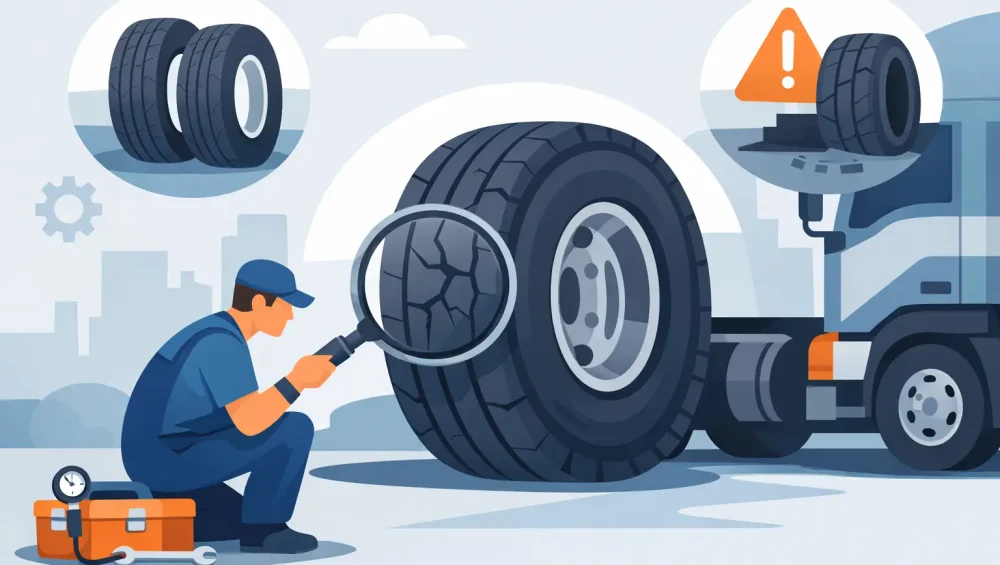
Fine cracks in the outer rubber are one of the clearest warning signs. They can appear along the sidewall lettering, between tread blocks, around the rim line or in the grooves. Small surface crazing may not mean a tyre is about to fail, but it should never be dismissed on a heavy vehicle.
Look for these signs during every inspection:
- Fine lines, splits or deeper cracks in the sidewall, tread grooves or shoulder
- Rubber that appears dry, faded, brittle or unusually hard to the touch
- Bulges, blisters or raised sections that may point to internal damage
- Tread or belt separation, including a ripple, lump or uneven raised area
- Crumbling rubber around the bead, valve area or rim edge
Deep cracks, exposed cords, bulges and separation are not monitoring jobs. Take the tyre out of service and have it assessed straight away. Continuing to run it can turn a manageable tyre change into a dangerous failure.
Check whether the tyre is holding pressure
Ageing rubber and deteriorating valve components can contribute to slow pressure loss. A tyre that repeatedly needs topping up may have a puncture, a rim issue, valve damage or casing deterioration. The cause needs to be found rather than masked with more air.
Use a reliable gauge and set pressures to suit the tyre, axle load and application. Underinflation generates heat through excessive flexing, which accelerates tyre ageing and can damage the internal structure. Overinflation reduces the contact patch and can make the ride harsher, increasing the chance of impact damage. The correct pressure is the one specified for the load and tyre application, not simply the pressure another truck is running.
Look for changes in shape and ride quality
An ageing tyre may show problems before obvious cracking appears. Pay attention to vibration through the steering wheel, a new thump at speed, pulling to one side, irregular wear or a trailer that suddenly feels unsettled. These symptoms can also come from balancing, alignment, suspension or wheel issues, so they need diagnosis rather than guesswork.
Inspect for flat spots on vehicles that have been parked for extended periods. Some temporary flat spotting can ease as a tyre warms up, but a persistent vibration or distortion needs professional attention. This is particularly relevant for trailers, farm equipment and spare vehicles that spend long periods off the road.
What makes truck tyres age faster?
Time matters, but operating conditions often decide how quickly a tyre deteriorates. High ambient temperatures, long highway runs, high loads and low pressure create heat, which is one of the biggest enemies of tyre life. Tyres working on rough access roads, quarry sites or construction projects also face extra impact and sidewall damage.
Poor storage is another common cause. Spare tyres left exposed to direct sun, rain, ozone from electrical equipment, oil, fuel or chemicals can deteriorate faster than tyres stored clean, dry and out of sunlight. If a spare has been sitting under a trailer or in a depot for years, inspect it as carefully as a tyre in daily use.
Dual tyres deserve extra attention. If one tyre in a dual set runs at a different pressure, has a noticeably different diameter or is more worn than its partner, the load sharing can be uneven. That creates heat and stress in both tyres. Matching compatible tyres and maintaining equal pressures helps protect the pair.
Build tyre age checks into the pre-start routine
A quick check before leaving the yard can prevent a long day on the shoulder. Drivers should look for damage, obvious cracking, low pressure, objects in the tread and unusual tyre shape. Fleet managers should back this up with scheduled, recorded inspections that include tyre dates, tread depth, pressure readings, rotation history and repairs.
The inspection frequency depends on the work. A long-haul prime mover running daily has different demands from a tipper on rough sites or a trailer used only occasionally. High-load, high-heat and off-road work calls for closer monitoring. If a vehicle has been parked for months, inspect its tyres before putting it straight back into service.
Do not overlook wheels and valves. Corrosion, damaged rims, loose wheel nuts and failing valve caps can create pressure issues that make tyre ageing worse. A tyre service check should consider the whole wheel assembly, not just the visible rubber.
When to replace an ageing tyre
Replace a tyre immediately if there is a bulge, exposed cords, major cracking, separation, significant air loss or damage that cannot be safely repaired. For less obvious ageing, the decision depends on its date, service history, storage conditions, position on the vehicle, load requirements and the manufacturer’s guidance.
Steer tyres warrant a conservative approach because they have a direct effect on control. Trailer and drive tyres also need careful assessment, especially where cracks are developing or pressure has been inconsistent. Moving a questionable tyre to another axle is not a fix if the tyre is structurally unsound.
A qualified technician can inspect the casing, measure wear, check pressure patterns and advise whether the tyre can remain in service, needs repair or should be replaced. That judgement is particularly valuable for commercial operators trying to balance tyre costs with safety and uptime.
When an ageing tyre is found at the depot, roadside or on a remote job, acting quickly keeps the problem contained. Hunter Mobile Truck Tyres provides mobile heavy vehicle tyre support across the Hunter region, helping drivers and fleets get safe tyres fitted where the truck is stopped.
The best time to deal with tyre ageing is before the load is on, the weather is hot and the truck is kilometres from the yard. Make tyre condition part of every pre-start, keep accurate records and treat new cracks or pressure loss as a reason to inspect, not a reason to hope for the best.