A vibration through the steering wheel at highway speed, a shake in the seat of the cab, or a trailer that suddenly feels unsettled is not something to push through until the next stop. What causes truck tyre vibration can range from a straightforward wheel balance issue to tyre damage, a bent rim or a mechanical fault that needs urgent attention. For owner-drivers and fleet operators, getting the cause checked early can prevent a roadside failure, damaged suspension parts and costly downtime.
What causes truck tyre vibration?
Truck tyre vibration happens when the tyre and wheel assembly cannot roll smoothly and evenly. At low speed, you may only notice a light thump or an occasional shake. As speed rises, that small imbalance or defect can become a strong vibration through the steering, chassis, seat or trailer.
The location and timing of the vibration provide useful clues. A shake felt mainly through the steering wheel often points to a front steering tyre, wheel or front-end component. A vibration felt through the floor, seat or trailer may be coming from drive axles, trailer axles or the driveline. That said, heavy vehicles have multiple axles and tyres, so a proper inspection is the safest way to identify the real source.
Wheel balance problems
An out-of-balance wheel is one of the most common causes. It occurs when the tyre and wheel assembly has more weight on one side than the other. At certain speeds, usually on open roads or the motorway, that uneven mass creates a repeating shake.
Wheel balance can be affected after fitting a new tyre, repairing a puncture, losing a balance weight, or collecting mud and debris inside the wheel. It can also occur when a tyre is fitted without being correctly seated on the rim. The fix may be as simple as removing the wheel, inspecting it and rebalancing it properly. But balance should not be treated as the answer before the tyre itself has been checked for damage.
Tyres that are out of round or have excessive run-out
A tyre should roll in a near-perfect circle. If it is out of round, it rises and falls as it turns, causing a noticeable thump, hop or vibration. This can happen because of manufacturing variation, incorrect fitting, a damaged casing, a distorted rim or a tyre that has been parked under heavy load for an extended period.
Temporary flat spots can sometimes improve after the tyre warms up, particularly after a vehicle has been standing. A hard, repeated vibration that remains once the tyres are warm is different. It needs attention, especially on long-haul trucks, tippers and loaded trailers where heat and load put extra stress on every tyre.
Internal tyre damage or belt separation
A tyre can look acceptable at first glance while suffering internal damage. A broken belt, separation inside the casing or damage from a heavy impact can make the tread lift in one area as the tyre rotates. Drivers may describe it as a rhythmic thud, a bouncing feeling or a vibration that comes and goes with road speed.
Potholes, sharp road edges, kerb strikes, overloading and running with low pressure can all contribute. Do not keep operating a truck on a tyre suspected of having a bulge, irregular tread shape or internal separation. The condition can worsen rapidly and may lead to a blowout.
Incorrect tyre pressure and load pressure mismatch
Tyre pressure is not just a wear issue. Under-inflated tyres flex more, build heat and can feel unstable or lumpy under load. Over-inflated tyres can transmit more road shock into the vehicle and reduce the tread’s ability to absorb uneven surfaces.
The correct pressure depends on tyre size, axle position, load, speed and the manufacturer’s recommendations. A steer tyre, drive tyre and trailer tyre may each have different requirements. Pressure should be checked cold, with a reliable gauge, and adjusted to suit the work the truck is doing. A truck that is fine empty but vibrates when loaded may have a pressure, load distribution or suspension issue that only appears under weight.
Uneven, cupped or irregular tyre wear
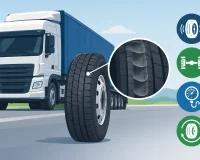
Look closely at the tread across the full width of the tyre. Cupping, scalloping, feathering and one-sided wear can all create vibration. They also tell you that something beyond normal tyre wear may be happening.
Cupped tread can be linked to worn shock absorbers, suspension movement, wheel imbalance or incorrect inflation. Feathered wear commonly points to alignment problems. One-sided wear may indicate alignment, axle tracking or worn steering and suspension components. Replacing the tyre without correcting the underlying cause often means the replacement tyre will wear the same way.
Wheel, rim and fitting faults that create vibration
Not every vibration comes from the rubber. The wheel and its connection to the hub must also be in sound condition.
A bent, cracked or corroded rim can create run-out even if the tyre is in good shape. Damage may follow an impact with a pothole, road debris or a rough worksite surface. Dirt, rust or debris trapped between the wheel and hub can stop the wheel from mounting squarely. Incorrect wheel nut torque can also cause problems, including wheel movement and uneven clamping.
After a roadside tyre change or workshop fitting, it is worth checking whether the vibration began immediately afterwards. This does not automatically mean the new tyre is faulty. The tyre may need balancing, the wheel may not be centred correctly, or an existing rim issue may have become more obvious. A qualified technician should remove, inspect and refit the assembly rather than guessing from the roadside.
Mechanical issues that can feel like tyre vibration
Tyres often reveal faults elsewhere in the vehicle. If the tyres and wheels check out, inspection should extend to the running gear.
Worn wheel bearings can allow excess movement and create vibration, noise or heat at the hub. Loose steering components, worn kingpins, bushes, shocks, suspension components and damaged springs can make the front end wander and cause irregular tyre wear. On trailers, worn suspension bushes, axle alignment issues and loose components can produce a shake that looks like a tyre problem.
A vibration that changes when accelerating, backing off or selecting different gears may be driveline-related rather than tyre-related. Tailshaft imbalance, universal joint wear and differential issues need mechanical assessment. The key point is simple: do not keep balancing tyres if the vibration pattern suggests another fault.
How to narrow down the cause safely
Before setting off, walk around the truck and trailer. Look for low tyres, bulges, cuts, lodged debris, missing chunks of tread, unusual wear and damage to rims. Check for loose wheel nuts only in line with safe procedures and never attempt repairs beside live traffic without proper protection.
While driving, make a clear note of when the vibration occurs. Does it start at a particular speed? Is it worse under load? Is it in the steering wheel, the seat or the trailer? Does it change during braking or turning? These details help a tyre technician or mechanic diagnose the issue faster and avoid unnecessary work.
Stop and arrange assistance promptly if the vibration is severe, the truck pulls sharply, a tyre has a visible bulge, there is smoke or a burning smell, a wheel is hot, or you suspect a loose wheel or separated tyre. Continuing can turn a manageable repair into a blown tyre, wheel-end damage or a recovery job.
Preventing repeat truck tyre vibration
A consistent maintenance routine is the best defence. Check pressures before runs, inspect tread condition and sidewalls, rotate tyres where appropriate, and schedule balancing when new tyres are fitted or vibration appears. Keep axle alignment and suspension maintenance up to date, particularly for vehicles working on rough sites, carrying variable loads or covering high kilometres.
Fleet operators should record tyre position, pressure checks, repairs, rotations and wear patterns. Those records make it easier to spot a recurring problem on one axle, one trailer or a particular route. They also support better tyre life and fewer surprise callouts.
For trucks working across the Hunter Valley, Newcastle, the M1 or remote job sites, mobile tyre support can save valuable time when a vibration needs checking away from the depot. Hunter Mobile Truck Tyres can inspect tyre condition, pressure, wheel fitment and obvious damage on-site, helping get the vehicle moving safely without an unnecessary trip to a workshop.
A truck should feel stable, predictable and settled at road speed. If it does not, treat the vibration as useful warning information, not part of the job, and have the wheel, tyre and running gear checked before the next heavy run.