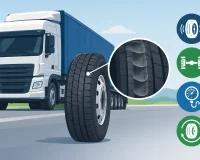
A tipper tyre can look fine at pre-start and still cost you a shift by lunchtime. Sharp quarry rock, soft site access, loaded turns and long sealed-road runs ask a lot from every casing. That is why tipper tyre reviews are useful only when they go beyond a quick comment about price or tread depth.
For tipper operators, the right tyre is the one that stays in service, handles the ground under the truck and gives fair value across its working life. A tyre that is cheap to buy but suffers shoulder damage, cuts or rapid wear is not a bargain when the truck is parked waiting for a replacement.
What Good Tipper Tyre Reviews Should Tell You
The most helpful reviews come from operators running similar loads, routes and site conditions to yours. A tipper working between a Newcastle depot and a hardstand construction site has different needs from a truck spending every day in a quarry or moving grain on rural roads.
Look for comments that explain where and how the tyre was used. Useful details include whether the truck runs mainly on bitumen, gravel, mud, clay, demolition material or blasted rock. They should also say whether the tyre is fitted to the steer, drive or trailer axle. A drive tyre praised for traction may not be the best choice for a trailer axle where scrub resistance and even wear matter more.
Pay attention to the timeframe as well. A review written immediately after fitting tells you about ride and first impressions. A review after several months of loaded work is far more valuable for judging wear rate, casing condition and resistance to damage.
Tread wear is only part of the story
Even tread wear is a good sign, but it does not tell the whole story. On a tipper, sidewall cuts, chipped tread blocks, stone drilling and heat damage can end a tyre’s life well before it wears out. Reviews that mention casing strength and damage resistance are worth more than those that simply say the tyre “lasts well”.
Look at the pattern of wear being described. Centre wear can point to overinflation, while shoulder wear often suggests low pressure, overloading or alignment issues. Feathering and uneven wear may be caused by suspension or steering faults rather than the tyre itself. If several reviews mention unusual wear, consider whether those operators had their wheel alignment, axle condition and pressures checked.
Compare Tipper Tyres Against Your Actual Work
There is no single best tyre for every tipper truck. The right choice depends on the balance between road kilometres, site conditions, payload and the consequences of getting stuck.
A deep, open drive pattern can provide the traction needed on loose gravel, wet clay and rough job sites. The trade-off is that aggressive patterns can run noisier on the highway and may wear faster when the truck spends most of its time on sealed roads. A more road-focused pattern may give a longer, smoother life on bitumen, but it can lose grip when a loaded tipper needs to climb out of a soft site.
When reading reviews, match the reviewer’s work to your own operation. A positive review from a long-haul operator does not automatically apply to a truck that is constantly turning on abrasive quarry floors. Likewise, a tyre built for severe off-road work may be unnecessary expense for a tipper that does 90 per cent of its kilometres on the highway.
Drive, steer and trailer positions matter
Tyre reviews can be misleading when axle position is left out. Drive tyres need traction and resistance to torque-related wear. Steer tyres need stable handling, predictable braking and protection against road hazards. Trailer tyres need to cope with high loads, tight turns and lateral scrub without developing irregular wear.
For multi-trailer or dog trailer combinations, axle loading and turning paths deserve extra attention. A tyre that performs well on a straight-running trailer may wear differently on an axle that is regularly dragged through tight site entrances. Ask your tyre provider which pattern and construction suit each axle position rather than fitting the same tyre everywhere simply because it is convenient.
Read Reviews With a Critical Eye
Star ratings can be a starting point, but they are not enough to make a tyre decision. A five-star review that says “great tyres” offers very little. A detailed three- or four-star review that explains wear, traction, puncture resistance and kilometres achieved may be far more useful.
Be cautious with claims about tyre life unless the operating conditions are clear. Two operators can run the same tyre and get very different results because of tyre pressures, loads, driver habits, road surfaces and maintenance standards. High kilometres are impressive only if the tyre stayed safe, wore evenly and did not create repeated downtime along the way.
Also consider the age of the review. Tyre ranges and compounds can change, and a tyre that suited one operation years ago may not be the right fit now. Current advice from someone who understands local heavy vehicle work is often more useful than old online comments.
The Cost of a Tipper Tyre Is More Than the Invoice
The purchase price matters, especially when several tyres need replacing at once. But the true cost includes how long the tyre lasts, how often it needs attention and what happens when it fails at the worst possible time.
A roadside puncture or blowout can delay deliveries, leave a machine waiting for material and put pressure on the rest of the fleet. It may also force a driver to sit on the side of the road rather than completing paid work. In these situations, the cheapest tyre can become the most expensive choice.
A practical comparison should include the expected service life, likelihood of repair, casing value for retreading where suitable, fuel impact and availability of a matching replacement. For fleet operators, keeping sensible tyre consistency across similar vehicles can make rotations, inspections and stock management easier.
Maintenance Changes What Reviews Mean
The best-reviewed tyre will not perform properly if it is run at the wrong pressure or fitted to a truck with mechanical issues. Tipper work is hard enough without asking tyres to compensate for worn suspension bushes, poor wheel alignment, overloaded axles or neglected rotations.
Pressure checks should suit the load and the work, not just what was written on the sidewall or used on the previous job. A truck that changes from highway runs to wet site work may need closer monitoring. Heat, slow leaks and valve damage can all reduce tyre life before there is any obvious sign from the driver’s seat.
Regular inspections also give you a clearer picture of whether a tyre model is actually performing. Record fitment dates, positions, pressure readings, repairs and removal reasons. Over time, this creates better evidence than general online reviews because it is based on your own trucks, payloads and routes.
When Fast Mobile Support Matters
No tyre review can guarantee that a puncture or impact damage will not happen. Tipper trucks work where debris, sharp rock and rough access tracks are part of the job. What matters after a failure is getting the vehicle assessed and moving again without unnecessary delay.
Hunter Mobile Truck Tyres provides mobile heavy vehicle tyre support for tipper operators across the Hunter region, including emergency replacements, puncture repairs, fitting and fleet tyre assistance. When a tyre issue stops the job, having experienced help come to the truck can save the time and cost of limping to a workshop or organising a recovery.
Before your next tyre purchase, write down the loads you carry, the surfaces you cross and the failures that have hurt your operation before. Those details will turn tipper tyre reviews from general opinions into a decision that keeps your truck working when it counts.