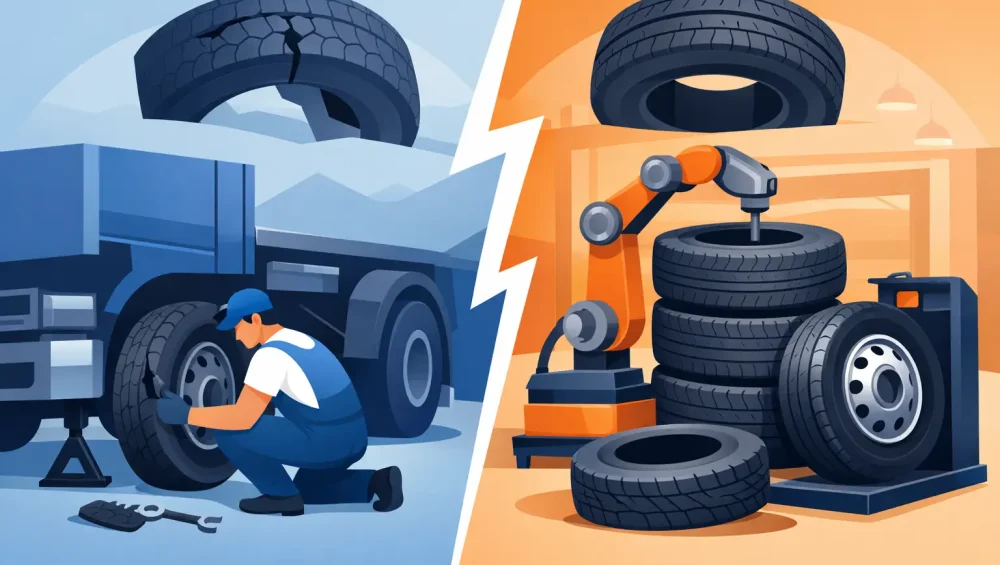
A damaged tyre on a loaded truck is never just a tyre problem. It can mean a missed delivery, a stranded driver, a delayed crew or an expensive day of downtime. When it comes to truck tyre repair versus replacement, the right call depends on the damage, the tyre’s condition, where it is fitted and the work the vehicle needs to do next.
For owner-drivers and fleet operators, the goal is simple: get safely back on the road without spending money where it is not needed. A quality repair can be a practical solution for the right puncture. But when a tyre is unsafe, badly worn or damaged beyond repair, replacement is the only sensible option.
Truck Tyre Repair Versus Replacement: Start With Safety
A repair is only worthwhile when it restores the tyre’s integrity and suits the vehicle’s operating conditions. Heavy vehicles carry serious weight, travel long distances and often work through demanding sites, highways and regional roads. A shortcut on a tyre can quickly turn into a blowout, roadside delay or worse.
The first question is not whether a repair is cheaper. It is whether the tyre is safe to repair. A trained tyre technician needs to inspect the tyre properly, including the tread area, casing, sidewalls, bead and inside of the tyre. Damage that looks minor from the outside can hide internal issues caused by running underinflated or continuing to drive after a puncture.
If there is any doubt about the tyre’s safety, replacement is the better decision. The cost of one failed tyre can be far greater than the cost of fitting a sound replacement at the start.
When a Truck Tyre Repair Can Make Sense
A puncture through the central tread area is often the most repairable type of damage, provided the hole is small, clean and the tyre has not been driven flat. In this situation, a proper internal repair may keep a serviceable tyre working safely and extend its usable life.
Tyre repair can be a strong option when the remaining tread is healthy, wear is even and the tyre has no signs of structural damage. This is particularly useful for fleet vehicles where keeping matched tyre positions and managing operating costs matters.
A repair may save a good tyre from being discarded too early, but it needs to be completed correctly. Temporary roadside plugs are not the same as a professional heavy vehicle tyre repair. They may get a vehicle out of immediate trouble in limited circumstances, but they should not be treated as a long-term answer for a working truck, trailer or tipper.
A technician should also check why the puncture happened. A nail or screw in the tread may be a straightforward repair. Repeated punctures, however, can point to the routes being travelled, poor site housekeeping or tyres operating with incorrect pressure. Fixing the cause helps prevent another callout tomorrow.
Damage That Usually Means Replacement
Some tyre damage leaves no room for debate. Sidewall cuts, bulges, exposed cords, major tread separation and bead damage generally mean the tyre needs replacing. These areas carry critical structural loads and cannot be safely restored with a simple puncture repair.
A tyre that has been driven flat may also require replacement, even if the original puncture looks repairable. Running low or flat creates heat and flexing that can damage the casing internally. This is common when a driver notices a soft tyre too late, especially on a loaded trailer or during long-haul work.
Replacement is also the smarter choice when tread is near the legal limit, the tyre is wearing unevenly or multiple previous repairs have already been carried out. Spending money repairing a tyre with very little usable life left can be false economy. A replacement tyre gives the vehicle a safer foundation and reduces the chance of another stop shortly after.
For steer tyres in particular, the standard should be high. Steer positions play a direct role in vehicle control, braking and handling. Any questionable damage or irregular wear deserves immediate professional assessment rather than a gamble on the road.
The Position of the Tyre Matters
Not every tyre position does the same job. A drive tyre, trailer tyre and steer tyre face different loads, forces and wear patterns. That affects whether repair is appropriate and what replacement tyre should be fitted.
Steer tyres need consistent condition and correct matching to support stable handling. Drive tyres need traction and must cope with torque, particularly on wet roads, quarry sites, farms and earthmoving work. Trailer tyres can suffer from scrub wear, incorrect alignment and pressure issues that are easy to overlook until the damage is advanced.
A good tyre decision considers the full axle, not just the damaged tyre. If one tyre has worn quickly, it may be worth checking wheel alignment, suspension components, wheel balance, tyre pressures and load distribution. Replacing one tyre without dealing with the reason for abnormal wear can see the same problem return.
Cost Is More Than the Price of One Tyre
Repair is normally less expensive than replacement, which is why it is worth considering when the tyre is genuinely repairable. It can protect your operating budget and keep a tyre in service for thousands more kilometres.
But the cheapest invoice is not always the lowest-cost outcome. A tyre that fails again on the M1, Hunter Expressway or a remote worksite can create callout costs, lost driving hours, late freight and pressure on the rest of the fleet. For a business operating on tight schedules, reliability has a real dollar value.
Replacement costs more upfront, but it may deliver better value when the tyre is worn, damaged or unsuitable for the job. The right replacement should suit the vehicle, axle position, load rating, road conditions and expected mileage. New and quality used truck tyres can both have a place, depending on the job and the remaining life needed from the tyre.
For fleets, consistent tyre records make this decision easier. Tracking pressure checks, repairs, tread depth, rotations and replacement dates helps identify tyres that are costing too much to keep alive. It also makes planned maintenance possible instead of waiting for an emergency.
Do Not Ignore the Warning Signs
Drivers are often the first line of defence against a tyre failure. A vehicle pulling to one side, vibration through the steering, a visible bulge, repeated pressure loss or unusual tyre noise should be checked before the next run. These issues do not improve with more kilometres.
Daily visual checks are quick and can save serious downtime. Look for cuts, embedded objects, missing tread, uneven wear, cracks and signs that a tyre is running low. Pressure checks matter just as much. Incorrect pressure creates excess heat, affects handling and accelerates wear across the tyre casing.
If a tyre has suffered a blowout, do not assume fitting another tyre is the only task. The wheel, rim, valve, surrounding tyres and vehicle components should be inspected for damage. A proper recovery job gets the truck moving, but it should also reduce the risk of the same vehicle being off the road again.
Get the Right Answer Where the Truck Is Stopped
When a truck is parked on a roadside, depot, farm, construction site or loading area, getting it to a workshop can add hours to the delay. A mobile tyre technician can inspect the damage on-site, explain whether repair is suitable and fit a replacement when it is not.
Hunter Mobile Truck Tyres provides 24/7 mobile support for heavy vehicles across the Hunter region, helping drivers and fleet managers make a practical decision without unnecessary towing or workshop travel. Whether it is a puncture repair, blowout recovery, tyre fitting or pressure issue, the focus is on getting the vehicle safely operational as quickly as possible.
The best tyre decision is the one that protects the driver, the load and the next job. If the tyre is sound and the damage is repairable, repair it properly. If its condition is questionable, replace it before a small tyre issue becomes a major roadside problem.