A steer tyre wearing smooth on one shoulder is not just a tyre problem. It can be an early warning that your alignment, suspension, axle setup or operating pressure needs attention. Truck tyre wear causes are often easy to spot once you know what the tread is telling you – and acting early can prevent a roadside failure, damaged components and costly time off the road.
For owner-drivers, tipper operators and fleet managers, tyres work hard every kilometre. They carry serious loads, deal with changing road surfaces and cop plenty of heat through the Hunter, on the M1, the Golden Highway and out to remote job sites. Some wear is normal. Fast, uneven or unusual wear is not.
The main truck tyre wear causes
Tyres do not wear evenly by accident. The wear pattern is usually linked to how the truck is loaded, driven, maintained or set up. A quick inspection before a shift can help catch the issue, but the fix needs to match the cause.
Incorrect tyre pressure
Pressure is one of the biggest causes of premature tyre wear. An under-inflated tyre flexes too much, builds heat and commonly wears harder along both outer shoulders. It also increases rolling resistance, which can push fuel use up and make the casing more vulnerable to damage.
Over-inflation has the opposite effect. The centre of the tread carries too much of the load and wears faster, while the tyre has less footprint on the road. That can reduce grip, particularly in wet conditions or on loose surfaces around yards, farms and worksites.
The right pressure depends on the tyre, axle position, load and application. A long-haul prime mover, a loaded tipper and a trailer working local deliveries do not necessarily run the same pressures. Check tyres cold, use a reliable gauge and follow the tyre manufacturer’s load and inflation guidance rather than relying on a visual check alone.
Wheel alignment problems
If tyres are wearing on one edge, feathering across the tread or scrubbing faster than expected, alignment should be high on the list. Incorrect toe, camber or axle tracking can drag a tyre slightly sideways as it rolls. It may not look dramatic from the cab, but over thousands of kilometres it can remove usable tread quickly.
Alignment issues can follow a hard pothole strike, kerb contact, suspension repairs or repeated work on rough access roads. On multi-axle trucks and trailers, a tracking problem can affect more than one position and make the whole combination work harder.
Do not wait until the tyre is bald on one shoulder. Early alignment checks are far cheaper than replacing tyres before their time.
Worn suspension or steering components
Tyres often reveal faults in the truck before the driver feels them. Worn shocks, bushes, kingpins, wheel bearings, tie-rod ends or steering components can allow the wheel to move where it should not. The result may be cupping, scalloping or irregular patches around the tread.
Cupping is commonly seen as a series of dips or high and low spots. It can come with vibration, noise or a steering wheel that no longer feels settled. Leaving it alone does not just sacrifice the tyre. It can put extra strain on other suspension and steering parts as well.
A tyre inspection should include a practical check of the hardware behind it. Replacing a damaged tyre without addressing loose or worn components simply sets the next tyre up to fail.
Overloading and uneven loads
Every tyre has a load rating, and every axle has a legal and practical limit. Regular overloading places extra heat and stress into the casing, especially on hot days, long climbs and slower work where tyres have little chance to cool.
Uneven loading causes its own problems. A load sitting heavier on one side can create different wear across the axle. On tippers, earthmoving gear, agricultural trucks and trailers, changing payloads can make this easy to miss. The truck may be legal overall but still have individual tyres carrying more than their fair share.
Load distribution matters as much as total weight. Secure the load correctly, stay within axle limits and account for how the vehicle sits when loaded.
Driving conditions and driving style
Truck tyres are built for work, but harsh use leaves a mark. Frequent tight turns in depots, quarry sites and narrow loading areas can scrub trailer tyres. Sudden braking, hard acceleration and aggressive cornering add heat and tear at the tread. Long stretches of coarse chip roads or poorly maintained access tracks can speed up wear even where the setup is correct.
This does not mean every truck needs to be driven gently. It means the tyre choice and maintenance plan need to suit the job. A tyre that performs well on highway freight may not be the best option for repeated site work, and a drive tyre used in the wrong axle position may wear far sooner than expected.
Poor tyre matching and rotation practices
Mixing tyres with noticeably different tread depths, constructions or rolling diameters across a drive axle can place extra stress on the tyres and drivetrain. Different brands can sometimes be used safely when specifications match, but random replacements can create problems.
Rotation is also worth considering where the operating pattern supports it. Some positions wear quicker than others, particularly steers and trailer axles. A planned rotation can help make better use of the casing, but it is not a cure for alignment or pressure problems. Rotate a tyre with an existing wear fault and you may simply move the fault somewhere else.
What common wear patterns are telling you
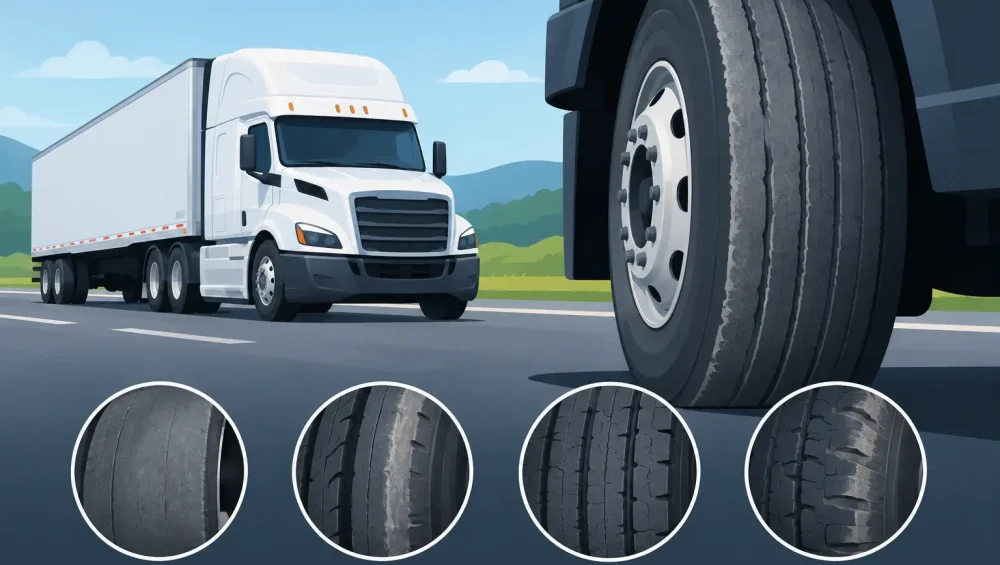
A close look at the tread provides useful clues. Centre wear often points to over-inflation. Both shoulders wearing faster usually suggests under-inflation or frequent heavy loading. One-sided shoulder wear is commonly linked to alignment, camber or axle-tracking issues.
Feathered tread blocks that feel sharp in one direction and smooth in the other often indicate incorrect toe settings. Cupping or scalloping can suggest worn shocks, loose steering parts, imbalance or wheel-end issues. Localised flat spots may be caused by harsh braking, a dragging brake or a wheel that has locked under load.
These patterns are guides, not a diagnosis by themselves. A skilled technician needs to inspect the tyre, wheel, suspension and operating conditions together. That is how you avoid replacing good rubber while the real fault stays on the truck.
When tyre wear needs urgent attention
Do not gamble with a tyre that is showing cords, deep cuts, exposed steel, sidewall damage, bulges or rapid pressure loss. Those faults can turn into a blowout without much warning, especially under load or at highway speed.
You should also act quickly when a tyre develops severe uneven wear, persistent vibration, pulling under braking or repeated pressure loss. Continuing to run can damage the casing beyond repair and may take out other tyres or components when it fails.
If you are parked on the roadside, at a depot or stuck at a remote site, mobile support can save the tow, workshop trip and lost shift. Hunter Mobile Truck Tyres provides 24/7 on-site tyre assistance across the Hunter region for punctures, blowouts, replacement tyres, fitting and practical tyre checks.
A simple routine that saves tyres
A short walk-around before heading out is one of the best habits in heavy vehicle work. Check for low pressure, cuts, stones lodged in the tread, irregular wear, missing valve caps and anything rubbing against the tyre. Listen for a new vibration or change in handling once you are moving.
For fleets, record pressures, tread depth, rotations, repairs and tyre positions. Those records make patterns easier to see. If the same axle keeps wearing tyres early, there is a reason, and it is worth finding before the next set goes on.
The cheapest tyre is rarely the one with the lowest purchase price. The better value is the tyre that suits the application, stays correctly inflated, wears evenly and remains in service for its full safe working life. Catch the warning signs early, keep the truck properly maintained and you will spend more time delivering loads than waiting beside the road.