A loaded trailer on the side of the M1 is no place to discover that the wrong tyre setup is costing you traction, payload or precious hours off the road. The choice between single versus dual truck tyres affects more than the look of the axle. It affects how your truck carries weight, handles rough ground, uses fuel and gets home after a puncture.
For owner-drivers, earthmoving operators and fleet managers, there is no one-size-fits-all answer. Duals have earned their reputation on demanding heavy-haul work, while wide-base single tyres can reduce weight and simplify maintenance on the right application. The best setup depends on the load, route, axle configuration and the work your vehicle does every day.
Single Versus Dual Truck Tyres: The Main Difference
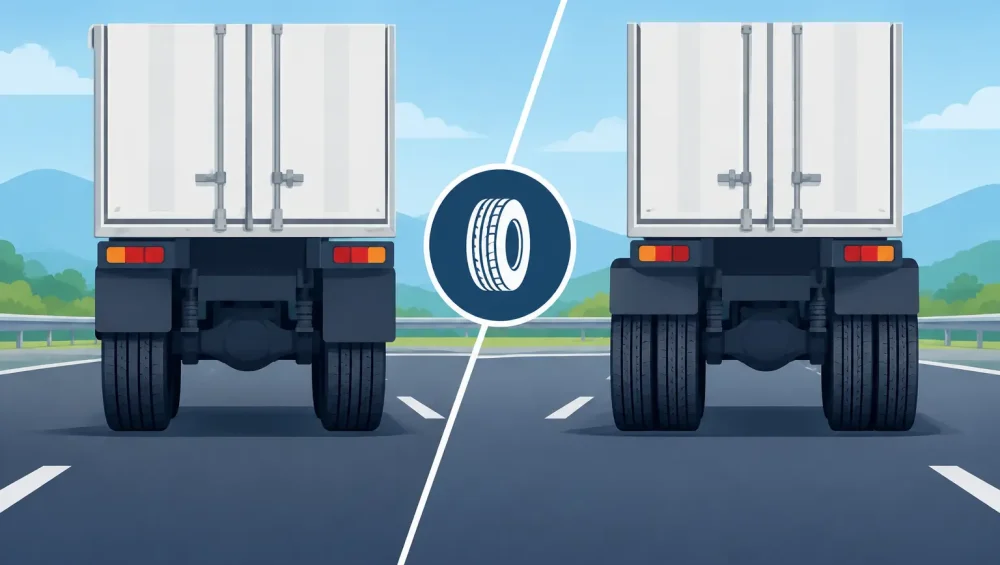
A dual tyre setup uses two tyres side by side on each end of an axle. This is common on drive axles and many trailer axles, particularly where vehicles carry sustained heavy loads. The combined tyre footprint spreads weight across more rubber and provides a degree of backup if one tyre is damaged.
A single setup, often called a wide-base single or super single, uses one wider tyre in place of a pair of duals. It needs the correct wheel, rim and axle arrangement. It is not simply a matter of removing one tyre from a dual set. The tyre’s load rating, wheel offset, clearance, suspension, guards and the vehicle manufacturer’s specifications all need to suit the conversion.
Both configurations can work hard. The right decision comes down to how and where the truck earns its keep.
Why Dual Tyres Still Suit Heavy Work
Dual tyres remain the practical choice for a lot of Australian transport work. On B-doubles, tippers, trailers and vehicles regularly operating at higher axle loads, the load-sharing advantage is hard to ignore. Instead of asking one tyre to carry the whole workload at that wheel position, the load is distributed over two tyres.
That larger contact area can also be useful where loose material, uneven work sites or mixed road conditions are part of the job. A dual setup generally provides predictable stability under a loaded trailer and can offer strong traction on drive axles when matched with the right tread pattern.
There is another major benefit: redundancy. If one tyre in a dual pair suffers a puncture or damage, the other tyre may help support the vehicle long enough for the driver to move to a safer location. It does not mean the truck should keep working as normal. Running on an overloaded companion tyre can quickly create heat damage and lead to a second failure. But it can make a roadside situation less immediate than a failed single tyre.
Duals also give fleet operators flexibility when replacing tyres. Depending on the application and company policy, replacing one tyre can be more straightforward than replacing a costly wide-base tyre. However, matched tyre sizes, tread depths and inflation pressures still matter. A badly mismatched dual pair can scrub, overheat and wear far faster than it should.
The trade-off with duals
The downside is extra weight, extra rolling resistance and extra maintenance points. Two tyres, wheels and valve positions per wheel end mean more inspections and more opportunities for an issue to go unnoticed. Stones can become trapped between dual tyres, pressure can differ from one tyre to the other, and an underinflated inner tyre is easy to miss without regular checks.
Dual tyres can also collect more mud and debris on site. For operators spending most of their time on sealed highways, the extra weight may be an unnecessary fuel penalty if their loads and axle ratings suit a single alternative.
Where Wide-Base Single Tyres Make Sense
Wide-base single tyres are often chosen to reduce tare weight. Removing one tyre and wheel from each dual position can provide a useful weight saving across the vehicle, potentially allowing more payload where legal mass limits and vehicle ratings permit it. For long-haul operators, that saving can add up over repeated runs.
Singles can also reduce rolling resistance in some applications, which may assist fuel efficiency. Fewer tyres mean fewer casings to rotate, inspect and replace. Access is simpler too. A driver or technician is not working around an inner dual, and there is no gap between tyres for rocks to lodge.
For vehicles travelling mainly on maintained roads, wide-base singles can provide a stable, efficient setup when they are specified properly. They are commonly considered for certain trailers and freight applications where weight savings, tyre management and fuel use are high priorities.
The trade-off with singles
The biggest consideration is that a single tyre has no partner beside it. If it is punctured, damaged or suffers a blowout, that wheel position is immediately out of action. A roadside response may be needed straight away, particularly on a loaded trailer or when the tyre has damaged guards, airlines or nearby components.
Wide-base singles can also be less forgiving in soft, heavily rutted or rocky conditions depending on the tyre pattern and ground pressure. A wider footprint does not automatically mean better flotation or traction in every situation. On some job sites, the tyre can be more exposed to sidewall cuts, sharp debris or edge damage.
Replacement cost is another factor. A quality wide-base tyre can cost more upfront than an individual dual tyre, and stock availability matters when you are a long way from a major depot. The savings only work if the tyre is right for the route, load and maintenance plan.
Load Ratings Come Before Fuel Savings
Fuel economy and tare weight get plenty of attention, but load capacity must come first. Every tyre, wheel and axle component has a maximum rating. The vehicle must comply with applicable mass limits and manufacturer requirements, not just look capable of carrying the load.
A dual arrangement may have a higher combined capacity for a given axle position than a single tyre option. In other cases, a modern wide-base tyre may be rated for the job. The answer is found in the actual tyre specification, approved rim, axle rating and intended use, not in a general rule about singles being lighter or duals being stronger.
This is especially relevant for tippers, quarry work, agricultural loads and long-haul trailers where weights can vary dramatically from one job to the next. A truck that runs empty or lightly loaded one day may be at its working limit the next. Build the tyre setup around the heaviest legitimate work it must perform, with the correct safety margin.
Pressure Checks Matter More Than the Configuration
A well-managed tyre setup will usually outperform a poorly managed one, whether it is single or dual. Incorrect inflation pressure is one of the fastest ways to burn through tyres and invite a breakdown.
Underinflation creates excessive heat, weakens the casing and increases shoulder wear. Overinflation can reduce the contact patch, make the ride harsher and accelerate centre wear. In dual assemblies, even a modest pressure difference can force the better-inflated tyre to carry more of the load.
Daily visual checks are worth the few minutes they take. Look for cuts, bulges, exposed cords, uneven wear, lodged objects and signs that a tyre is running hot. Check pressures cold and use the pressure recommendation suited to the actual load and tyre specification. If a tyre keeps losing pressure, do not keep topping it up and hoping for the best. Get the wheel, valve and tyre inspected before a small leak turns into a roadside failure.
Choose for the Route, Not the Sales Pitch
A highway fleet running consistent freight between Newcastle and regional NSW may benefit from the tare and efficiency advantages of a properly approved wide-base single setup. A tipper moving through rough access tracks, loose aggregate and changing payloads may be better served by duals that prioritise load distribution and work-site resilience.
Think about the whole operating picture: the heaviest axle loads, percentage of sealed-road running, road surface, turning conditions, tyre availability, likely damage risks and how quickly a replacement can be fitted if something goes wrong. Also consider your spare tyre strategy. A spare for a wide-base single setup needs to be compatible with the wheel position and load requirement, not simply whatever is available in the yard.
Changing configurations should be planned with qualified tyre professionals and checked against vehicle manufacturer guidance and legal requirements. A conversion that saves a few kilograms but causes clearance problems, compliance issues or repeated failures is not a saving.
Keep Your Truck Moving When a Tyre Lets Go
Whether you run singles or duals, tyre damage does not wait for business hours. Hunter Mobile Truck Tyres provides mobile tyre support for working trucks, trailers and fleets across the Hunter region, helping operators deal with punctures, blowouts, replacement tyres and pressure issues where the vehicle is stopped.
The useful question is not which setup wins on paper. It is which setup keeps your particular truck safe, legal and productive on its toughest run. Get the load data, tyre ratings and route conditions in front of you before making the call, and you will spend less time dealing with preventable tyre trouble at the roadside.