A damaged tyre at a quarry does more than stop one machine. It can hold up loading, delay haulage, leave drivers waiting and put pressure on the whole job. Fast quarry tyre replacement is about getting safe, suitable tyres fitted where the vehicle or plant has stopped, so your operation can get moving again without an unnecessary trip to town.
For tipper trucks, road trains, trailers, loaders and support vehicles, tyre trouble rarely arrives at a convenient time. Sharp rock, rough haul roads, heavy loads and long operating hours are hard on tyres. When a puncture or blowout takes a unit out of service, a mobile response can make the difference between a short interruption and a lost shift.
Quarry Tyre Replacement Without the Workshop Delay
Taking a disabled truck or piece of plant off-site for tyre work costs more than the repair itself. There is towing or recovery to consider, time lost travelling, driver hours, missed loads and the disruption of shifting work around one parked vehicle. In remote quarry locations, those delays can quickly stack up.
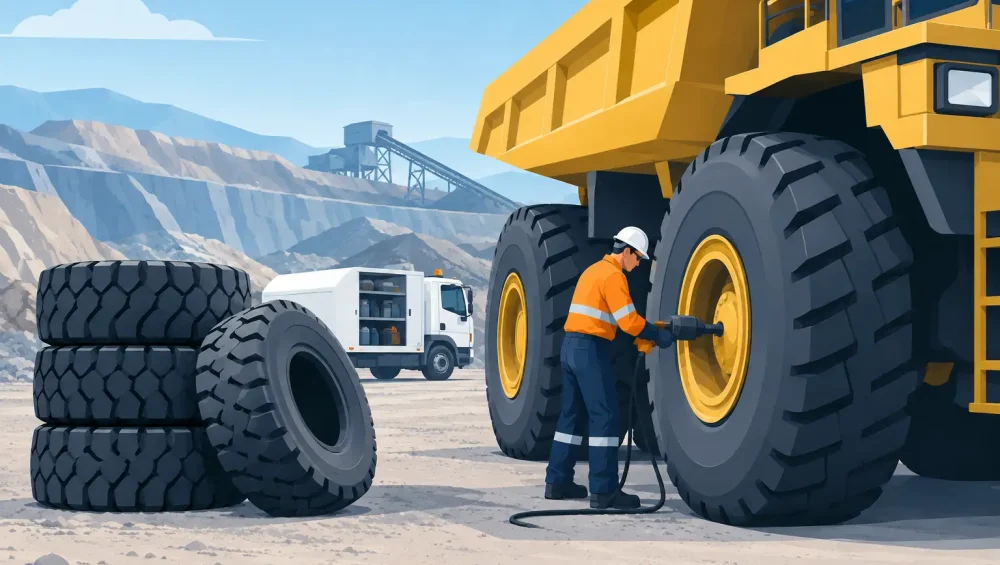
On-site tyre replacement removes much of that pressure. A qualified mobile tyre technician comes to the quarry, access road, stockpile area, depot or roadside location with the equipment needed to assess the damage and fit a replacement where practical. The goal is straightforward: make the vehicle safe, fit the right tyre for the job and get it back into service as soon as conditions allow.
Hunter Mobile Truck Tyres provides 24/7 mobile support for heavy vehicles across the Hunter and surrounding routes, including quarry, transport and earthmoving work. Whether the issue is on a haul road near Muswellbrook, at a depot in Newcastle or on the Golden Highway, prompt tyre help means less time waiting for a workshop opening.
When a Quarry Tyre Needs Replacing
Not every damaged tyre needs to be replaced. Some tread punctures can be professionally repaired if the tyre structure is sound and the damage is within a repairable area. But quarry work is unforgiving, and continuing on a compromised tyre can turn a manageable issue into a dangerous failure.
Replacement is generally the safer call when there is a sidewall cut, exposed cords, bead damage, separation, severe chunking or a blowout. A tyre with very low remaining tread may also need to come off, particularly if traction, braking or water clearing is affected. For steer tyres and heavily loaded positions, the margin for risk is even smaller.
The right decision depends on the tyre’s condition, its position on the vehicle, the load it carries and the surface it works on. A good mobile technician will inspect the damage before recommending a repair or replacement. That gives operators a practical answer rather than paying for a tyre that is not needed or risking a repair that will not last.
Blowouts Need a Controlled Response
After a blowout, pull up safely, keep people away from the damaged wheel area and secure the vehicle. Do not attempt to drive on a flat tyre to a more convenient location unless it is absolutely necessary and safe to do so. Running flat can destroy the casing, damage the wheel and create a far bigger repair bill.
Tell the tyre technician the vehicle type, tyre size if known, axle position, location and the nature of the damage. Clear details help bring the most suitable replacement and avoid a second callout.
Choosing Tyres for Quarry Trucks and Plant
The cheapest tyre is not always the lowest-cost option. A tyre that wears quickly, cuts easily or runs too hot under load can cost far more in downtime than it saves at purchase. Quarry operators need tyres matched to the work, not just tyres that fit the rim.
For trucks hauling between quarry and road, the tyre needs to handle mixed conditions. It must resist cuts and heat on-site while still delivering dependable wear and handling on sealed roads. Tipper trucks operating mostly on loose material may need a more aggressive tread pattern for traction, but that can involve a trade-off in road noise, rolling resistance and on-road wear.
Load rating matters just as much. Overloading tyres, under-inflating them or fitting a tyre unsuited to the axle position creates excess heat and flex. That shortens casing life and raises the chance of failure. Matching tyre specifications across paired positions also helps the vehicle track correctly and reduces uneven wear.
New tyres are often the right choice for high-mileage trucks, demanding haul work and steer positions where reliability is critical. Quality used tyres can be a sensible option in some trailer or lower-duty applications, provided their condition, tread depth and intended use have been properly assessed. The right option depends on the job, budget and how much downtime a failure could cause.
Tyre Pressure Is Part of Quarry Productivity
Pressure checks can seem like a small maintenance task until a tyre fails under load. Under-inflation causes excessive heat, sidewall flex and shoulder wear. Over-inflation reduces the tyre’s footprint, makes it more vulnerable to impact damage and can wear the centre of the tread faster.
Quarry conditions can hide pressure problems. A slow leak from a nail, rim issue or damaged valve may not be obvious during a rushed pre-start check, but it can become serious after hours of loaded hauling. Pressure should be checked cold and set to the manufacturer’s recommendation for the tyre, axle load and operating conditions.
Regular inspections should also look for cuts, embedded rock, exposed cords, cracks, irregular tread wear and signs of rubbing. Drivers are often the first to spot a change in handling or vibration. Acting early can save a casing and prevent an emergency callout in the middle of a busy run.
How Mobile Tyre Support Reduces Downtime
A reliable tyre response is more than arriving with a replacement. It starts with practical communication and finishes with a safe vehicle ready to return to work. For busy fleets, that may include emergency puncture repairs, replacement tyre fitting, wheel balancing where required, tyre rotation and pressure checks across multiple units.
Fleet tyre management also helps identify patterns before they become expensive. If the same axle is chewing through tyres, the cause may be alignment, suspension wear, incorrect pressures, loading practices or the wrong tyre for the surface. Replacing tyres without finding the underlying problem only repeats the cost.
For owner-drivers, keeping basic information handy can speed up any roadside or quarry callout. Record your tyre sizes, common fitments, wheel configuration and the location details for regular sites. If your work takes you into remote areas, plan for mobile coverage and avoid waiting until the last tyre is worn out before arranging replacements.
Keep People Clear and Keep the Job Moving
Tyre work around heavy vehicles is not a quick roadside job for untrained hands. Quarry traffic, uneven ground, loaded vehicles and damaged wheels all add risk. Isolate the work area, follow site procedures and allow the technician room to work safely. A fast response should never mean rushed safety.
When a tyre issue stops your truck, trailer or plant, report it early and give clear information. The sooner the right mobile tyre support is on the way, the sooner your crew can get back to the work that pays the bills.