A steer-axle tyre does far more than carry weight. It controls how accurately the truck tracks, how it responds under braking, and how much confidence the driver has in rain, ruts and rough shoulders. If you are asking which tyre suits steer axles, the short answer is a purpose-built steer tyre with a ribbed highway pattern, the correct load and speed rating, and a casing suited to the work your truck actually performs.
Putting the wrong tyre on the front can cost more than a set of rubber. It can lead to irregular wear, vibration, poor handling, higher fuel use and an early tyre failure that puts your truck off the road. For owner-drivers and fleet managers, choosing correctly starts with understanding what the steer axle demands.
Why Steer Axles Need a Different Tyre
The steer axle is responsible for direction, stability and a large share of braking control. Unlike drive tyres, which need traction to transfer power to the road, steer tyres need to roll straight, clear water effectively and hold their shape under load.
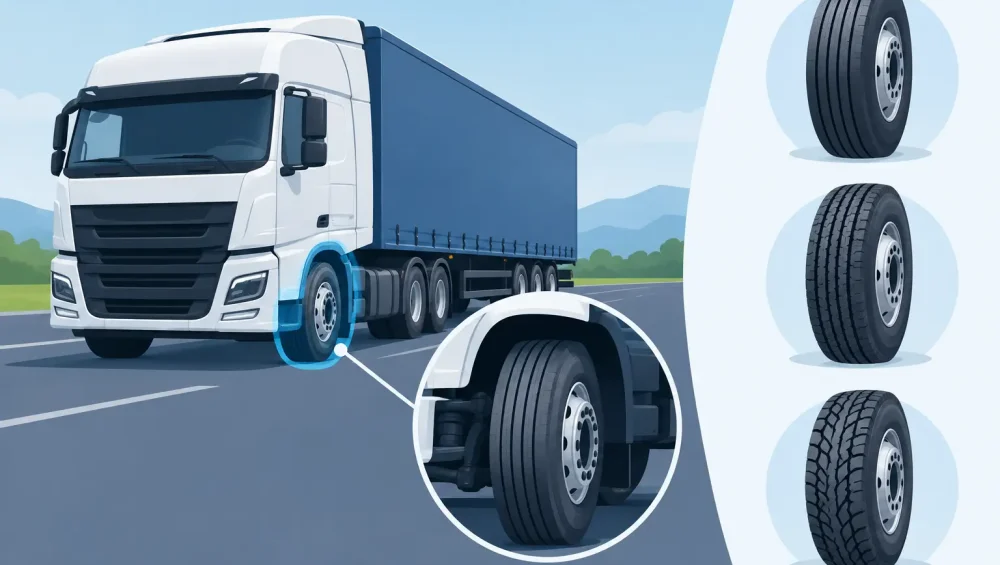
That is why most highway trucks run a rib-pattern tyre on the steering axle. Long, continuous ribs give a broad and stable contact patch. They help the tyre track straight on the M1 or Golden Highway, reduce wandering, and provide more even wear during long-distance running.
A drive-position tyre may physically fit on the front axle, but that does not make it the right choice. Deep lug patterns are designed to bite into the road surface and provide traction. On a steer axle, they can create extra road noise, uneven wear and less predictable steering feel. In some cases, they may also be unsuitable for the manufacturer’s intended fitment or your operating requirements.
Which Tyre Suits Steer Axles Best?
For most prime movers, rigid trucks and highway freight vehicles, a premium all-position or steer-position radial tyre is the practical choice. Look for a tyre specifically marked or specified for steer use, with a multi-rib tread design and strong shoulder construction.
The right tyre still depends on the job. A B-double covering sealed roads between Newcastle, Muswellbrook and Taree will usually benefit from a highway steer tyre designed for low rolling resistance, even wear and high kilometre performance. A tipper travelling between sealed roads, quarry entries and job sites may need a tougher regional steer tyre with more cut-resistant compounds and a casing built for harsher conditions.
For mixed-service vehicles, an all-position tyre can be a good answer where the tyre needs to cope with variable surfaces. The trade-off is that it may not deliver the same long, even highway wear as a tyre designed solely for front-axle highway use. There is no single tyre that is perfect for every truck. The best fit comes down to axle load, road surface, distance travelled, steering geometry and the driver’s daily route.
The Rib Pattern Matters
A steer tyre generally uses several continuous ribs running around the circumference of the tyre. These ribs support straight-line stability and help spread the load evenly across the tread. Fine sipes and grooves assist water evacuation, helping reduce the chance of water build-up between the tyre and road.
Pay attention to the shoulders as well. Strong, well-supported shoulders resist feathering and scrub wear, particularly where trucks spend time in tight yards, roundabouts, industrial estates or frequent urban delivery work. If the shoulders are wearing first, the problem may be alignment, inflation or driving conditions rather than the tyre brand itself.
Match the Load Rating to the Real Load
A steer tyre must have enough load capacity for the axle it is carrying. Never choose a tyre based on price alone or assume that a similar-looking tyre has the same load rating. Check the tyre size, load index, speed rating, rim compatibility and the vehicle manufacturer’s requirements before fitting.
Front axle weights can change with bull bars, winches, refrigeration equipment, body modifications and the way the vehicle is loaded. A tyre that is marginal on paper has little safety buffer once the truck is working hard. Heat is the enemy of tyres, and under-rated or under-inflated steer tyres generate more heat under load.
For fleet vehicles, record actual axle weights where possible. This gives you a far better basis for tyre selection than relying on assumptions.
Choose a Casing Worth Retreading
For commercial operators, the casing is often as important as the original tread. A quality steer tyre casing can be inspected and retreaded when the first tread life is finished, provided it has been looked after properly and has not suffered impact damage, severe heat damage or run-flat operation.
A cheaper tyre can look attractive at the time of purchase, but low initial cost does not always mean low cost per kilometre. If the tyre wears unevenly, cannot be retreaded or fails early, the saving disappears quickly. A sound casing, correctly inflated and rotated when needed, gives a fleet more value over the tyre’s working life.
This does not mean every truck needs the most expensive tyre on the shelf. A local truck doing modest kilometres has different needs from a long-haul prime mover. The aim is to buy the tyre that delivers safe, reliable kilometres for the work it will actually do.
Tyre Pressure Is Part of the Choice
Even the right steer tyre will not perform properly at the wrong pressure. Under-inflation causes heat, soft shoulders and excessive fuel use. Over-inflation can reduce the contact patch, make the ride harsher and increase wear through the centre of the tread.
Set pressures according to the tyre manufacturer’s load and inflation data, then check them cold as part of the pre-start routine. Do not rely on a visual check alone. A commercial tyre can be seriously low on pressure without looking obviously flat.
Slow leaks, damaged valves and faulty extensions can turn a good tyre into a roadside callout. Regular pressure checks are one of the simplest ways to protect steer tyres, avoid blowouts and keep a truck moving.
Watch for Wear Patterns Before They Become a Failure
Steer tyres often tell you when something else on the truck needs attention. Feathering across the tread can point to toe alignment issues. One-sided shoulder wear may indicate camber or worn steering and suspension components. Cupping or scalloping can be linked to balance issues, worn shocks or loose components.
Do not simply replace a worn steer tyre and send the truck back out. If the underlying cause is still there, the new tyre may wear out the same way. A proper inspection should include the steering system, suspension, wheel bearings, alignment and inflation pressures.
Rotation can also help extend tyre life where the tyre manufacturer and vehicle setup allow it. The key is to rotate early enough to correct minor wear, not after the tyre has already developed a severe pattern.
When a Steer Tyre Needs Immediate Attention
A steer-axle tyre is not a place to take chances. Pull up and arrange an inspection if you notice a bulge, exposed cords, deep cuts, rapid pressure loss, abnormal vibration, steering pull or a sudden change in handling. These signs can indicate internal damage that cannot be judged safely from the driver’s seat.
If a puncture occurs, avoid running the tyre flat to reach the next workshop. A short distance on a deflated tyre can destroy the casing and create further wheel or vehicle damage. Getting mobile help at the roadside, depot or job site can save the tyre where a safe repair is possible, or get the correct replacement fitted without losing a full day to a workshop visit.
Hunter Mobile Truck Tyres provides on-site support for trucks across the Hunter region, including emergency replacement, puncture assessment, tyre fitting and fleet tyre checks. For operators working long hours or running tight schedules, fast assistance can be the difference between a manageable delay and a missed delivery.
Make the Front Axle a Priority
The best steer tyre is the one built for your axle position, load and road conditions, fitted at the correct pressure and backed by a truck with sound alignment and steering components. A ribbed, purpose-designed steer tyre is usually the right starting point, but the final choice should always match the work your truck does day after day.
Before the next long run, take a proper look at the front tyres. A few minutes checking pressure, tread condition and unusual wear can prevent a costly stoppage kilometres down the road.