A Hunter Valley tyre callout review should answer one practical question: when a truck is stopped on the roadside, at a depot or on a job site, can the tyre provider get it moving again without wasting half the shift? For owner-drivers and fleet operators, a flat tyre is not a minor inconvenience. It can mean a missed delivery slot, a delayed load, an idle driver and a customer waiting for answers.
That is why a mobile tyre callout needs to be judged on more than whether a replacement tyre eventually arrives. The service has to be available when the problem happens, equipped for heavy vehicles and run by people who understand that every hour off the road costs money.
What a Hunter Valley tyre callout review should assess
The first measure is response, not promises. A useful callout service takes clear details, confirms the location and sends a technician who arrives prepared to assess the wheel, tyre and vehicle safely. On the Hunter Expressway, the M1, Golden Highway or a remote work site near Singleton or Muswellbrook, access and safety can affect the job. A good operator communicates honestly about this rather than offering vague arrival times.
The second measure is capability. Heavy truck, trailer, tipper and long-haul tyres are not a passenger-car job. The technician needs the right tools, suitable replacement stock and the experience to decide whether a puncture can be repaired or whether the tyre must come off the vehicle. The goal is a safe return to service, not a quick patch that creates another problem 50 kilometres down the road.
Finally, look at the whole outcome. Did the callout reduce downtime? Was the work explained clearly? Was the tyre pressure checked, the wheel fitted correctly and the vehicle left safe to continue? These are the details that separate a proper mobile truck tyre service from a basic roadside attendance.
Speed matters, but preparation matters more
Everyone wants a fast response when a tyre lets go. That is fair. But speed without preparation can mean a technician arrives, identifies the problem and then has to leave again to source a tyre or equipment. That adds delay when the driver is already stuck.
A reliable mobile provider works to avoid that second wait. Before attending, they should establish the vehicle type, tyre size, axle position, load conditions and exact location where possible. This helps the technician bring suitable options, whether the job calls for a repair, a new tyre, a used tyre or a complete wheel change.
There are times when the quickest option is not the right option. A tyre with sidewall damage, severe casing damage or signs of running flat may not be safely repairable. In that situation, replacement is the sensible call. An honest technician explains why, gives the available options and gets the vehicle back on the road with a tyre that suits the work ahead.
24/7 support is about more than after-hours phones
Breakdowns do not wait for business hours. Long-haul runs, early depot departures, agricultural work and overnight freight movements can all put a vehicle on the road well before dawn or long after dark. A 24/7 tyre callout is valuable only if it translates to genuine after-hours assistance.
For drivers, that means being able to make the call, provide their location and know someone is taking ownership of the problem. For fleet managers, it means fewer unknowns. Instead of trying to organise towing, workshop access and a replacement tyre through several providers, there is one mobile service focused on getting the vehicle rolling.
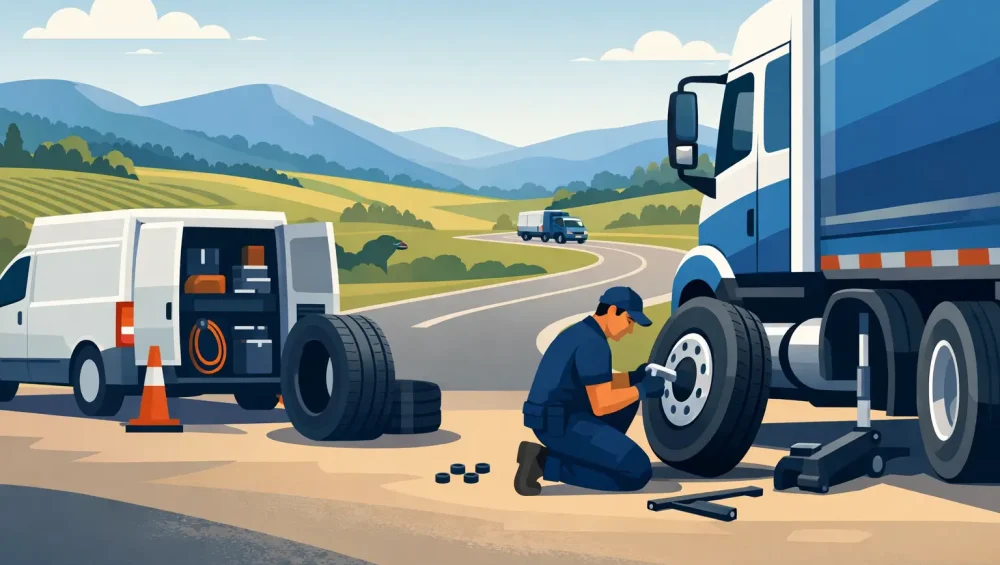
Hunter Mobile Truck Tyres is built around this need for direct, on-site heavy vehicle tyre support. Whether the truck is at a Newcastle depot, a Maitland job site, a roadside location around Cessnock or on a route through the wider Hunter, the priority is straightforward: attend, assess, repair or replace, and minimise the time the vehicle is out of action.
The right tyre decision protects the next shift
A roadside callout should not ignore what caused the tyre failure. Punctures happen, but repeated failures can point to underinflation, excessive load, poor rotation practices, wheel damage, alignment concerns or tyres that are simply worn beyond their working life.
This is where a quality callout has value beyond the emergency repair. The technician can check adjacent tyres, inspect visible damage and flag pressure concerns before the truck leaves. A simple pressure check can prevent another tyre failure on the next leg of the trip. Where appropriate, wheel balancing, rotation or a planned tyre replacement can be organised before a minor issue becomes a roadside breakdown.
For fleets, the decision between new and used truck tyres also depends on the application. New tyres may be the better investment for high-kilometre, long-haul work or steer positions where consistent performance matters most. A sound used tyre can be a practical, cost-conscious solution in the right application, provided it is inspected properly and suited to the vehicle’s operating conditions. The best choice is not always the most expensive one. It is the one that is safe, legal and fit for the job.
What drivers should have ready when they call
A clear first call helps get the right assistance moving quickly. Have the truck’s location as precise as possible, including a nearby town, road name, travel direction or kilometre marker. Mention whether the vehicle is loaded, whether it is safely off the traffic lane and which tyre has failed if you can identify it.
It also helps to provide the tyre size, tyre position and vehicle type. If those details are not available, a clear photo can assist where conditions allow. Do not put yourself at risk trying to inspect a damaged tyre beside live traffic. Park safely, use required warning equipment and follow site or road safety procedures while help is on the way.
For fleet staff calling on behalf of a driver, pass on the driver’s mobile number and vehicle details at the start. That avoids delays caused by messages being relayed between the office, the driver and the technician.
A callout is cheaper when it prevents longer downtime
The visible cost of a mobile tyre callout is only one part of the decision. The bigger cost is often the vehicle sitting still. A missed booking, spoiled run schedule, overtime payment, recovery charge or unhappy customer can quickly outweigh the cost of getting qualified tyre help to the site.
Mobile service is especially useful where taking the vehicle to a workshop is impractical. A loaded trailer, earthmoving vehicle or truck with a damaged tyre may not be able to travel safely. Sending the tyre service to the vehicle can remove towing costs and reduce disruption to the rest of the fleet.
That said, not every tyre issue can or should be completed at the roadside. Major wheel damage, mechanical faults or unsafe site conditions may require further repair elsewhere. A professional provider will say so plainly and help identify the safest next step rather than forcing a roadside fix.
Keep the next tyre failure from becoming urgent
The strongest tyre callout review is written in operating time, not marketing words. It is the driver who gets to the next delivery, the fleet that avoids losing a vehicle for a day and the operator who knows the repair was carried out properly.
If a truck, trailer or work vehicle is sitting on a damaged tyre, act early. Get the location and vehicle details ready, call for mobile heavy vehicle tyre support, and have the issue assessed before a manageable puncture turns into a costly blowout or a longer delay.