A tyre failure rarely happens at a convenient time. It happens loaded on the highway, halfway through a delivery run, leaving a job site, or before first light when every lost minute starts costing money. That is exactly why a 24 7 tyre callout matters for truck operators, fleet managers and owner-drivers who need a fast fix on-site, not a workshop delay and a blown schedule.
For heavy vehicles, tyre trouble is never just a tyre problem. It affects delivery windows, driver safety, customer commitments and the rest of the day’s run sheet. If the truck is stranded on the shoulder, stuck in a depot, or parked at a remote site, waiting around is not a workable option. A mobile response gets the right support to the vehicle and gives you a practical path forward with less downtime.
Why a 24 7 tyre callout matters in the real world
When a steer tyre is damaged or a drive tyre lets go under load, the issue moves quickly from inconvenience to operational problem. A missed slot at a warehouse can push the rest of the route behind. A delayed tipper can hold up a site. A grounded trailer can leave freight sitting still when it should be moving.
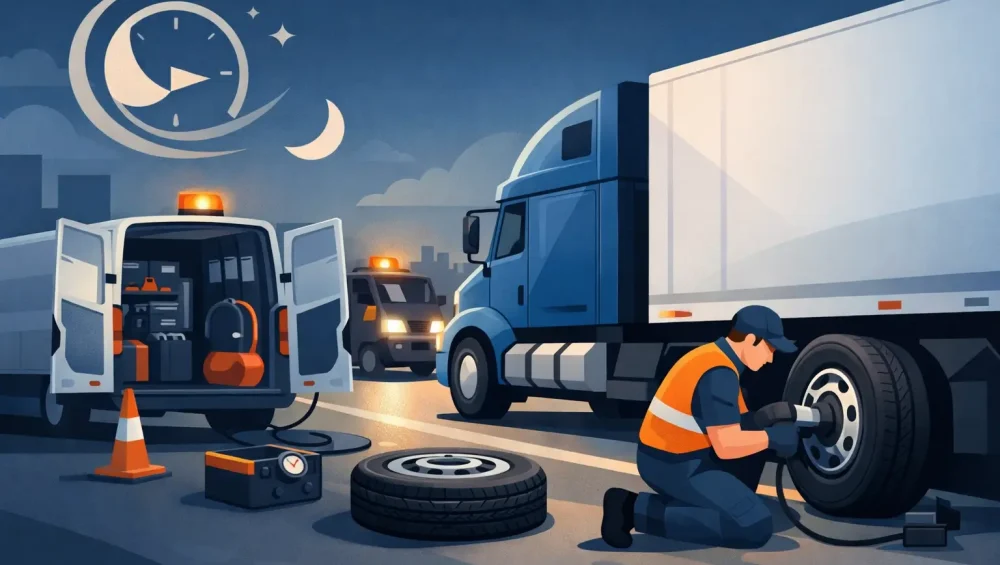
That is the real value of a 24 7 tyre callout. It is not only about replacing or repairing a tyre. It is about keeping work moving when the unexpected hits. Fast mobile service means the technician comes to you with the gear, the replacement options and the experience to assess what is safe and what needs doing straight away.
For transport businesses, this can be the difference between a manageable delay and a major disruption. For owner-drivers, it can be the difference between salvaging the job and losing the day.
What a mobile truck tyre service should actually deliver
Not every roadside tyre service is set up for heavy vehicles. Trucks, trailers, tippers and commercial fleets need a provider that understands load demands, wheel positions, tyre wear patterns and roadside safety. A proper mobile service should do more than show up. It should arrive ready to solve the problem.
That means carrying suitable truck tyre stock, having the tools for on-site fitting, and knowing when a puncture repair is appropriate and when a full replacement is the only safe call. It also means clear communication. If a vehicle is off the road, the driver or fleet manager needs straight answers, realistic timing and a fix that gets the unit back into service as quickly as possible.
A good operator will also look beyond the obvious failure. Sometimes the flat is only part of the story. Low pressure, uneven wear, wheel issues or damage from running underinflated can point to a bigger problem that needs attention before the next breakdown.
Repairs versus replacement – it depends on the damage
There is no one-size-fits-all answer once a truck tyre fails. Some punctures can be repaired safely, particularly when the damage is limited and the casing remains sound. Other situations call for immediate replacement, especially after a blowout, sidewall damage, severe tread separation or damage caused by driving on the tyre while deflated.
This is where experience counts. The fastest option is not always the safest one, and the cheapest option can end up costing more if it leads to another failure down the track. A reliable mobile technician will make the call based on condition, position, workload and roadworthiness, not guesswork.
The real cost of waiting for help
Every transport operator knows downtime has a price. There is the direct cost of the tyre issue itself, but there is also the lost delivery time, idle driver time, rescheduling, possible penalties, customer frustration and pressure on the rest of the fleet.
For smaller operators, one truck off the road can throw the whole week out. For larger fleets, repeated tyre delays can quietly chew through margins and create avoidable headaches in dispatch. That is why response time matters so much. A mobile tyre service that answers after hours and gets moving fast is protecting more than a tyre budget. It is protecting your operation.
In regional areas and on long-haul routes, the stakes can be even higher. Distance from workshops, limited roadside support and tight freight schedules leave less room for delays. Having access to a 24 7 tyre callout gives drivers and fleet controllers a practical backup when things go wrong outside normal business hours.
24 7 tyre callout support for fleets and owner-drivers
The needs of a fleet manager are not always the same as the needs of an owner-driver, but both rely on dependable service. Fleets often need consistency, account support, regular tyre checks and fast response across multiple vehicles. Owner-drivers usually need quick decisions, fair pricing and confidence that the job will be done properly the first time.
A mobile truck tyre service should be able to support both. That might mean emergency roadside replacement overnight, on-site fitting at a depot during a shift change, or scheduled checks to pick up worn tyres before they become roadside failures. The strongest service model is not just reactive. It helps reduce the chance of the next callout as well.
That is especially useful for businesses running routes across the Hunter, Newcastle and the wider regional network, where vehicles may move between highways, industrial areas and remote sites in a single day. When tyre support comes to the truck, you keep control of the day instead of losing hours getting the vehicle to a workshop.
What drivers should do while waiting for a mobile tyre technician
Once the vehicle is stopped safely, the priority is reducing risk and giving clear information. The more accurate the details, the faster the response tends to be. Vehicle type, tyre size if known, exact location, the nature of the damage and whether the truck is loaded all help the technician prepare.
Drivers should avoid moving the vehicle unless it is necessary for safety. Continuing on a damaged tyre can destroy the casing, damage the rim and turn a repairable issue into a more expensive replacement. It can also create extra safety risks, particularly on steer positions or fully loaded units.
This is also where a calm, practical response counts. A good mobile service is used to urgent jobs and roadside conditions. The aim is to stabilise the situation quickly and get the vehicle moving again with the least disruption possible.
More than emergencies – preventing the next breakdown
Emergency response is essential, but prevention saves the most time over the long run. Pressure checks, wheel balancing, tyre rotation and regular inspections all help spot issues before they become breakdowns at the side of the road. Uneven wear, embedded damage and recurring pressure loss are often early warnings that should not be ignored.
For fleets, this is where ongoing tyre management pays off. Scheduled maintenance reduces unplanned callouts, improves tyre life and gives operators better visibility over replacement timing. For owner-drivers, it means fewer nasty surprises and a better chance of getting full value from every tyre on the vehicle.
A service provider like Hunter Mobile Truck Tyres is strongest when it can handle both sides of the job – urgent roadside support when things go wrong, and practical on-site tyre care that helps stop those failures happening so often.
Choosing the right mobile tyre partner
When you are comparing providers, speed matters, but so does capability. You want a team that knows heavy vehicles, answers the phone after hours and can work across roadside locations, depots and job sites. You also want honest advice. If a tyre can be repaired safely, you should be told. If it needs replacement, that should be made clear without mucking around.
Coverage matters too. If your trucks run local one day and regional the next, you need a provider that understands the routes and can respond where your vehicles actually operate. Competitive rates are important, but reliability is what keeps freight moving.
A 24 7 tyre callout is ultimately about confidence. Confidence that when a tyre fails at the worst possible time, someone can get there, assess it properly and sort it out without wasting half the shift.
For busy truck operators, that peace of mind is not a luxury. It is part of staying on the road, looking after drivers and keeping commitments when the day does not go to plan. When the next tyre issue hits, the best outcome is simple – fast help, on-site, and back to work.