A truck tyre lets go at highway speed and everything changes in a second. The steering can pull hard, the load can shift, the trailer can feel unsettled, and what was a normal run turns into an urgent safety problem. That is why truck tyre blowout recovery is not just about fitting another tyre – it is about protecting the driver, the vehicle, the freight and everyone else on the road.
For owner-drivers, fleet operators and site supervisors, the real cost of a blowout is rarely just the damaged casing. It is the missed delivery window, the stranded truck, the risk of further wheel-end damage, and the pressure to get moving again without making the situation worse. When a blowout happens, the best response is fast, calm and practical.
What truck tyre blowout recovery actually involves
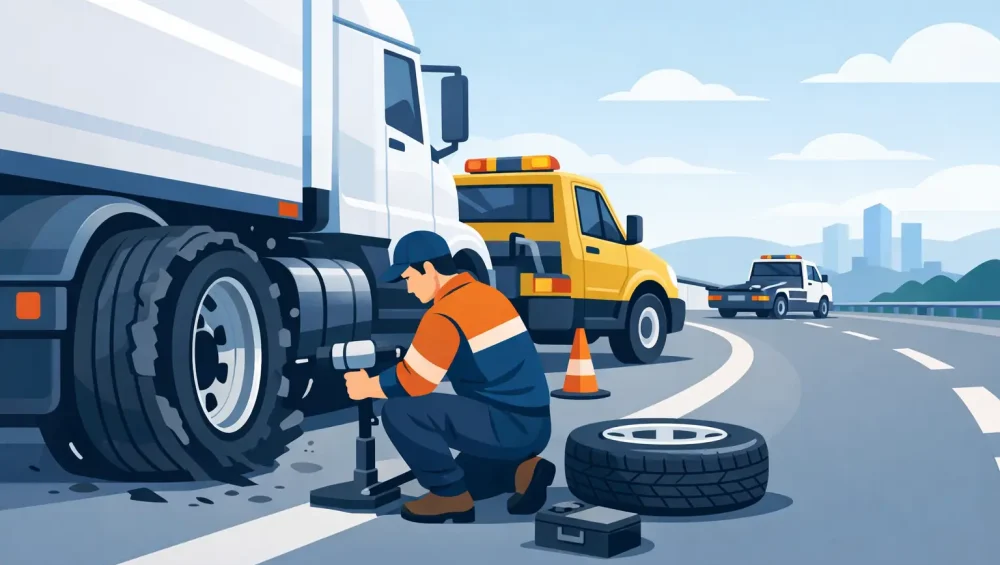
A proper truck tyre blowout recovery job starts well before a new tyre goes on. First, the vehicle needs to be made safe where it has stopped. Depending on the location, that might mean roadside traffic exposure, a shoulder on the M1, a depot yard, a quarry track or a paddock access road. Every one of those situations comes with different risks.
Next comes the inspection. A blowout can do more than destroy a tyre. It can damage the rim, air lines, mudguards, guards, brake components or nearby tyres. On trailers, there can also be damage from shredded tyre debris whipping around the wheel area. If the response is rushed and those issues are missed, the vehicle can be back on the road with another failure waiting to happen.
Then there is the replacement itself. The right tyre has to match the application, load and axle position. A steer position is not the same as a drive or trailer position, and using the wrong casing as a quick fix can create a new problem further down the road. Good recovery is about getting the truck mobile again without compromising safety or tyre life.
The first few minutes after a blowout matter most
Most drivers know the feeling when a tyre fails – the bang, the vibration, the sudden pull, or the trailer instability. In that moment, overcorrecting is one of the biggest risks. The goal is to keep control, reduce speed steadily and bring the vehicle to a stop in the safest available position.
Once stopped, the priority is visibility and safety. Hazard lights, safe positioning and staying clear of traffic matter more than trying to inspect the damage straight away. If the truck is in a dangerous spot, especially on a busy road or narrow shoulder, it often makes more sense to call for mobile support immediately rather than attempt anything at the roadside.
This is where experience counts. Blowout recovery is not a standard passenger vehicle tyre change. Heavy vehicles have different loads, different clearances and different risks. A roadside response has to account for all of that while keeping downtime as low as possible.
Why blowouts happen in the first place
A blowout rarely comes out of nowhere. In many cases, the tyre has been under pressure for some time – just not in the way drivers want. Underinflation is one of the biggest causes. A tyre running low builds heat, and heat is the enemy of casing integrity. Overloading can do the same thing, especially over long distances or in hot conditions.
Road hazards also play a part. Sharp debris, potholes, broken edges, rough access roads and kerb strikes can weaken a tyre well before it fails. On work sites and regional routes, this is even more common. A cut or impact break may not look dramatic at first, but once the structure is compromised, a blowout can follow later under load.
Then there is wear. A tyre near the end of its life is naturally more vulnerable, but uneven wear is often the bigger warning sign. Poor alignment, wheel balance issues, incorrect pressures and suspension faults all shorten tyre life and increase blowout risk. If one tyre in the fleet has failed, it is worth asking whether others are close behind.
Truck tyre blowout recovery is about more than speed
Fast response matters. No operator wants a prime mover, trailer or tipper sitting idle for hours. But speed on its own is not enough. The recovery has to be done properly.
That means arriving with the right equipment, understanding heavy vehicle tyre setups, and being ready to work on-site without sending the truck off to a workshop unless absolutely necessary. For transport businesses, that convenience matters. For drivers stuck roadside, it matters even more.
A mobile service can often get the job done where the vehicle stands – whether that is on a roadside shoulder, at a customer site, in a yard or on a remote route. That saves time, removes the need for towing in many cases and helps reduce the flow-on disruption to runs, schedules and clients.
What a professional roadside response should check
When a technician attends a blowout recovery, the best outcome is not simply replacing what is visibly damaged. A proper check should look at the wheel assembly, valve components, inflation condition and nearby tyres. If the failed tyre has come apart badly, there may be hidden damage that affects the next leg of the trip.
It is also worth checking why the failure happened. If the cause was a puncture from road debris, replacing the tyre may be enough. If the cause was chronic underinflation, overloading or dual tyres rubbing due to pressure mismatch, the operator needs to know. Otherwise, recovery becomes a revolving door of repeat failures.
This is where practical tyre support pays off. A quick, honest assessment can stop one roadside callout turning into three more over the next fortnight.
When used tyres make sense and when they do not
For some operators, especially when budgets are tight or a temporary solution is needed to get back to base, a quality used truck tyre can be a sensible option. It depends on the axle position, condition and application. On a trailer in the right circumstances, it may be a practical short-term recovery choice.
But there are trade-offs. On steer axles or higher-demand applications, a new tyre is often the safer and smarter call. The point is not to push one option every time. The point is to fit the right tyre for the job, the load and the road ahead.
A good mobile tyre service should be upfront about that. Busy operators do not need sales talk in the middle of a breakdown. They need clear advice, fair pricing and a recovery plan that makes sense.
Reducing the chance of the next blowout
The best truck tyre blowout recovery is the one you never need. That comes down to regular checks, sensible tyre management and fixing small issues before they become expensive ones.
Pressure checks are the obvious starting point, but fleets also benefit from regular inspections for irregular wear, sidewall damage, embedded debris and pairing problems in duals. Rotation and balancing have their place too, especially in operations where tyre wear patterns are repetitive. If trucks are constantly running overloaded, over rough ground or over long highway distances in heat, tyre planning needs to reflect that reality.
For owner-drivers, this can be as simple as building tyre checks into the daily routine rather than waiting for visible trouble. For fleet managers, it often means having a service partner who can spot patterns across multiple vehicles and act before downtime stacks up.
Why local mobile support changes the outcome
When a truck is off the road, every minute drags. Waiting on the wrong provider, trying to explain heavy vehicle tyre sizes to a general roadside service, or being told the vehicle has to be moved to a workshop all adds delay.
That is why specialist mobile support makes such a difference. A team that works on truck tyres every day understands the urgency, the equipment and the practical reality of getting heavy vehicles moving again. In the Hunter region, that could mean responding to a breakdown on the expressway, a depot issue in an industrial area, or a tyre failure on a rural freight route without turning it into an all-day problem.
Hunter Mobile Truck Tyres is built around that exact need – fast on-site support, 24/7 availability and practical tyre solutions that help keep trucks, trailers and fleets working anytime and anywhere in Raymond terrace Hunter Valley, Newcastle, Beresfield, Tomago, Maitland, Rutherford, Hunter expressway, Singleton, Muswellbrook , scone , golden highway, M1 , Dungog, 12 Mile creek, port Stephens, Nelson bay, tea gardens, Taree , bulahdelah, Morisset, Tuggerah , Wyong, bellbird and Cessnock for all trucks, tipper trucks, long haul tyres
If you run heavy vehicles, the smartest move after a blowout is not to improvise. It is to get the right help quickly, make the site safe, and have the tyre and wheel assembly checked properly before the truck rolls again. One calm decision at the roadside can save a lot of grief on the next hundred kilometres.