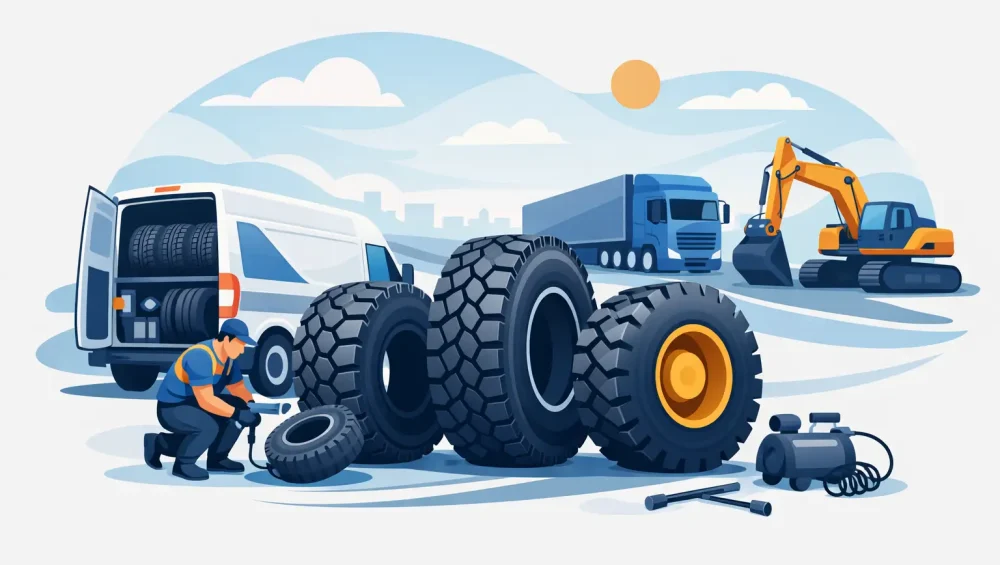
A loaded truck on the shoulder at 2 am is not just a tyre problem. It is missed delivery windows, stressed drivers, unhappy clients and money bleeding out by the minute. That is why mobile heavy vehicle tyres services matter – they get the vehicle sorted where it stands, without the extra delay of limping to a workshop or waiting until business hours.
For owner-drivers, fleet managers and operators running trucks, trailers, tippers and earthmoving gear, tyre issues rarely happen at a convenient time. A puncture at the depot before first load-out is frustrating. A blowout on the highway is a different level of disruption altogether. In both cases, the real priority is the same: get a qualified technician to the vehicle fast, fit the right tyre or carry out the right repair, and get the job back on track safely.
Why mobile heavy vehicle tyres services matter
Heavy vehicles do not have the luxury of easy downtime. When a car gets a flat, it is an inconvenience. When a truck goes down, the impact spreads quickly across the whole job. Loads run late, schedules shift, drivers lose hours, and the next booking can be affected too.
That is where mobile service changes the equation. Instead of sending the vehicle off the road and into a workshop queue, the tyre service comes to the site, depot, roadside or work area. That cuts dead time and often avoids the need for a tow. For transport businesses, that practical difference matters more than anything written on a brochure.
There is also a safety factor. Driving on a damaged or badly worn tyre to reach a tyre shop can turn a manageable issue into a much bigger one. Heat build-up, sidewall failure and tread separation do not give much warning once things start to go wrong. On-site support means the vehicle stays put until the tyre is assessed properly.
What a good mobile heavy vehicle tyres service should actually do
Not every tyre callout is the same. Some jobs need a straightforward puncture repair. Others need a full replacement, wheel balancing, rotation or pressure correction across multiple axles. The value of a proper mobile service is not just that someone turns up. It is that they arrive ready to solve the problem properly.
A reliable provider should be equipped to deal with emergency roadside callouts as well as planned tyre work at depots and job sites. That includes fitting new and used truck tyres where appropriate, checking for uneven wear, identifying pressure issues, and making sure the tyre that goes on suits the load, route and operating conditions.
There is a trade-off here worth being honest about. Not every tyre can or should be repaired on the spot. Some damage is simply too severe, especially after a blowout or sidewall failure. A good technician will not patch something unsafe just to get a vehicle moving. Fast service matters, but safe service matters more.
The cost of waiting too long
A lot of heavy vehicle tyre failures start as smaller problems that were easy to miss or easy to ignore. Low pressure, irregular wear, road debris damage and overloaded runs all shorten tyre life. The trouble is that tyres often keep working right up until they do not.
That is why operators who rely only on emergency callouts usually pay more over time than those who combine urgent support with regular tyre checks. One roadside failure can cost far more than the price of routine maintenance once you factor in lost time, callout fees, delayed jobs and customer knock-on effects.
Fleet managers know this well. The direct tyre cost is only one part of the picture. The bigger cost is downtime. If a vehicle is meant to be earning and is instead sitting still waiting on a fix, the tyre issue has already become an operations issue.
When on-site tyre support makes the biggest difference
Roadside breakdowns get the most attention because they are urgent, but depot and site-based tyre work can be just as valuable. If a truck is due out and a tyre inspection picks up a problem before departure, that can save a major headache later in the day.
On construction sites, farms and regional worksites, mobile support is often the only practical option. Moving a heavy vehicle with tyre damage across rough ground or longer distances is not always possible, and it is rarely efficient. Having a tyre technician come directly to the vehicle keeps the job moving with less disruption.
For fleets, mobile service also helps with scheduling. Tyre rotations, pressure checks and replacements can be done around operating hours rather than forcing vehicles into a workshop line-up. That flexibility is a major advantage when every truck has a booked task and little room for avoidable delays.
Choosing the right tyre is not just about price
There is always pressure to keep running costs down, and tyres are a visible expense. But choosing the cheapest option every time can cost more if the tyre is not suited to the work. Highway work, regional haulage, stop-start urban delivery, quarry access and mixed-surface operations all place different demands on a tyre.
Load rating, tread pattern, casing quality and expected wear life all matter. So does whether a new or used tyre makes sense for the job. In some cases, a quality used tyre can be a practical short-term option. In other cases, especially with higher kilometre work or heavier loads, a new tyre is the smarter call.
This is where practical advice matters. A good mobile tyre service should not just fit whatever is easiest off the truck. They should help the operator make the best decision for the vehicle, the route and the budget. Sometimes the right answer is the premium option. Sometimes it is a more economical tyre that still does the job safely and reliably.
What drivers and fleets should watch for
Tyres rarely fail without leaving clues. Uneven tread wear, steering pull, vibration, frequent pressure loss and visible sidewall damage are all signs something needs attention. The earlier those signs are picked up, the more options there usually are.
Pressure is one of the biggest issues. Underinflation creates excess heat and wear, while overinflation can reduce contact patch and affect handling and tread life. For heavy vehicles doing long distances or carrying variable loads, regular pressure checks are simple insurance against more expensive problems.
It also pays to look beyond the damaged tyre itself. A puncture may be bad luck. Repeated tyre failures on the same axle can point to alignment problems, loading issues or suspension wear. Fixing the tyre without fixing the cause just means the same problem comes back.
Why local response matters on the road
In regional transport work, distance changes everything. A fast response in theory is no use if the service provider is hours away or does not cover the route your vehicles actually run. Operators need a tyre partner who understands local roads, freight corridors and the reality of after-hours callouts.
That is especially true across the Hunter, where trucks move between depots, highways, industrial sites and regional roads at all hours. A mobile service with real local coverage can usually respond faster, reach awkward locations more efficiently and carry the sort of stock that suits the vehicles working in the area. That local knowledge saves time when time is exactly what the customer does not have.
For businesses that need both emergency response and ongoing support, that combination is even more valuable. Hunter Mobile Truck Tyres works with operators who need urgent help on the roadside as well as practical fleet tyre management that helps reduce breakdowns before they happen.
The real value of 24/7 support
Round-the-clock service is easy to advertise. The real test is whether it means someone picks up, turns up and gets the job done when the pressure is on. For transport operators, tyre support is not a nice extra. It is part of keeping commitments to customers.
A 24/7 mobile heavy vehicle tyres service gives drivers and fleet managers a back-up plan when things go wrong outside normal hours. That matters for overnight freight, early departures, weekend work and long-haul runs where workshop access is limited. It also provides peace of mind for the people making the call, because they know there is a practical next step instead of a dead end.
The strongest tyre support is a mix of speed, honesty and capability. Quick arrival matters, but so does getting straight answers about repairability, tyre condition and the best fix for the vehicle. Operators do not need sales talk on the side of the road. They need the job handled properly so they can get moving again.
If your trucks, trailers or heavy equipment cannot afford to sit still, mobile tyre support is not just convenient. It is part of running a smarter operation, protecting your schedule and keeping your drivers safer when the unexpected hits.