A tyre rarely gives a convenient warning. It lets go on the M1 with a loaded trailer, picks up a puncture leaving a site, or fails halfway through a tight delivery run. Knowing when to replace truck tyres is not just about staying compliant. It is about keeping your truck moving, protecting your driver and avoiding a much bigger bill from downtime, recovery or damage.
For owner-drivers and fleet operators, the right time to replace a tyre depends on its tread, condition, age, load history and the work it is doing. A steer tyre, drive tyre and trailer tyre can all wear differently. The key is to spot trouble while it can still be planned, rather than waiting for an urgent roadside callout.
When to replace truck tyres: the clear warning signs
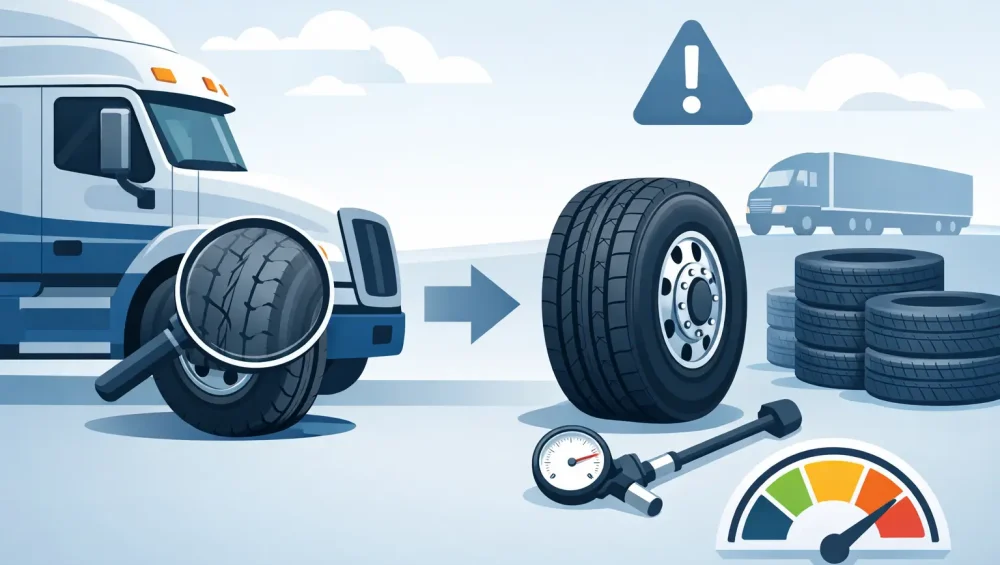
Tread depth is the first check, but it should not be the only one. Australian road rules set minimum tread requirements, yet waiting until a tyre reaches the legal limit leaves no safety margin. In wet conditions, shallow tread clears less water, braking performance can suffer and irregular wear may expose a problem that has been building for months.
Replace tyres before they become marginal if you are seeing the signs below:
- Tread is worn close to the legal minimum or is noticeably lower on one shoulder, across the centre or in patches.
- Cords, steel belts or fabric are visible through the rubber.
- The sidewall has a cut, deep scuff, bulge, split or impact damage.
- There are cracks around the sidewall, tread blocks or bead area.
- A puncture is in an unsafe repair area, has caused internal damage, or keeps losing pressure after repair.
- The tyre has developed a vibration, out-of-round feel, separated tread or repeated balancing issue.
A bulge is a stop-work sign. It can mean the internal casing has been damaged, even if the outside of the tyre does not look dramatic. Do not keep rolling to finish the day. Park safely and arrange a replacement.
Tread wear tells you what the truck needs
Even tread wear usually means the tyre is doing its job. Uneven wear means there is often another issue to fix before fitting a new tyre. Otherwise, the replacement can wear out early and you are back where you started.
Wear in the centre of the tread commonly points to over-inflation or a tyre that is not suited to the operating load. Both shoulders wearing faster can indicate under-inflation, overload or hard cornering. One-sided wear may be related to wheel alignment, suspension components, axle geometry or camber. Cupping and scalloped wear can come from worn shocks, wheel balance problems or loose mechanical parts.
On drive tyres, look for irregular block wear, tearing and damage from gravel, site work or high-torque applications. On trailer tyres, watch for scrub wear caused by axle alignment issues. Steer tyres deserve particularly close attention because their condition affects directional control, braking and driver confidence.
Replacing the tyre without checking the cause can be false economy. A quick pressure check, wheel balance, rotation plan or alignment inspection may add life to the tyres that remain on the truck.
Do not judge tyres by kilometres alone
There is no single kilometre figure that tells every operator when a truck tyre is finished. A long-haul prime mover on sealed roads may get a very different result from a tipper working rough access tracks, an earthmoving truck on sharp rock or a local delivery vehicle doing constant stop-start work.
Payload, tyre pressure, driving speed, road surface, heat, wheel position and maintenance all matter. Two tyres fitted on the same day can reach replacement point at different times. That is why a regular visual inspection is more useful than relying on the odometer alone.
Damage after a puncture or blowout
Not every puncture means a tyre must be replaced. A repair may be suitable where the damage is small, located in a repairable section of the tread and has not been driven on flat. The tyre needs to be properly assessed from the inside, not simply plugged from the outside and sent back to work.
If a tyre has run under-inflated or flat, the internal structure may have overheated or broken down. The sidewall can look acceptable while the casing is no longer safe for service. This is one reason drivers should pull up as soon as it is safe when they notice a pressure loss, vibration or handling change.
After a blowout, inspect more than the failed tyre. Check the rim, valve, wheel studs, mudguards, brake lines and nearby tyres for debris damage. On a dual-wheel setup, the companion tyre may have carried extra load or suffered impact damage when the first tyre failed.
Age, heat and storage still matter
Truck tyres can age even when they have plenty of tread left. Vehicles that sit for long periods, seasonal agricultural equipment, spare wheels and lightly used trailers are common examples. Sun exposure, heat cycles, ozone and poor storage can dry the rubber and create cracking.
Check the tyre’s date code and inspect it closely if it has spent years in service or storage. There is no one replacement age that suits every application, because tyre condition and manufacturer guidance matter. But visible cracking, hardening rubber or recurring pressure loss are good reasons to have it assessed rather than assuming unused tread equals a safe tyre.
Heat is another tyre killer. Under-inflation creates flexing, flexing creates heat, and heat can damage the casing fast when the truck is loaded. Hot weather, long grades and sustained highway running increase the risk. Pressure checks should be done when tyres are cold wherever practical, using the correct pressure for the tyre, axle and load.
Make tyre checks part of every run
A driver’s pre-start walk-around is the cheapest tyre maintenance program a business can run. It takes minutes and can prevent hours of lost work. Look for cuts, lodged objects, low tyres, loose valve caps, uneven wear, rubbing marks and debris between duals. Listen for leaks and pay attention to any new vibration or pull through the steering.
For fleets, record tread depths, pressures, repairs, rotations and replacements by vehicle and wheel position. That information helps identify patterns. If the inside trailer tyres are always scrubbing out, or the steer tyres are wearing early, there is a mechanical or operational issue worth fixing.
It also makes replacement planning easier. You can order the right tyre and schedule fitting at the depot or job site before the tyre becomes an emergency. Planned replacement costs less than a missed load, a stranded driver and an after-hours recovery.
Choose the right replacement tyre for the job
The cheapest tyre is not always the lowest-cost option. A tyre needs to suit the application: highway work, regional freight, mixed service, construction access, quarry work, agriculture or trailer use. The wrong tread pattern or load rating can wear quickly, lose traction or create handling issues.
Used truck tyres can be a practical option in the right situation when their condition, remaining tread and intended use are properly assessed. For high-load, long-distance or safety-critical positions, many operators prefer new tyres from a trusted supply. The decision comes down to the job, the wheel position, your risk tolerance and the cost of downtime.
When replacing one tyre in a dual set, ensure the rolling circumference is suitably matched to its partner. A major mismatch can force one tyre to carry more work, leading to heat and premature wear. Your technician can help assess whether one tyre, a pair or a complete axle set is the sensible call.
Get help before the truck is parked up
If you find damage, low tread or an unexplained pressure problem, act before the next run. Hunter Mobile Truck Tyres provides on-site tyre fitting, puncture assessment, pressure checks, balancing and emergency replacement for trucks, trailers and working fleets across the Hunter and surrounding routes. That means less time organising a workshop visit and more time keeping freight, equipment and drivers moving.
A tyre that is still rolling is not automatically a tyre that is safe to keep. Check it early, replace it before failure becomes your schedule, and give your driver the confidence to get home without an avoidable roadside stop.