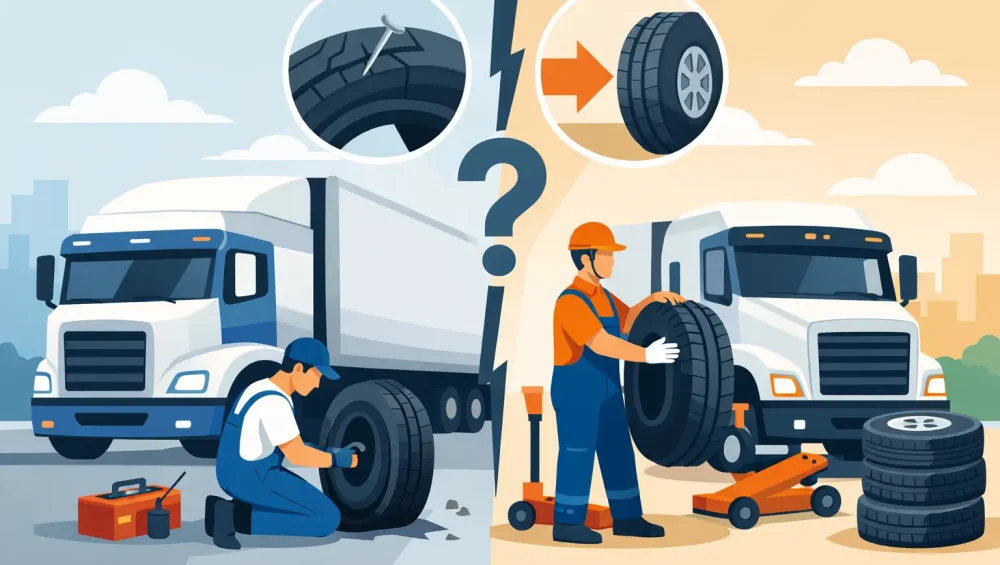
A puncture on a loaded truck, tipper or trailer is never just a tyre problem. It can hold up a delivery, leave a machine idle, put a driver on the shoulder of the M1, and cost far more than the tyre itself. When weighing up truck puncture repair vs replacement, the right call comes down to safety, tyre condition and how quickly you need the vehicle moving again.
A good repair can save a sound tyre and get your truck back to work without unnecessary cost. But not every puncture is repairable. Trying to patch damage that has weakened the casing can lead to a blowout, more downtime and a far bigger bill later.
Truck Puncture Repair vs Replacement: What Decides It?
The location and size of the damage matter first. A small, clean puncture through the centre area of the tread is often repairable if the tyre has not been driven flat and the internal structure remains sound. This is the best-case scenario for a professional on-site repair.
Damage in the shoulder or sidewall is a different story. These sections flex heavily under load, and repairs there are generally not a safe long-term option for heavy vehicles. A cut, split, exposed cords or a bulge means replacement is usually the only sensible decision.
The tyre’s remaining life also matters. If tread is close to its legal limit, wear is uneven, or the tyre has already had several repairs, spending money on another repair may be false economy. Replacement gives the vehicle a dependable tyre and gives the operator a chance to correct the cause of the wear.
Most importantly, the tyre needs to be inspected properly. A hole on the outside does not show everything that has happened inside. A trained technician checks for run-flat damage, heat damage, moisture, casing separation and damage around the bead before recommending repair or replacement.
When a Truck Tyre Puncture Can Be Repaired
A professional repair is often a practical option when the puncture is limited to the repairable tread area and the tyre has been stopped quickly. For fleets and owner-drivers, this can protect a valuable casing and reduce the immediate cost of getting back on the road.
The best repair is not a quick plug pushed in from the outside. For commercial tyres, the tyre should be removed from the wheel, inspected internally, prepared correctly and repaired with the right materials. The wheel should then be refitted, inflated to the correct pressure and checked before the vehicle returns to service.
A repair may be suitable where there is a single, small penetration from a nail, screw or similar road debris. The casing must be in good condition, the tyre must have enough usable tread left, and the driver must not have continued for kilometres on a deflated tyre.
This is why calling for assistance early pays off. Pulling up safely as soon as a pressure issue is noticed can be the difference between a repairable puncture and a damaged casing that needs replacing.
Do not keep driving on a soft tyre
A tyre can look only slightly soft and still be in trouble. On a heavy vehicle, low pressure creates heat quickly. That heat can damage the sidewall and internal plies even when the tread looks acceptable from the outside.
If you notice the truck pulling, a tyre-pressure warning, unusual vibration, a flapping sound or a visible flat, reduce speed and find a safe place to stop. Do not try to limp the vehicle to a depot or workshop on a compromised tyre. The extra distance can turn a simple roadside repair into a full replacement.
When Replacement Is the Safer Choice
Replacement is required when the tyre cannot safely carry its intended load and speed after repair. Sidewall damage, shoulder punctures, major cuts, casing damage and tyres driven flat are the common reasons. So are tyres with exposed steel belts, deep cracking, severe irregular wear or signs of a previous failure.
A replacement is also often the better operational choice where the truck is heading straight back onto long-haul work, carrying heavy loads or travelling through demanding site conditions. Saving a small amount on a marginal repair is not worth risking a breakdown on the Golden Highway, Hunter Expressway or a remote job site later that day.
For dual-wheel positions, the matching tyre also needs consideration. Large differences in overall diameter, tread depth or construction can affect how the pair shares load. A technician can assess whether a single tyre replacement is appropriate or whether a matched option will give better service life.
Used truck tyres can sometimes be a sensible short-term or budget-conscious replacement solution when they are properly inspected and suited to the application. For high-load, long-distance work, a quality new tyre may deliver better reliability and lower cost per kilometre over its working life. The right choice depends on the axle position, load, route and condition of the rest of the tyre set.
The Cost Question: Repair Now or Replace Once?
Repair is usually the lower upfront cost, but replacement can be the cheaper decision over time when the tyre is already near the end of its service life. The key is to look beyond the callout cost.
Consider how much tread remains, whether the tyre has had repairs before, the value of the casing, and how hard that vehicle works. A steer tyre, drive tyre and trailer tyre do different jobs, so they should not be judged by the same rule. A tyre on a local trailer doing light work may have a different replacement threshold from a steer tyre on a long-haul prime mover.
There is also the cost of unplanned downtime. A tyre that fails again can mean a missed booking, delayed freight, recovery costs and a frustrated customer. For busy operators, fitting the right tyre once is often better than making a borderline repair and hoping it holds.
Honest advice matters here. The right provider should explain what they found, why they recommend repair or replacement, and what options suit the job. You should not be pushed into a new tyre when a safe repair is available, and you should not be sold a repair when replacement is clearly needed.
What to Expect From a Mobile Tyre Technician
Mobile support is built for the moment your vehicle cannot afford to sit still. Instead of arranging recovery or attempting to get a damaged truck to a workshop, a technician can attend the roadside, depot, farm, quarry or site with the equipment needed to assess the tyre on location.
The process starts with safety. The vehicle is positioned securely, the damaged tyre is inspected and the technician checks whether the fault is a puncture, valve issue, wheel problem or more serious tyre failure. From there, the practical options are explained clearly.
If repair is safe, the work is completed to get the tyre back into service. If replacement is needed, the correct tyre is fitted where available, with attention paid to load requirements, tyre size and axle application. Pressure checks and wheel condition checks help make sure the job is properly finished, not merely patched over.
For operators across the Hunter region, Hunter Mobile Truck Tyres provides 24/7 on-site help for truck, trailer and heavy vehicle tyre issues. That means less time arranging workshop visits and more time focused on keeping freight, equipment and crews moving.
Prevent the Next Puncture From Stopping the Job
Not every puncture can be avoided, especially around construction sites, farms, industrial yards and highways. Regular checks still make a real difference. Correct pressure helps the tyre resist heat and impact damage, while early inspections can catch embedded objects before they work deeper into the casing.
Drivers should include tyres in their pre-start routine, looking for lodged screws, cuts, low pressure, unusual wear and debris between duals. Fleet managers can reduce repeat failures by tracking tyre condition, rotation schedules and recurring damage by route or vehicle. If one truck repeatedly picks up punctures, the issue may be the site surface, loading practice, tyre specification or pressure management rather than bad luck.
When a puncture happens, stop safely, avoid running the tyre flat and get it assessed before the damage grows. A fast, professional decision between repair and replacement keeps the truck safer, protects the tyre budget and gives your vehicle the best chance of finishing the job.