A flat tyre at the wrong time does more than hold up one truck. It can delay a delivery, leave a driver stranded, disrupt a loading slot and put pressure on the rest of the fleet. When weighing up mobile fitting vs depot fitting, the real question is simple: which option gets your vehicle safely back to work with the least disruption?
For many operators, the answer changes from job to job. A planned tyre change at a depot is different from a steer tyre failure on the M1, a puncture at a remote worksite or a trailer sitting loaded at a customer’s gate. Knowing when each service makes sense helps you control downtime instead of reacting to it.
Mobile fitting vs depot fitting: the key difference
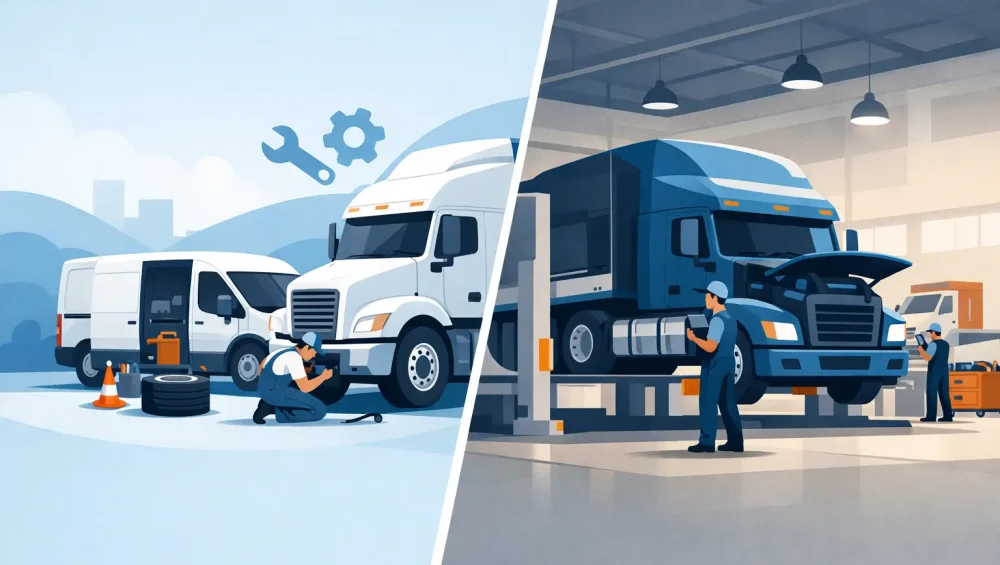
Mobile tyre fitting brings the technician, equipment and replacement tyre to the truck, trailer or plant where it is parked or stranded. It is designed around keeping vehicles where they need to be, whether that is roadside, at a depot, on a farm, at a quarry or at a job site.
Depot fitting requires the vehicle to travel to a tyre workshop or depot. This can work well when the truck is roadworthy, the issue is not urgent and the job can be booked around normal operations. It gives the technician a fixed workspace and can suit more involved maintenance planning.
Neither option is automatically better in every situation. The better choice is the one that protects your driver, load, schedule and operating costs.
When mobile tyre fitting is the smarter call
Mobile fitting is built for the jobs that cannot wait. If a tyre has blown out, gone flat, suffered sidewall damage or picked up a puncture that cannot be safely repaired in place, sending the truck to a depot is usually not an option. A mobile technician can attend with the right tools, assess the damage and fit or repair the tyre on site where conditions allow.
The biggest benefit is reduced lost time. There is no need to organise a tow, unload a trailer purely to move it, or take a working vehicle out of its route for a workshop visit. For an owner-driver, that can mean saving a full day’s earnings. For a fleet manager, it can prevent one breakdown becoming a chain of missed jobs.
Mobile service is also a strong choice for vehicles parked at a depot overnight or between runs. Rather than sending multiple trucks away for tyre work, planned on-site fitting, pressure checks, rotations and inspections can be completed where the fleet is already based. Drivers can start their shift with less chance of a tyre surprise further down the road.
In the Hunter region, distance matters. A truck working near Singleton, Muswellbrook, the Golden Highway or out towards Port Stephens may be a long way from a suitable workshop. A 24/7 mobile tyre response is often the practical option when every kilometre travelled on a damaged tyre increases risk and cost.
Mobile fitting keeps the job moving
A good mobile service is not just for emergencies. It supports day-to-day fleet uptime by handling tyre replacements, puncture repairs, wheel balancing, tyre rotations and pressure checks at a location that works for the operator.
That convenience is especially valuable for tipper trucks, trailers, earthmoving equipment and agricultural vehicles. These machines are often operating away from town, may not be easy to transport, and can lose valuable production time when they are sent off-site for routine tyre work.
Mobile fitting also reduces unnecessary handling. If a trailer is loaded, a truck is queued for dispatch or plant is positioned at an active site, moving it to a depot may create more disruption than the tyre issue itself.
When depot fitting can be the better option
Depot fitting remains useful for planned maintenance and jobs that need more time or a controlled workshop environment. If a vehicle is already returning to base, has several tyres due for replacement, or needs a full inspection across truck and trailer, booking it into a depot can be an efficient way to complete the work in one stop.
A fixed workshop may be preferable where there is limited safe access around the vehicle. Soft ground, tight roadside shoulders, poor lighting, unstable loads or heavy traffic can affect whether any tyre work can be carried out safely on site. The technician should always assess the work area first. If the location is unsafe, moving the vehicle to a secure area may be necessary.
Depot visits can also suit operators who run a predictable maintenance schedule and have spare vehicles available. If taking one unit out of service for a few hours does not affect delivery commitments, a planned depot appointment can be straightforward.
The trade-off is travel time. A truck may need to leave its route, use fuel, wait for an available appointment and then return to the job. On paper, the fitting price may look competitive, but the true cost includes driver time, kilometres, missed work and the risk of travelling on a tyre that is already deteriorating.
Compare the full cost, not just the invoice
When deciding between mobile fitting and depot fitting, the cheapest line item is not always the lowest-cost outcome. A callout fee can be easy to focus on, particularly during an unexpected breakdown. But the better calculation is what the vehicle being off the road is costing your business each hour.
Consider the value of the load, the driver’s time, the delivery deadline and the effect on your customer. Add towing costs if the truck cannot move, as well as the cost of arranging another vehicle to cover the run. In many urgent cases, on-site tyre assistance is the more economical choice because it gets the truck or trailer moving sooner.
For scheduled work, mobile service can still provide value by reducing the number of non-productive kilometres. A technician attending your yard lets your team focus on dispatch, loading and servicing customers while the tyre work is handled on site.
That said, not every repair should be rushed simply to get back on the road. A tyre with serious structural damage, exposed cords, major sidewall cuts or damage from running flat needs the right assessment. Replacing a tyre before it fails again is cheaper than dealing with another breakdown, damaged rims or a roadside safety incident.
Safety comes before speed
Fast service matters, but safe service matters more. Heavy vehicle tyres, rims and wheel assemblies require trained handling, correct equipment and proper procedures. Trying to nurse a damaged tyre to a workshop, or attempting an improvised roadside fix, can put the driver and other road users at risk.
Before calling for help, pull over as safely as possible, use hazard lights and keep clear of traffic. Give the technician accurate details: vehicle type, tyre size if known, axle position, whether the truck is loaded, the nature of the damage and your precise location. Clear information helps the right tyre and equipment arrive the first time.
For fleets, tyre pressure checks should not only happen after a failure. Incorrect pressure is a common cause of uneven wear, heat build-up and premature tyre damage. Regular inspections can reveal cuts, bulges, irregular wear and slow leaks before they turn into an urgent callout.
Build a tyre plan that uses both options
The strongest approach for most transport businesses is not choosing one service forever. It is using depot fitting for planned maintenance where it suits the operation, and mobile fitting for urgent failures, remote work and on-site fleet support.
Set replacement intervals based on tyre condition and operating conditions, not guesswork. Keep records of punctures, wear patterns, tyre positions and pressure issues across the fleet. If the same problem keeps appearing, it may point to overloading, poor inflation practices, rough site conditions, alignment concerns or unsuitable tyre selection.
It also pays to know who you will call before a blowout happens. Hunter Mobile Truck Tyres provides 24/7 on-site support for heavy vehicles, so drivers and fleet managers can get practical help when a tyre problem threatens the day’s work.
The next tyre issue will rarely arrive at a convenient time. Having a clear plan for mobile response and scheduled depot work gives your drivers confidence, keeps customers informed and gives every truck a better chance of staying where it belongs – on the road and earning.