A tyre decision can look cheap at the start and become expensive halfway through a run. When comparing new versus used truck tyres, the right choice comes down to the work your vehicle does, the condition of the tyre on offer and how much downtime your operation can carry. For an owner-driver, one unexpected failure can wipe out the saving. For a fleet, the wrong tyre policy can create repeat callouts, missed delivery windows and avoidable maintenance costs.
Used tyres have a place in heavy vehicle work. New tyres do too. The key is choosing on condition and duty, not simply the lowest upfront price.
New Versus Used Truck Tyres: Start With the Job
A highway prime mover covering long distances has different tyre demands from a tipper running rough access roads, a trailer parked for extended periods or an agricultural truck moving between paddocks and the road. Tyres need to suit axle position, load, road surface, expected kilometres and the weather conditions they will face.
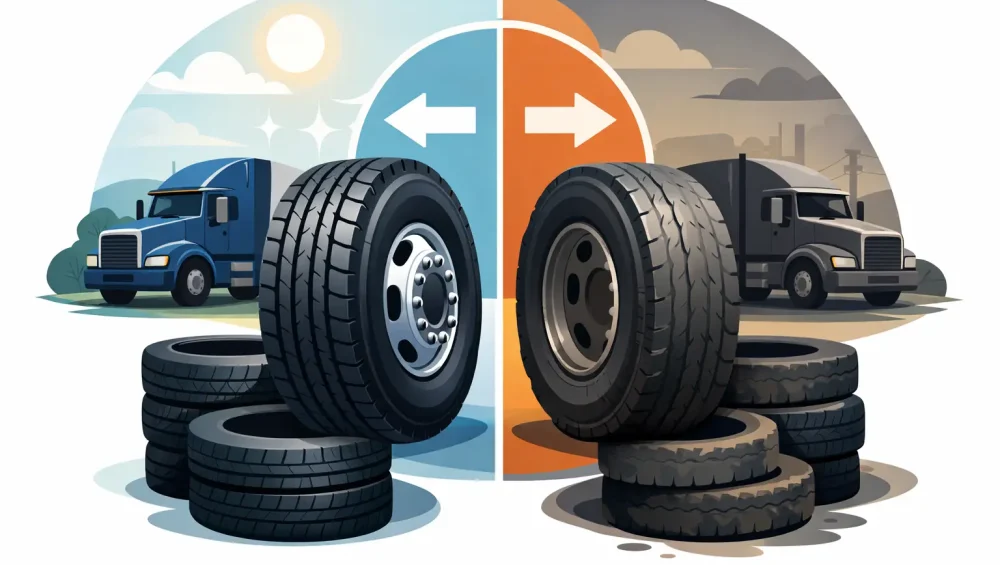
New truck tyres are usually the stronger option where reliability, predictable wear and maximum casing life matter. They give you full tread depth, a known service history and the best chance of getting the kilometres the tyre was designed to deliver. This is particularly valuable on steer axles, long-haul drives and vehicles carrying regular heavy loads.
A quality used tyre can make good commercial sense when the job is temporary, the vehicle sees lower kilometres or you need to get a truck, trailer or spare wheel back into service quickly. A sound used tyre may also be a practical choice for a non-driven trailer position, provided its size, load rating, tread pattern and condition are suitable.
The important word is quality. A used tyre is not automatically a bargain just because it has visible tread left.
What You Get With New Truck Tyres
New tyres cost more upfront, but that figure should be weighed against availability, safety and total cost per kilometre. With a new tyre, you know there has been no previous puncture repair, overload event, sidewall impact or period of underinflation that may have weakened the casing.
Full tread depth improves wet-weather grip and gives more room for even wear across the tyre’s working life. It also gives fleet managers a cleaner baseline for rotations, pressure checks and replacement planning. When the vehicle is working every day, that predictability has value.
New tyres are often the better call when:
- the tyre will be fitted to a steer axle or a critical drive position
- the truck is running long-haul kilometres or heavy loads
- the fleet needs consistent tyre performance across several vehicles
- you want the strongest potential for casing recovery and future retreading
- downtime from a failure would cost more than the initial tyre saving
That does not mean the most expensive tyre is always the right tyre. The correct construction and tread pattern matter more than buying by brand name alone. A tyre suited to regional freight work can wear poorly if it is put into constant quarry or construction-site service.
When Used Truck Tyres Are a Smart Option
A properly inspected used truck tyre can be a fast, cost-effective solution. This is often the case when a tyre has been damaged unexpectedly and the priority is getting the vehicle safely moving again without blowing out the day’s budget.
Used tyres can also suit low-use trailers, farm equipment, older vehicles nearing replacement, spare assemblies and certain short-term operational needs. If the tyre has strong, even tread and a clean casing, it can provide useful service at a lower purchase price.
But a used tyre must be assessed as more than a tread-depth number. Deep tread on one shoulder and shallow tread on the other can point to alignment, suspension or inflation issues from its previous life. Uneven wear is not just cosmetic. It can affect handling, ride quality and how long the tyre lasts once fitted.
Ask for a tyre that has been checked for puncture repairs, exposed cords, cuts, sidewall damage, bead damage, cracking, irregular wear and signs of heat damage. It must also match the required load and speed ratings for the vehicle and position. A tyre that is technically the right size but unsuitable for the load is not a safe saving.
The Risks of Choosing on Price Alone
The cheapest tyre is rarely the cheapest outcome if it leads to a roadside stop. A blowout on the M1, Hunter Expressway or a remote work site can mean lost hours, delayed freight, recovery arrangements and a driver waiting on the shoulder when they should be earning.
Used tyres carry an unknown history unless they have been thoroughly inspected by someone who understands heavy vehicle tyre condition. Previous overheating from low pressure, hidden internal damage and poor earlier repairs can shorten their life without obvious external warning.
New tyres are not immune to problems either. Incorrect pressure, overloading, wheel alignment faults, damaged rims and poor rotation practices will ruin a new tyre just as effectively as a used one. The tyre decision needs to sit alongside basic maintenance, not replace it.
For fleets, it is worth tracking the reason each tyre comes off. If drive tyres are wearing rapidly, fitting another tyre without checking alignment, suspension or inflation only repeats the expense. Good fleet tyre management looks for the cause, not just the quickest replacement.
Put Safety-Critical Positions First
If the budget means mixing new and used tyres across a vehicle, be selective. Steer tyres deserve particular care because they influence braking stability, wet grip and directional control. A steer-axle failure is not the place to chase the lowest price.
Drive positions also demand a tyre that can handle torque, load and the surface it works on. Trailer tyres may offer more flexibility, but they still need suitable tread, sound construction and correct inflation. Heavy vehicles place enormous stress on tyres, especially during tight turns, high ambient temperatures and repeated loading cycles.
Your tyre technician should consider the full setup: axle configuration, wheel condition, remaining tyres on the vehicle, tread pattern, fitment position and the work ahead. Mixing tyres carelessly can create uneven rolling behaviour and wear issues that cost more later.
Check the Numbers That Matter
Before approving either option, look past the purchase invoice. Consider the expected service life, fitting cost, callout risk, fuel impact from poor rolling resistance, potential casing value and the cost of a vehicle sitting idle.
For a busy transport operator, a new tyre that delivers more predictable kilometres may offer better value over its life. For a trailer used occasionally around a local site, a quality used tyre may be the sensible financial choice. There is no one-answer rule because every truck earns differently.
Pressure management is one of the biggest factors in protecting either investment. Underinflated tyres build heat, wear faster and risk failure. Overinflation can reduce the contact patch and contribute to uneven wear. Regular pressure checks, wheel balancing where required and timely rotations help tyres stay in service longer.
Get the Right Tyre Fitted Where the Truck Is
When a puncture or blowout stops the job, the immediate question is often not new or used. It is how quickly the vehicle can be safely returned to work. A mobile tyre service can inspect the damage on-site, assess whether a repair is appropriate and fit a suitable replacement without sending the truck or trailer to a workshop.
Hunter Mobile Truck Tyres provides new and used tyre options, on-site fitting, puncture repairs and 24/7 emergency support across the Hunter region. That gives drivers and fleet managers a practical choice when time is tight: select the tyre that suits the vehicle, the load and the budget, then get moving with minimal delay.
A good tyre decision should leave you confident at the next weighbridge, on the next wet run and at the end of the shift. Choose the option that protects safe operation and keeps your truck earning, not just the one with the smallest price tag today.