A tyre brand is not just a name on the sidewall when your truck is carrying a load up the Golden Highway, tipping at a site near Muswellbrook or working through the night on the M1. The right commercial tyre brands can help control running costs, protect traction and keep your vehicle earning. The wrong fit can mean uneven wear, repeated punctures, poor fuel economy and an unplanned stop when you can least afford it.
For owner-drivers and fleet managers, the best choice is rarely about buying the most expensive tyre or chasing the cheapest deal. It is about fitting the right tyre for the axle, load, road surface, kilometres travelled and the way the vehicle actually works.
Commercial tyre brands: choose for the job, not the logo
Well-known commercial tyre brands have earned their reputation through product development, casing quality, dealer support and proven performance across different applications. Brands such as Bridgestone, Michelin, Goodyear, Continental, Yokohama, Hankook and Toyo all offer commercial ranges, but no single brand or pattern is automatically the right answer for every truck.
A long-haul prime mover running sealed roads between Newcastle, Sydney and regional NSW has different demands from a tipper hauling through quarry access roads. A local delivery truck making constant stops and tight turns needs different wear characteristics again. Trailer tyres, drive tyres and steer tyres each do a separate job, so they should never be chosen as though they are interchangeable.
The tyre that gives excellent kilometre life on a highway route may struggle on loose gravel. A tough, deep-tread drive tyre built for off-road grip can create unnecessary resistance and wear faster on a predominantly sealed route. Matching the tyre to the work is where the real value sits.
Start with your operating conditions
Before comparing brands, look closely at what your vehicle faces every week. Be honest about the work, not the occasional job. If a truck spends 80 per cent of its time on bitumen and 20 per cent on site tracks, it should normally be specified for its main operating environment while still allowing a sensible margin for the rough stuff.
Consider load weight and distribution, average trip distance, axle position, road type, weather, frequency of stop-start driving and whether the vehicle sees mud, rocks, construction debris or soft shoulders. These details shape the tread pattern, compound and construction that will work best.
For example, a regional freight operator may place a higher priority on fuel efficiency, predictable highway handling and casing life. An earthmoving or agricultural operator may need stronger sidewalls, cut resistance and aggressive traction. A rubbish collection truck or local rigid truck may benefit from tyres designed to cope with scrubbing during tight turns and frequent braking.
This is also why a tyre quote should include more than the size. Two tyres with the same dimensions can have very different load ratings, tread depths, compounds and intended service conditions.
Steer, drive and trailer tyres are different investments
Steer tyres need stable handling, good water evacuation and even wear across the tread. Because they influence how the truck feels through the wheel, poor alignment or incorrect inflation often shows up here first.
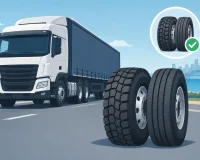
Drive tyres need traction and durability. On a long-haul truck, a highway drive pattern may be the practical choice. On a tipper, a more open tread pattern may deliver the grip needed on loose surfaces. The trade-off is that highly aggressive patterns can be noisier and may not give the same fuel efficiency on sealed roads.
Trailer tyres are often treated as an afterthought, yet trailer axle scrub can destroy tyres quickly. The right trailer tyre needs to cope with lateral forces, load and heat. Regular rotations and alignment checks can make a major difference to kilometres per tyre.
Look beyond the purchase price
A lower upfront price can be attractive when cash flow is tight, particularly for a small operator with a tyre down now. But the cheapest tyre is only good value if it delivers safe, reliable service for the work it is doing.
The better question is: what will this tyre cost per kilometre? That includes the purchase price, expected life, fuel use, repairability, downtime risk and whether the casing is suitable for retreading. A premium tyre may justify its price where it provides longer life, lower rolling resistance or a quality casing that can remain in service through a retread program. On the other hand, a quality value-brand tyre can be the smarter choice for a vehicle with lower annual kilometres, limited service life or an application that is especially hard on tyres.
There is no benefit paying for long-haul fuel-saving technology on a truck that spends most of its life moving slowly around a worksite. Likewise, fitting a budget road tyre to a heavy vehicle that works in harsh site conditions can prove costly very quickly.
Casing quality and retreading matter
For many commercial operators, the casing is one of the most valuable parts of the tyre. A well-maintained, retreadable casing can lower whole-of-life tyre costs and reduce waste. The original tyre choice matters because some casings are better suited to retreading than others.
Retreading is not a shortcut or a compromise when it is completed by a reputable provider and used in the right application. It is a proven part of commercial tyre management. However, it relies on the casing being protected from heat damage, overloads, underinflation, impacts and prolonged use after a puncture.
That is where daily checks pay off. Driving on a soft tyre, even for a short distance, can damage the internal structure beyond repair. What may have been a straightforward repair can become a tyre replacement and the loss of a casing asset.
Availability is part of the brand decision
The best commercial tyre brand on paper is not much help if the correct size or pattern cannot be sourced when a truck is sitting on the roadside. Availability matters, especially for fleets with mixed vehicles, specialised fitments or work spread across regional areas.
Ask whether your preferred brand has consistent supply in the sizes you run, whether an equivalent option is available if stock is delayed, and whether there is reliable support for repairs and emergency replacements. Standardising tyres across a fleet can simplify stock, rotations and maintenance records, but it should not force every vehicle into the same pattern if their jobs differ.
For operators across the Hunter, a mobile tyre partner adds another layer of protection. Hunter Mobile Truck Tyres can assess the failed tyre on-site, carry out suitable repairs where safe, or fit a replacement without sending the truck to a workshop. That means less time waiting, less disruption to a delivery schedule and a faster path back to work.
Tyre maintenance protects every brand
Even the best tyre will wear badly if it is run at the wrong pressure or on a vehicle with alignment issues. Brand choice and tyre maintenance need to work together.
Pressure should be set for the actual axle load, not guessed from appearance. Underinflation creates heat, increases rolling resistance and can lead to structural failure. Overinflation can reduce the contact patch, affect ride and accelerate irregular wear. Use the manufacturer’s load-and-pressure guidance, and check pressures when tyres are cold.
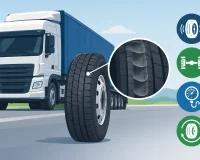
Wheel alignment, balance, suspension condition and brake drag also affect tyre life. Feathering, shoulder wear, cupping or rapid wear on one position are warning signs worth acting on early. Waiting until the tyre is bald wastes money and can leave a vehicle exposed to a roadside failure.
A practical fleet tyre program records tyre position, pressures, repairs, rotations and removal reasons. It does not need to be complicated. The aim is to spot a pattern before it becomes a breakdown – whether that is one trailer axle wearing faster, recurring punctures on a particular route or a driver regularly running tyres low.
When used commercial tyres make sense
Used truck tyres can be a practical option in the right situation. They may help get a truck, trailer or spare wheel back into service at a lower immediate cost, particularly when the vehicle has limited use remaining or needs an urgent replacement.
The condition of the tyre matters more than the bargain. Check tread depth, age, repair history, sidewall condition, matching size and load rating. A used tyre should be professionally inspected and suitable for the position where it will be fitted. It is not always the right choice for a heavily loaded steer axle or a vehicle doing long-distance highway work.
For urgent situations, the priority is safe, suitable fitment and getting the vehicle moving without creating another problem down the road.
Make the next tyre decision before the next failure
The easiest time to compare commercial tyre brands is before a blowout or puncture forces the decision. Review what each truck is doing, identify the sizes and patterns you regularly need, and keep an eye on wear before it becomes an emergency.
A tyre plan built around your real routes, loads and deadlines gives you more control when the pressure is on. And if a truck is already stopped on the roadside, prompt mobile support can turn a costly delay into a job that is handled where the vehicle stands.