A truck tyre can look fine in the yard, hold pressure and still be well past its best. So, do truck tyres expire? Not in the same simple way as a carton of milk, but they do age. Rubber changes over time, and an older tyre can become less reliable even when there is usable tread left.
For owner-drivers, earthmoving operators and fleet managers, that matters. A tyre failure can mean a missed delivery, a stranded truck on the M1 or Golden Highway, damaged guards and rims, or a far more serious roadside safety risk. Knowing a tyre’s age is one part of keeping your vehicles moving safely.
Do truck tyres expire after a set number of years?
There is no one expiry date that applies to every truck tyre. How long a tyre remains suitable depends on its construction, position on the vehicle, workload, inflation pressure, maintenance history, storage and the environment it has worked in.
A steer tyre doing long highway kilometres will age differently from a drive tyre on a tipper working rough access roads. A spare carried underneath a trailer may have plenty of tread but suffer from years of heat, moisture and exposure. A tyre stored correctly indoors can remain in better condition than one sitting outside in full sun for the same period.
That is why age should trigger an inspection, not an automatic decision based only on the calendar. Tyre manufacturers provide their own recommendations for service life and inspection intervals, so always check the specific tyre maker’s guidance as well as your fleet policy.
The practical rule is straightforward: do not assume deep tread means a tyre is safe. As tyres get older, inspection needs to become more thorough and more frequent.
Why truck tyres age before the tread wears out
Tyres are made from rubber compounds, steel belts, textile materials and bonding layers. Heat cycles, oxygen, ozone, sunlight and moisture gradually affect those materials. This process is often called ageing or degradation.
On heavy vehicles, heat is a major factor. Underinflation, overloading, high speeds, harsh braking and long runs can build excess heat inside the casing. That heat accelerates ageing and can weaken the bond between tyre components. A tyre may then be more prone to cracking, belt separation or sudden failure.
Vehicles that do low kilometres are not automatically protected. In fact, tyres on seasonal farm equipment, trailers, standby vehicles and low-use rigs can age quietly while sitting still. Tyres need regular checks whether they run every day or only occasionally.
Poor storage also takes its toll. Direct sun, hot asphalt, standing water, chemical spills, oil contamination and contact with electrical equipment can all shorten tyre life. If you keep spare tyres, store them clean, dry and away from direct UV exposure where possible.
How to check the age of a truck tyre
Most modern tyres have a date code moulded into the sidewall. Look for the final four digits of the DOT or production marking. The first two numbers show the week the tyre was made, and the final two show the year.
For example, a code ending in 2423 means the tyre was manufactured in the 24th week of 2023. It is worth recording these dates during fleet inspections, especially for spare wheels, trailers and equipment that sees irregular use.
The date code tells you when the tyre was made, not whether it is safe. A newer tyre with sidewall damage, chronic underinflation or poor repairs can be unsafe. An older tyre that has been stored and maintained properly may still be serviceable. The inspection and operating history decide the real condition.
Signs an ageing tyre needs attention now
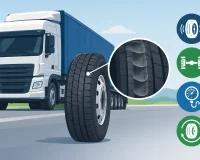
Visible cracking is one of the clearest warning signs. Check the sidewalls, tread grooves and around the bead area for fine cracks, splits or rubber that feels unusually dry and hard. Cracking can allow moisture into the casing and reduce the tyre’s strength.
Also watch for bulges, lumps, exposed cords, uneven wear, vibration, repeated pressure loss and tread separation. A tyre that has had a major impact with a pothole, kerb or debris should be assessed even if it does not look badly damaged at first glance.
If the tyre has been run flat or severely underinflated, do not simply reinflate it and send it back out. Internal damage may not be visible from the outside. Get it inspected by a qualified truck tyre technician before it returns to service.
Age, tread depth and legal roadworthiness
Tread depth remains critical for traction, braking and water clearance, but it is only one part of roadworthiness. In New South Wales, heavy vehicle operators are responsible for ensuring tyres are safe and suitable for the vehicle and conditions. That includes checking for damage, exposed cords, inadequate tread and other defects that could make the vehicle unsafe.
A tyre can meet a minimum tread requirement and still be a poor choice if the casing is deteriorating. This is particularly relevant for older trailer tyres and spares, where tyres can look presentable until a high-load highway run reveals the problem.
For fleets, age tracking helps prevent this situation. Add tyre manufacture dates, fitment dates, rotation history, repairs and inspections to your tyre records. It gives you a clearer picture than kilometre readings alone and makes replacement planning easier.
Retreaded truck tyres and casing age
Retreaded tyres are widely used in commercial transport because a sound casing can deliver strong value over its life. But retreading does not make an unsuitable casing safe. The casing must be properly inspected and accepted for retreading, and its previous use, repairs, age and condition all matter.
Treat a retread with the same discipline as any other commercial tyre. Maintain correct pressures, match it to the job, carry out regular visual checks and act quickly on vibration or damage. The right retread can be a cost-effective option, while the wrong casing or neglected maintenance can create downtime when you can least afford it.
What keeps truck tyres serviceable for longer
The best way to manage tyre ageing is to control the conditions that speed it up. Correct inflation pressure is at the top of the list. Pressure should suit the axle load, tyre size and application, not be guessed at during a quick pre-start check.
Regular wheel alignment, balancing and rotation also matter. They reduce irregular wear and prevent one tyre from carrying more work than it should. Avoid overloading, inspect tyres after rough-site work, and keep dual tyres correctly matched and inflated. A mismatched dual can overload its partner and generate damaging heat.
A simple routine can prevent expensive surprises:
- Check pressure when tyres are cold and investigate repeat losses.
- Inspect tread, sidewalls and valve areas before long runs or heavy loads.
- Record damage and repairs rather than relying on memory.
- Check stored spares and trailer tyres as part of scheduled maintenance.
- Have unusual vibration, pull or heat build-up checked early.
When to replace rather than repair
A puncture does not always mean a new tyre. Many punctures can be professionally assessed and repaired when the injury is in a repairable area and the tyre has not been run flat or damaged internally. However, sidewall damage, exposed cords, significant cracking, belt separation and serious impact damage generally call for replacement.
Do not make that call based on appearance alone. Heavy vehicle tyres carry serious loads, and a shortcut can cost far more than a replacement tyre. The right technician will inspect the damage, consider the tyre’s condition and tell you plainly whether a repair is safe and worthwhile.
If a truck, trailer or machine is off the road around Newcastle, the Hunter Valley or on a regional job site, Hunter Mobile Truck Tyres can inspect the problem on-site and help get the right tyre solution fitted without the unnecessary workshop delay.
An older tyre is not automatically a failed tyre, but it should never be ignored. Keep an eye on manufacture dates, treat cracks and pressure loss seriously, and arrange an inspection before a small concern becomes a roadside blowout.