A steer tyre wearing smooth in the centre is not the same problem as a truck that pulls toward the shoulder. In the tyre balancing vs alignment conversation, knowing the difference can save an operator from replacing expensive rubber before its time – and can help keep a truck, trailer or tipper working instead of waiting in a workshop.
Both services affect ride quality, handling and tyre life, but they correct different faults. Balancing deals with uneven weight around a rotating wheel assembly. Alignment deals with the angles and direction of the wheels and axles. Get the diagnosis right and you can target the cause, not just fit another tyre and hope for the best.
Tyre balancing vs alignment: what is the difference?
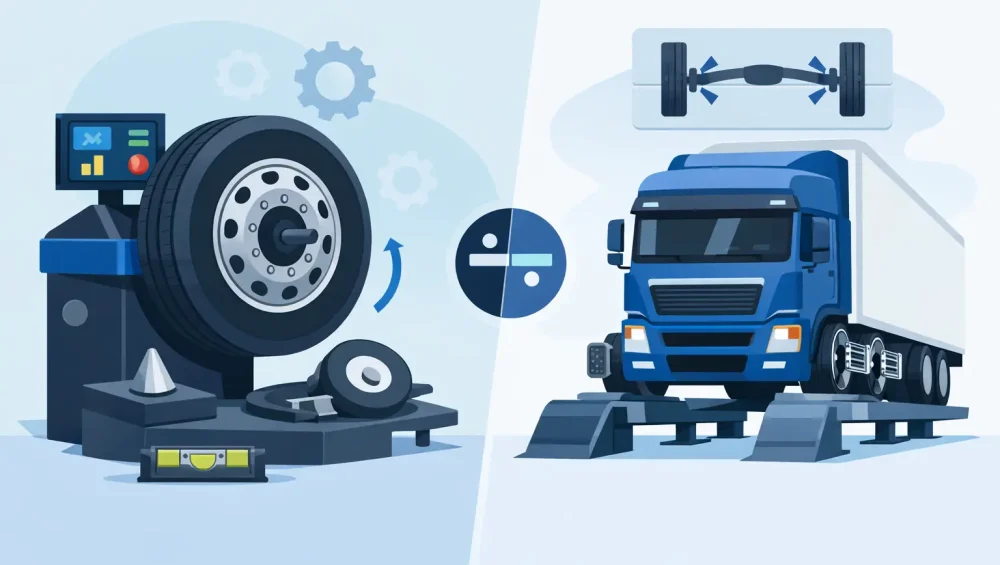
Tyre balancing is about rotation. A wheel and tyre can look perfectly round yet have one section that is heavier than the rest. At road speed, that small imbalance creates vibration. On a heavy vehicle, the driver may feel it through the steering wheel, cab floor or seat, often most noticeably within a certain speed range.
During balancing, the wheel assembly is checked on a balancing machine and small weights are fitted to offset the heavy point. The aim is for the wheel to rotate evenly. It is particularly relevant after fitting a new tyre, repairing a puncture, changing a wheel, or when a vibration starts after a wheel has been refitted.
Wheel alignment is about where the wheels point and how they sit relative to the vehicle and each other. On trucks, this can include steering axle toe, camber and caster, as well as drive axle and trailer axle tracking. An alignment issue can make the vehicle pull, cause a crooked steering wheel or scrub tread off one edge of a tyre.
The practical difference is simple: balancing helps a wheel spin smoothly; alignment helps the vehicle travel straight and track correctly.
Signs your truck needs tyre balancing
An imbalance usually announces itself as vibration rather than a handling problem. A driver might notice a shake through the steering wheel at highway speed, a drumming sensation through the cab, or vibration that appears at 80 km/h and eases again at a different speed.
Do not assume every vibration is a balancing issue. A damaged rim, mud packed inside a wheel, a shifted belt, irregular tyre wear, worn suspension components or loose wheel hardware can feel similar. That is why a proper inspection matters before weights are added.
Balancing is worth checking when new tyres are fitted, especially on steer positions where ride comfort and steering feel matter most. It can also help after a puncture repair if the tyre has been removed from the rim. For fleet operators, including balance checks as part of tyre rotation and fitting work can reduce the chance of a driver reporting a vibration halfway through a run.
On some heavy applications, the tyre, wheel and vehicle setup determine whether balancing is the best answer. Bead balancing products may suit certain operations, while conventional wheel weights may be preferred in others. The right method depends on wheel type, duty cycle and the condition of the tyre assembly.
Signs your truck needs wheel alignment
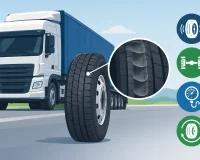
Alignment problems generally leave a visible trail on the tyres. Check the steer tyres regularly, because they often show the earliest warning signs. One shoulder wearing faster than the other, feathering across the tread blocks, or a tyre that looks scrubbed rather than evenly worn can point to incorrect wheel angles.
A truck that drifts or pulls on a level road also deserves attention. Road camber can make a vehicle feel slightly different from one lane to another, so a brief pull is not always proof of an alignment fault. But if the truck constantly needs steering correction, the wheel sits off-centre when travelling straight, or it feels unsettled after a pothole strike, have it checked.
For trailers and multi-axle equipment, poor axle tracking can be costly. If axles are not running true, tyres may scrub as the trailer travels down the road. That wastes fuel, shortens tyre life and puts extra stress on components. It can be especially noticeable on equipment that regularly works rough sites, carries heavy loads or encounters kerbs, washouts and uneven access roads.
Alignment is not usually a quick roadside adjustment. It often requires specialised measuring equipment, a suitable level surface and an inspection of steering, suspension and axle components first. If bushes, tie-rod ends, wheel bearings or suspension parts are worn, adjusting angles without fixing the underlying fault will not hold for long.
Why heavy vehicles can suffer from both problems
A truck can have balanced wheels and still need an alignment. It can also have excellent alignment and still vibrate because one wheel is out of balance. Treating one service as a replacement for the other is where tyre costs start to climb.
Heavy loads, long distances and rough job sites amplify small faults. A single pothole, kerb strike or loose wheel event can affect the condition of a tyre or rim. Repeated work on quarry roads, construction sites and rural routes can gradually wear steering and suspension components, changing how the wheels run without an obvious single incident.
Tyre pressure also belongs in the conversation. Incorrect pressure will not cause an alignment issue, but it can produce wear patterns that confuse the diagnosis. Under-inflation may wear shoulders and build heat, while over-inflation can wear the centre of the tread. Before blaming balance or alignment, confirm pressures are correct for the tyre, axle load and operating conditions.
What tyre wear is telling you
A quick walk-around before a shift can reveal problems early. Run a gloved hand lightly across the tread where safe to do so. If it feels sharp in one direction and smooth in the other, that feathering may be linked to alignment. If there are cups, dips or irregular patches, balance, suspension condition or shock absorber performance may be involved.
Centre wear often points toward excessive inflation or an unsuitable pressure for the load. Both shoulders wearing can indicate low pressure, although vehicle setup and service conditions must be considered. Wear on one shoulder is more likely to raise an alignment or component concern.
These patterns are clues, not a complete diagnosis. Tyre condition, retread history, axle position, load distribution and road surface all matter. The earlier the inspection happens, the more likely the tyre can stay in service rather than being removed prematurely.
The practical maintenance approach for fleets
The best approach is to check tyres before the driver feels a problem. Build tyre pressure checks, tread inspections, rotation planning and wheel condition checks into regular fleet maintenance. Record recurring vibration complaints, uneven wear and tyre removals by vehicle and axle position. Over time, those notes make it easier to spot a truck or trailer that keeps developing the same issue.
After a blowout, impact or puncture repair, inspect more than the damaged tyre. Check the rim, wheel hardware, nearby tyres and visible steering or suspension parts. A replacement tyre fitted to a vehicle with an unresolved alignment fault may start wearing badly from day one.
For operators working across the Hunter, a mobile tyre service can reduce the downtime involved in tyre fitting, pressure checks, puncture repairs, wheel balancing and rotation at the depot, roadside or job site. Hunter Mobile Truck Tyres can assess tyre-related concerns where the vehicle is parked, get a damaged tyre sorted quickly and help identify when the symptoms point beyond the tyre assembly to a specialist alignment inspection.
When to act straight away
A severe vibration, sudden pull, damaged sidewall, exposed cords, rapid pressure loss or abnormal heat needs immediate attention. Do not keep running a heavy vehicle in the hope it will settle down. A tyre failure or handling issue can quickly become a safety risk, a roadside delay and a much larger repair bill.
If the issue is mild but recurring, book the inspection before the next long run. A few minutes spent checking wheel condition, tyre pressure and wear can protect thousands of kilometres of usable tread. Keep the truck rolling straight, smooth and predictable, and your tyres will have a far better chance of earning their full working life.