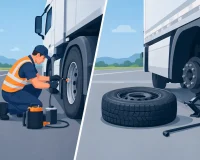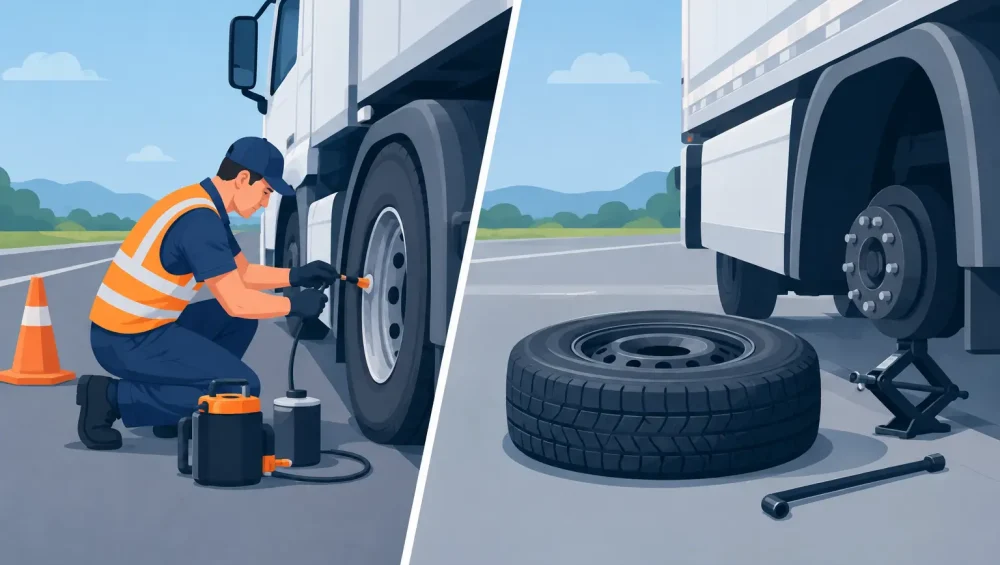
A flat tyre on a loaded truck is not a minor inconvenience. It can put a delivery behind schedule, leave a driver exposed on the shoulder and turn one damaged tyre into a costly day off the road. In the roadside tyre repair versus spare decision, the right answer depends on the damage, the tyre’s condition, your load and whether the vehicle can be made safe to continue.
For truck drivers, trailer owners and fleet managers, the priority is not simply getting moving again. It is getting moving safely, legally and without risking another failure a few kilometres down the road. A qualified mobile tyre technician can inspect the tyre where the vehicle has stopped and recommend the option that protects your driver, freight and operating schedule.
Roadside tyre repair versus spare: the real choice
A puncture repair can be the fastest and most cost-effective option when the tyre has suffered a straightforward, repairable injury. A spare or replacement tyre is the better call when the casing, sidewall or structure has been compromised. Neither option is automatically right every time.
The key point is that a tyre may look repairable from the outside but have hidden internal damage. Running underinflated, even for a short distance, can damage the casing through heat and flexing. A technician needs to assess more than the visible hole before deciding whether a repair is suitable.
For heavy vehicles, this decision carries more weight. Truck and trailer tyres deal with high loads, long distances, heat, uneven road surfaces and demanding braking forces. A temporary-looking fix made without a proper inspection can create bigger downtime later.
When a roadside puncture repair makes sense
A professional puncture repair is often a strong option when the damage is confined to the repairable area of the tread and the tyre has not been driven flat. Common examples include a nail, screw or similar object through the central tread area.
The tyre must still have sufficient legal tread, a sound casing and no signs of sidewall damage, belt separation or heat damage. The wheel also needs to be in good condition. If those checks are clear, a proper repair can keep a quality tyre in service and avoid replacing it before its working life is finished.
For an owner-driver, that can mean less immediate cost. For a fleet, it can prevent unnecessary tyre disposal and help control operating expenses across multiple vehicles. It is particularly useful when the remaining tyres on the axle are in good condition and matching tread depth matters.
However, a repair should never be treated as a quick plug-and-go job. The tyre needs to be removed where required, inspected internally and repaired using the correct process and materials. A roadside service that takes the time to check the full condition of the tyre gives you a decision based on safety, not guesswork.
Repairs are not suitable for every puncture
Damage close to the shoulder, in the sidewall or through a previously repaired section will usually rule out a roadside repair. So will a large puncture, a split tyre, exposed cords, damaged beads or evidence that the tyre has been run flat.
If a blowout has occurred, replacement is generally the sensible path. The force of a blowout can damage more than the tyre itself, including the wheel, guards, air lines or nearby tyres in a dual-wheel setup. The immediate job is to make the vehicle safe and inspect the surrounding components before sending it back on the road.
When fitting the spare is the better move
A spare tyre is there for exactly this reason: to get a vehicle mobile when the damaged tyre cannot safely stay in service. If the tyre is beyond repair, fitting a suitable spare or replacement tyre is the quickest way to restore operational continuity.
For trucks and trailers, though, a spare only helps if it is the correct size, load rating, construction and condition for the vehicle. An old spare with low pressure, cracked rubber or inadequate tread can create another roadside problem. Fleet managers should include spare inspections in regular tyre checks rather than discovering a spare is unusable during an emergency.
Matching also matters. On driven axles and dual-wheel positions, major differences in tyre diameter or tread depth can affect handling, tyre wear and drivetrain performance. A temporary spare arrangement may be acceptable to reach a safe location, but it may not be the best long-haul solution. A mobile tyre technician can advise whether the fitted tyre is appropriate for continued work or should be changed again promptly.
Where no usable spare is available, an on-site replacement avoids the delay and recovery costs of limping back to a workshop. This is particularly valuable on the Hunter Expressway, M1, Golden Highway and remote job sites where travelling on a damaged tyre is not an option.
What to do when a truck tyre goes down
The first decision should always be made with safety in mind. Slow down gradually, avoid sharp steering movements and get the vehicle as far from traffic as conditions safely allow. Put on hazard lights and assess the location before leaving the cab.
Do not continue driving on a deflated tyre just to find a better stopping point unless it is necessary to avoid immediate danger. Every extra metre on a flat tyre can turn a simple tread puncture into irreversible casing damage. It can also damage the wheel and make the roadside job more expensive.
Take a clear look from a safe position, but do not put yourself in danger beside live traffic. Note whether the tyre is fully flat, whether there is visible sidewall damage and whether a foreign object is still in the tread. If you are operating a dual-wheel axle, check the companion tyre as well. It may have been overloaded after the first tyre lost pressure.
Then call for mobile tyre support and provide the vehicle type, tyre size if known, your location, the damage you can see and whether you have a usable spare. Clear details help the technician arrive prepared with the right equipment and tyre options.
Downtime costs more than the tyre
Choosing between repair and replacement is often viewed as a tyre cost decision. In reality, the larger cost is usually downtime. A delayed load, missed booking, stranded driver, recovery charge or disrupted fleet schedule can exceed the price difference between a repair and a replacement.
That does not mean replacing every punctured tyre is the answer. It means making a sound decision quickly. A repairable tyre should be repaired properly. A tyre that is unsafe should be replaced without trying to squeeze extra kilometres from it.
For fleets, a clear roadside tyre procedure reduces uncertainty for drivers. Drivers should know who to call, what information to provide and when they must stop rather than continue. Fleet tyre records also make it easier to track recurring punctures, uneven wear, pressure issues and tyre failures by vehicle or route.
Hunter Mobile Truck Tyres provides 24/7 mobile support for trucks, trailers, tippers and long-haul vehicles across the Hunter region, bringing tyre repair, replacement and practical advice directly to the roadside, depot or work site.
Prevention gives you more options at the roadside
Regular pressure checks are one of the best ways to protect your repair options. Correct inflation helps prevent heat build-up, casing damage and irregular wear. It also gives a tyre a better chance of surviving a puncture without internal damage.
Routine inspections should look for embedded objects, cuts, sidewall scuffing, uneven tread wear and damage around valve stems. Rotation, balancing and alignment checks also matter, especially for vehicles covering long distances or working on rough access roads and construction sites.
Keep spares maintained, accessible and suitable for the vehicles they support. A spare is not a set-and-forget item. Check its pressure, age, tread and condition as part of your scheduled maintenance. For a mixed fleet, make sure drivers know which spare belongs to which tyre configuration.
Make the safe call, then get back to work
Roadside tyre repair versus spare is not about choosing the cheapest option in the moment. It is about choosing the option that keeps your vehicle safe, protects the tyre investment where possible and gets the job moving again with confidence. If the damage is uncertain, stop early and get a trained technician to inspect it – a fast professional callout is far cheaper than a second failure on the road.