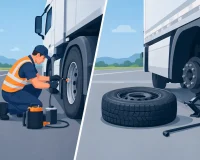
A steering shake at highway speed is more than an annoyance when you are hauling freight, carrying a loaded tipper or running a trailer through the Hunter. Knowing how to balance truck wheels helps protect tyres, steering components and driver comfort, but it also helps prevent a small vibration becoming costly downtime on the side of the road.
Truck wheel balancing is not simply a matter of adding a few weights. Heavy vehicle wheels, tyre casings, hubs and suspension all work together under serious loads. The right approach starts with identifying whether the vibration is truly an imbalance, then using proper balancing equipment to correct it safely.
What truck wheel balancing actually does
A wheel is balanced when its weight is distributed evenly around its centreline. If one section of the tyre and wheel assembly is heavier than the rest, centrifugal force increases as road speed rises. That heavy spot pulls outward and creates vibration through the steering wheel, cab, chassis or trailer.
On a passenger vehicle, the issue may only feel uncomfortable. On a truck, it can accelerate irregular tyre wear, place extra load on wheel bearings and suspension parts, and leave a driver fatigued after a long shift. Steer tyres usually make imbalance most obvious because the vibration travels directly through the steering axle, but drive and trailer wheels can also suffer from poor balance.
Balancing does not fix every shake. A bent rim, damaged tyre casing, loose wheel nuts, worn kingpins, wheel bearing play, poor alignment or a suspension fault can produce similar symptoms. That is why a proper inspection matters before weights are fitted.
Signs your truck wheels may need balancing
Vibration often appears within a particular speed range, commonly at highway speeds, and may reduce again as speed changes. Do not assume that means the issue has disappeared. It can still be working away at tyres and running gear.
Watch for these common warning signs:
- Steering wheel shake or cab vibration that increases with road speed.
- Cupping, scalloping or uneven patches across the tyre tread.
- A tyre that has recently been repaired, replaced or fitted to a different rim.
- Missing, loose or shifted balance weights on the wheel.
- A vibration that began after hitting a pothole, kerb, debris or rough worksite track.
Tyre wear gives useful clues. Imbalance often creates repeating high and low spots around the circumference of the tread. Alignment problems tend to wear one shoulder or scrub the tread across its width. Both conditions can exist at once, especially on trucks working on mixed highway, quarry and site roads.
How to balance truck wheels properly
For heavy vehicles, the safest and most accurate method is a professional dynamic balance performed with equipment rated for truck wheels. Static balancing can identify a single heavy point, while dynamic balancing measures imbalance across both the inner and outer planes of the assembly. Dynamic balancing is generally the better choice for steer axle wheels because it addresses side-to-side forces that can be felt through the steering.
Start with a thorough tyre and wheel inspection
Before the wheel goes near a balancing machine, inspect the tyre, rim and mounting hardware. Check the tyre pressure against the vehicle manufacturer’s requirements and the load being carried. An underinflated tyre can run hot and wear abnormally, while an overinflated tyre can reduce the contact patch and make the ride harsh.
Look for stones trapped in the tread, mud packed inside the wheel, bulges, exposed cords, sidewall damage, deep cuts and irregular wear. Check the rim for cracking, distortion and impact damage. A wheel packed with mud after a wet site job can feel out of balance, and cleaning it may be part of the fix.
The wheel must also be correctly seated on the hub. Dirt, corrosion or damage on mounting faces can prevent it from sitting square. Wheel nuts need to be tightened in the correct sequence and to the specified torque. Never try to cure vibration by over-tightening wheel nuts or adding random weights.
Mount and measure the complete assembly
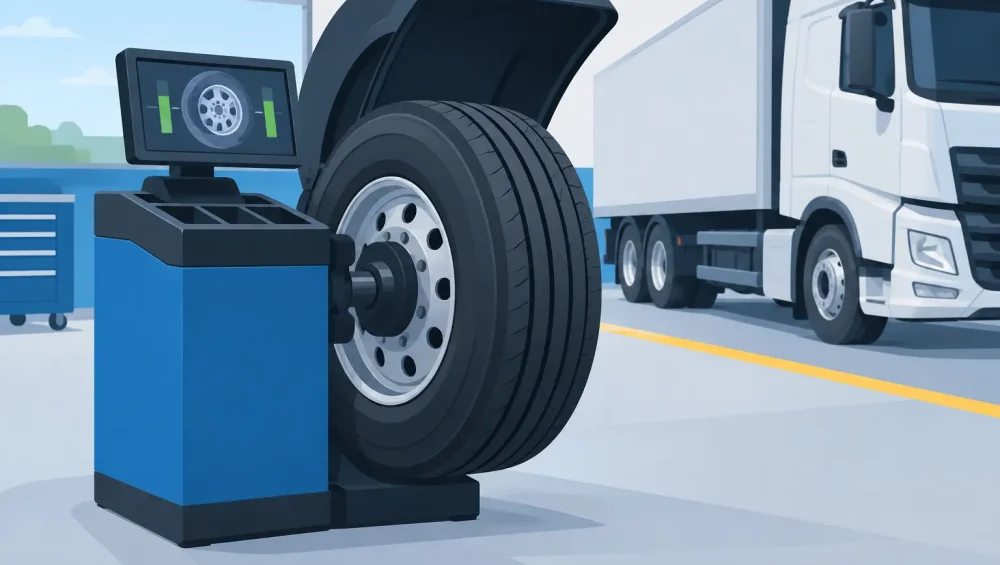
The tyre and wheel assembly is mounted on the balancing machine using the correct adaptor. The technician enters the wheel dimensions and runs the assembly at the machine’s test speed. The balancer identifies where weight is required and how much is needed on the inner and outer wheel planes.
The machine result is only reliable if the wheel is centred correctly on the balancer. This is one reason heavy vehicle balancing is best left to trained technicians. Truck wheels are heavy, and poor handling or incorrect mounting can create a safety risk as well as an inaccurate result.
Fit the correct balance weights
The technician cleans the weight location, applies the specified clip-on or adhesive weights, then spins the assembly again to confirm the result. Weight type depends on the wheel design and operating conditions. Clip-on weights are common on steel rims, while adhesive weights may suit some alloy wheels where fitted correctly.
Weights must be secure. A missing weight can bring the vibration back quickly, particularly on rough roads or vehicles regularly travelling through worksites. If a tyre needs an unusually large amount of weight, the technician should investigate further. The rim may be bent, the tyre may have excessive run-out, or the tyre may not be seated evenly on the bead.
Refit the wheel and road-test if required
Once balanced, the wheel is refitted using clean mating surfaces and the manufacturer’s torque specification. A road test can confirm whether the original vibration has gone. If the shake remains, the next check may be alignment, suspension, bearings, driveline components or another wheel position.
For dual wheels and trailer axles, the process depends on the tyre condition, axle role and the vibration being reported. Balancing every wheel may not always be necessary, but it can be worthwhile for long-haul work, frequent highway travel and vehicles where tyre life and ride quality matter. A tyre professional can help prioritise the wheels that need attention first.
Balancing beads versus wheel weights
Some operators use internal balancing beads or similar balancing media. These products move inside the tyre as it rotates and can redistribute to counter imbalance. They may suit certain heavy vehicle applications, particularly where wheels are exposed to conditions that could dislodge external weights.
There are trade-offs. Internal media must be compatible with the tyre, valve system and tyre monitoring equipment. Moisture contamination can cause problems, and the amount used needs to match the tyre size. Traditional machine balancing with correctly fitted weights remains a clear, measurable option, especially when diagnosing a fresh vibration on steer tyres.
Do not ignore the cause of repeat imbalance
A wheel that repeatedly loses balance needs more than another set of weights. Check whether the tyre is slipping on the rim, whether a weight is being knocked off, or whether the wheel has sustained impact damage. A casing with a broken belt or internal separation may also create a vibration that balancing cannot solve.
This is particularly relevant after a blowout, roadside repair or tyre replacement. The vehicle may be back on the road, but the wheel assembly and nearby components should be checked before the next long run. Catching a fault at the depot or job site is far cheaper than dealing with a damaged tyre on the M1 or a delayed load on the Golden Highway.
Keep wheel balancing part of tyre maintenance
Balancing works best alongside tyre pressure checks, rotations, alignment inspections and regular tread assessments. Rotation can move a developing vibration from the rear of the vehicle to the steering axle, so it makes sense to inspect and balance tyres when positions change.
Fleet operators should encourage drivers to report vibration early and record the speed, road conditions and axle where it is felt. That detail gives a technician a head start and reduces guesswork. It also makes it easier to spot a repeated issue across a particular vehicle or tyre position.
For owner-drivers and busy fleets, a mobile tyre service can inspect, repair or replace a tyre where the truck is parked, then assess whether wheel balancing is required before the vehicle returns to work. Hunter Mobile Truck Tyres provides on-site heavy vehicle tyre support across the Hunter region, helping keep trucks, trailers and plant moving without an unnecessary workshop delay.
A smooth-running truck is easier on the driver, kinder to tyres and less likely to surprise you halfway through a job. If a vibration has started, arrange a proper inspection early and give the wheels the attention they need before the next loaded run.