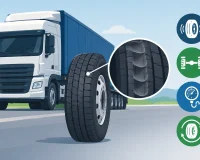
A trailer tyre failure rarely happens at a convenient time. It happens loaded up, on a delivery deadline, halfway through a long run or out at a job site where getting to a workshop costs hours. Finding the best trailer tyres Australia has to offer is not just about buying a recognised brand. It is about fitting the right tyre for the weight, axle setup, road conditions and kilometres your trailer actually works through.
For operators across the Hunter, that choice can make the difference between a reliable run and an expensive roadside delay. The right trailer tyres carry the load evenly, run cooler, wear predictably and help protect the suspension, bearings and cargo. The wrong ones can scrub out early, overheat or leave a truck and trailer parked on the shoulder.
Best trailer tyres Australia: start with the job
There is no single tyre that suits every trailer. A flat-top travelling the M1 every day has different needs from a tipper working rough access roads, a livestock trailer, a refrigerated unit or a plant trailer heading between sites. Start with the work, not the sticker price.
For highway trailers covering serious kilometres, durability, heat resistance and even wear matter most. A quality commercial trailer tyre with the correct load and speed rating is built for repeated highway use, but it still needs the right pressure and regular checks to deliver its full life.
For tippers, earthmoving trailers and agricultural work, tougher casings and tread designs suited to mixed surfaces may be the smarter option. Mud, loose gravel, sharp rock and regular site access place different demands on a tyre. A tyre that lasts well on sealed roads may not be the best value once it spends its week crossing rough yards and unmade tracks.
The key question is simple: what load does the trailer carry, and where does it carry it? Be honest about both. Choosing a tyre for the lightest or easiest part of the job is a fast way to create trouble.
Match tyre capacity to the real load
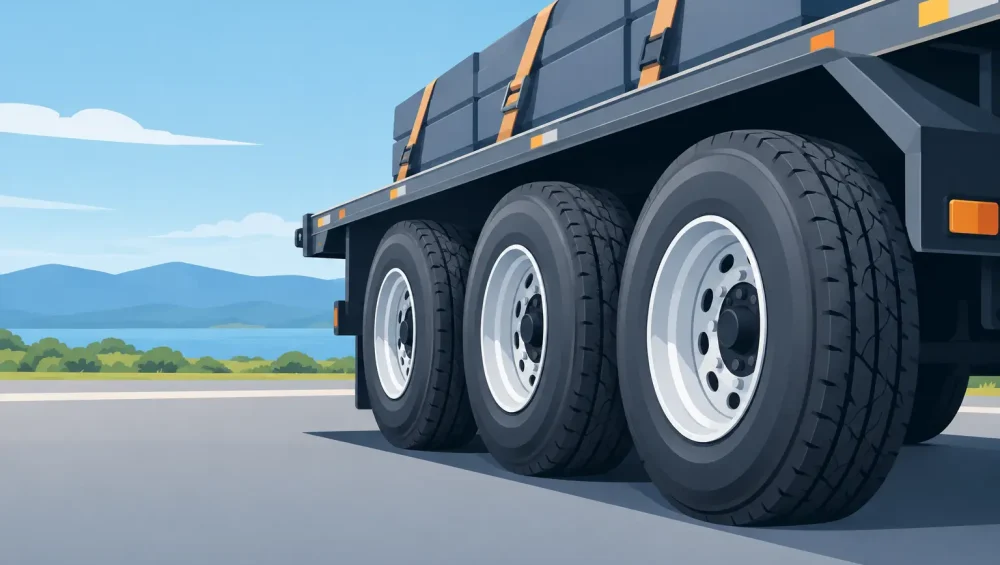
Every tyre has a load rating, and that rating is not a suggestion. It needs to cover the load placed on each tyre when the trailer is fully loaded, taking into account the trailer’s axle configuration and the way weight is distributed.
A common mistake is to look only at the trailer’s gross capacity. In practice, uneven loading, a forward-heavy load, side-to-side imbalance or poorly adjusted axle groups can place more pressure on one tyre than another. That overloaded tyre runs hotter and is far more likely to suffer casing damage, accelerated shoulder wear or a blowout.
Check the trailer placard and manufacturer specifications before replacing tyres. The tyre size, construction, load index and approved rim requirements all need to suit the trailer. If you are changing sizes or changing from one tyre construction to another, get proper advice first. A tyre that physically fits the wheel is not automatically suitable for the job.
It also pays to consider the full working load rather than the occasional light run. If the trailer regularly operates near capacity, fit tyres that are built to handle that work day after day. Saving a little on the initial purchase can disappear quickly after one roadside callout, missed load or damaged carcass.
Pressure is part of the tyre choice
Even the best tyre will not perform properly at the wrong pressure. Underinflation causes excessive flexing and heat build-up, particularly on loaded highway runs. Overinflation can reduce the contact patch, make the ride harsher and contribute to uneven wear. Both can shorten tyre life.
Pressure should be checked cold, before the day’s run, using the pressure recommended for the tyre and the load. Do not copy a pressure from another trailer just because the tyres look similar. Different axle loads, tyre sizes and applications require different settings.
A slow leak is just as costly as a dramatic puncture. Regular pressure checks catch valve issues, rim leaks and small penetrations before they turn into a shredded tyre on the highway.
Tread pattern matters, but tyre condition matters more
Tread design affects traction, water clearing and how the tyre handles mixed surfaces. For most road-going trailers, a highway-focused commercial pattern offers predictable wear and stable handling. For site work, a deeper or more open pattern may offer better grip, though it can wear differently on long sealed-road runs.
Do not choose a tyre on tread appearance alone. The casing quality, load capacity and suitability for the axle position carry just as much weight. Trailer tyres are subjected to scrubbing forces, especially on multi-axle groups during tight turns. A tyre designed for trailer service needs to handle that demand.
Inspect tyres regularly for irregular wear. Feathering, one-sided wear, cupping and rapid shoulder wear are warning signs, not cosmetic issues. They can point to incorrect pressure, worn suspension components, alignment trouble, overloaded axles or wheel balance issues. Replacing the tyre without addressing the cause usually means the new tyre wears out early too.
New versus used trailer tyres
New tyres offer the clearest starting point for heavy, frequent or long-haul work. You know the tyre’s history, casing condition and remaining service life. For fleets that need dependable uptime, fitting quality new tyres in the correct specification is often the strongest long-term decision.
Used tyres can be a practical option in the right circumstances, particularly for trailers with lower annual kilometres or short-term operational needs. But they must be inspected properly. Check tread depth, sidewall condition, repairs, age-related cracking, uneven wear and any signs of impact damage. A cheap tyre with hidden casing damage is not a bargain when it fails under load.
For transport operators, the decision should come back to risk. A used tyre may suit a low-use trailer around a property or yard. A trailer running loaded on major roads needs tyre reliability that matches the consequence of a failure.
Do not ignore wheels, balance and rotation
Tyres do not work alone. Damaged rims, loose wheel nuts, poor wheel balance and worn suspension parts can all reduce tyre life. A bent rim can cause a persistent leak or vibration. An unbalanced wheel can contribute to uneven wear. Worn bushes or axle alignment issues can destroy a set of tyres far sooner than expected.
Trailer tyre rotation is also worth considering where wear patterns allow it. Rotating tyres can help spread wear more evenly across the trailer, but it should be planned around tread condition, tyre matching and axle requirements. If tyres are wearing unevenly, inspect the mechanical cause before simply moving them to another position.
For a working fleet, tyre records help identify repeat problems. Record fitment dates, tyre positions, pressures, repairs and wear observations. This quickly shows whether one axle, route or trailer is costing more than it should.
When a tyre problem stops the job
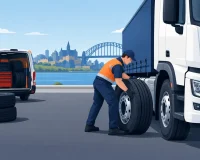
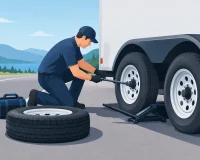
A puncture or blowout does not need to turn into a full day off the road. Hunter Mobile Truck Tyres provides mobile support for trucks and trailers, including emergency tyre replacement, puncture repairs, on-site fitting, wheel balancing and pressure checks. For operators working through Newcastle, the Hunter Valley, the M1, Golden Highway or remote job sites, on-site service means the repair comes to the vehicle instead of adding a workshop trip to an already delayed day.
If a tyre has failed, pull up safely where possible and avoid driving further on a flat. Running on a deflated tyre can destroy the casing, damage the rim and make a repair impossible. Give the technician clear details: trailer type, tyre size, location, load status and whether the wheel has already been damaged. That helps get the right solution to site faster.
A practical tyre check before every run
Before heading out, walk around the trailer and look for obvious cuts, bulges, exposed cords, lodged debris and low tyres. Check that dual tyres are not rubbing, wheel nuts appear secure and tread wear is reasonably even across each axle. It takes minutes and can prevent a major delay.
The best trailer tyre is the one correctly rated for the job, maintained at the right pressure and inspected before a small issue becomes a roadside failure. Put that check into the pre-start routine, especially before a loaded run, and your trailer has a far better chance of finishing the day on schedule.