A trailer wheel failure rarely happens at a convenient time. It happens loaded, on the shoulder of the M1, halfway through a delivery run, or when a tipper needs to be back on site. Fast, professional roadside trailer wheel replacement keeps a tyre problem from turning into a missed job, a stranded load, or a long and expensive recovery.
For owner-drivers, transport businesses and fleet managers, the priority is simple: make the area safe, get the correct wheel solution to the trailer, and return the vehicle to service without cutting corners. A mobile heavy vehicle tyre team can assess the problem where it happened and carry out the work without sending the truck and trailer off to a workshop.
When a Trailer Wheel Problem Needs Immediate Attention
A flat trailer tyre is not always just a puncture. A tyre may have failed after striking road debris, overheating from low pressure, carrying excess load, or running with damage that was not visible during a pre-start check. In other cases, a wheel issue can involve a damaged rim, loose wheel nuts, valve failure, or a tyre that has come apart at speed.
Do not keep rolling in the hope of reaching the next servo or depot. Continuing on a deflated or damaged trailer tyre can destroy the casing, damage the rim, affect the brakes or suspension, and create a serious safety risk for other road users. It can also turn a repairable issue into a full wheel and tyre replacement.
Pull over as safely as conditions allow, activate hazard lights, keep clear of traffic and assess the load from a safe position. If the trailer is leaning, the tyre has shredded, wheel studs appear damaged, or the vehicle is in an unsafe roadside location, leave the job to a qualified mobile technician. Heavy trailer wheels are not a quick roadside job with a passenger vehicle jack and a tyre iron.
Roadside Trailer Wheel Replacement That Keeps Work Moving
The right response starts with accurate information. When calling for roadside support, provide the trailer type, tyre size, wheel position, location, load details and a clear description of the failure. If you can safely share whether it is a single or dual-wheel setup, and whether the rim looks damaged, that helps the technician arrive prepared.
A proper roadside trailer wheel replacement involves more than fitting whatever tyre is available. The technician needs to confirm the correct tyre specification, load rating, wheel fitment and pressure for the application. A refrigerated trailer, low-loader, agricultural trailer and long-haul road trailer can all have different operating demands. Fitting the wrong tyre may get the trailer moving temporarily, but it can compromise handling, wear and load capacity.
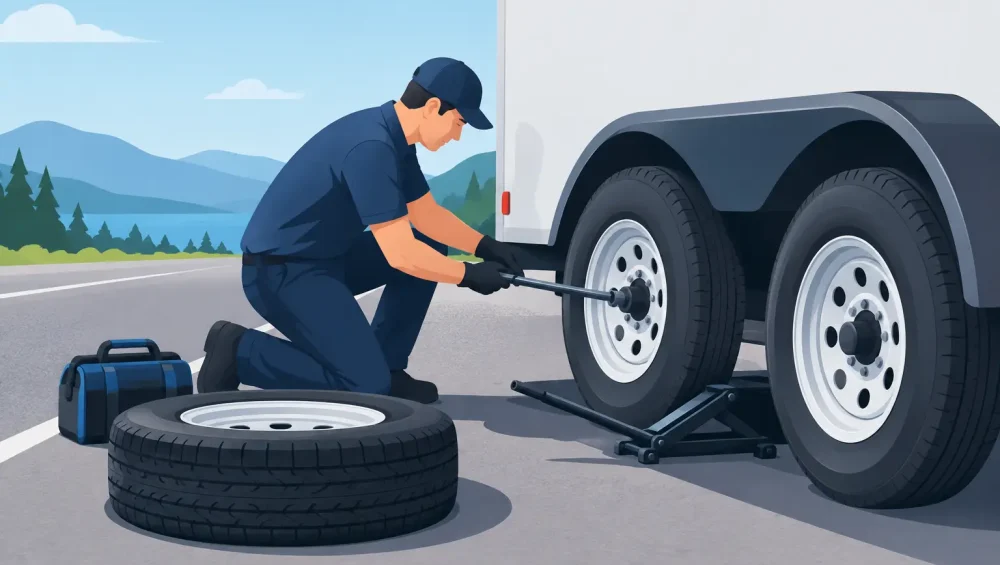
Once on site, the job generally includes securing the vehicle, inspecting the failed tyre and wheel area, removing the damaged assembly, fitting the suitable replacement, tightening wheel nuts to the required specification and checking tyre pressure. The surrounding tyres should also be inspected. If one tyre has failed due to underinflation, overloading, alignment trouble or a mechanical fault, there is a real chance the remaining tyres have been affected too.
At Hunter Mobile Truck Tyres, the focus is on getting commercial trailers and heavy vehicles back on the road with practical tyre support, day or night. That means responding to breakdowns at depots, work sites and roadside locations across the Hunter and beyond, rather than asking a loaded trailer to somehow make it to a workshop.
Replacement, Repair or a Spare Wheel?
The best option depends on the damage and the condition of the tyre. A straightforward puncture in the repairable area may be suitable for a professional repair if the casing has not been run flat or damaged internally. A sidewall cut, exposed cords, major tread separation or heat damage calls for replacement.
Using the trailer spare can be the quickest way to get moving, provided the spare is the correct size, load rating and condition. Too many trailers carry a spare that has sat unused for years with low pressure, cracked rubber or an unsuitable tread pattern. It is a spare only if it is serviceable.
A replacement wheel may be needed where the rim is cracked, bent, badly corroded, has damaged stud holes, or cannot hold air reliably. Wheel damage deserves close attention because it can cause repeat pressure loss and put extra stress on the hub and studs. The cheapest short-term option is not always the lowest-cost decision once downtime and repeat callouts are considered.
What Causes Trailer Tyres to Fail on the Road?
Most roadside tyre failures leave a clue. Finding the cause helps stop the same trailer from being off the road again next week.
Low tyre pressure is one of the biggest causes. An underinflated tyre flexes excessively, builds heat and can fail suddenly under a loaded trailer. Pressure should be checked cold, before the day’s run, using the pressure recommended for the tyre and actual axle load. Visual checks matter, but they are not enough to identify a tyre that is only moderately low.
Overloading or uneven loading also takes a toll. A trailer can be within gross weight limits but still overload one axle group or one side due to poor load placement. That creates hotter tyres, faster shoulder wear and a higher chance of blowouts. For tipper, earthmoving and agricultural operators, rough ground, sharp stone and repeated site access add another layer of risk.
Mechanical issues can be just as costly. Misalignment, worn suspension components, dragging brakes and bearing problems can destroy a tyre surprisingly quickly. If a replacement tyre shows unusual wear after a short distance, the tyre may not be the root cause. The trailer needs a wider inspection before another tyre is sacrificed.
Road hazards remain unavoidable at times. Screws, metal fragments, potholes and debris can take out even a well-maintained tyre. The difference is that a properly maintained tyre and wheel package gives you a better chance of identifying damage early and avoiding a major roadside failure.
Keep the Callout Short and the Risk Low
Good information and safe positioning make a real difference during an emergency callout. If possible, note the nearest cross street, kilometre marker, exit, business name or landmark. On the Hunter Expressway, Golden Highway and regional routes, a vague location can cost valuable response time.
Keep people well away from live traffic and do not stand beside a tyre that has overheated or suffered a violent blowout. Do not loosen wheel nuts or crawl under a trailer unless it is properly supported with equipment rated for the task. Air suspension, unstable ground and a loaded trailer create hazards that are easy to underestimate.
It also helps to have the trailer registration, tyre size and fleet contact details ready. For fleet operators, a simple record of tyre positions, replacement dates and recurring faults makes callouts faster and helps identify patterns across the fleet.
Preventing the Next Trailer Wheel Failure
Emergency service gets you moving, but regular checks reduce how often you need it. A brief walk-around before departure can spot cuts, bulges, lodged objects, uneven wear, damaged valves and loose-looking wheel hardware. Check pressures with a reliable gauge, particularly after a trailer has been parked for several days or has moved between heavy and light loads.
Schedule tyre rotation, wheel balancing where suitable, and professional inspections as part of normal fleet maintenance. For high-mileage trailers, tyre management is not paperwork for its own sake. It is a practical way to control tyre spend, extend casing life and prevent avoidable delays.
When the trailer is loaded and time matters, do not gamble on a damaged wheel or a tyre that is losing air. Arrange qualified mobile assistance early, protect the load and give your driver the best chance of getting safely back to the job.