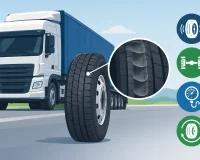
A single steer tyre found running low at a 5 am pre-start can be the difference between a normal run and a costly roadside delay. This fleet tyre maintenance example shows how a practical inspection routine, fast repairs and mobile support can keep heavy vehicles working while reducing avoidable tyre spend.
For truck fleets, tyres are not just a running cost. They affect safety, fuel use, load carrying, driver confidence and whether the vehicle gets back to work on time. The aim is not to replace every tyre early. It is to get the safest possible working life from every casing, while catching problems before they become a blowout, damaged wheel or missed delivery.
A fleet tyre maintenance example for working trucks
Consider a local operator running eight prime movers, 12 trailers and several tippers across the Hunter, Newcastle and the wider regional road network. The fleet handles a mix of highway kilometres, quarry access roads, depot work and job-site travel. Some units run long distances every week, while others face sharp rocks, mud and frequent turning on rough surfaces.
The operator had a familiar problem. Tyres were being checked when drivers had time, not through a set system. A puncture might be repaired only after a tyre had run soft and damaged the casing. Trailer tyres were often overlooked until obvious uneven wear appeared. Workshop visits also pulled vehicles out of service during busy periods.
The solution was a simple maintenance program built around scheduled checks, recorded findings and mobile tyre support when action was needed. It did not require complicated software or an unrealistic inspection process. It required consistency.
Step 1: Start every shift with a useful pre-start
Drivers were asked to check tyre condition before leaving the yard, not just kick the rubber and head off. The check focused on visible cuts, lodged stones, exposed cords, bulges, missing valve caps, flat spots and damage around the sidewall. Drivers also looked for obvious dual-tyre issues, including one tyre sitting lower than the other.
Pressure checks were scheduled with a calibrated gauge rather than judged by appearance. This matters because a tyre can look acceptable and still be underinflated. Underinflation creates excess heat, increases shoulder wear and can weaken the casing. On a loaded truck or trailer, that heat can quickly turn a repairable issue into a tyre failure.
Drivers did not need to make tyre decisions on their own. Their job was to identify and report an issue early. A quick report with the vehicle number, tyre position and a clear photo gave the fleet manager enough information to organise the right response.
Step 2: Set pressure targets by vehicle and job
One pressure does not suit every truck in a fleet. The correct setting depends on tyre size, axle load, operating conditions and the work the vehicle is doing. A highway prime mover, a loaded tipper and a trailer used on rough access roads can have very different requirements.
In this example, the operator created a tyre pressure sheet for each vehicle type. It was kept in the cab and at the depot, so drivers and technicians had a clear reference point. Pressures were checked cold wherever possible, before the vehicle had travelled far enough to heat the tyres.
The trade-off is straightforward. Higher pressure may help a tyre run cooler under heavier load, but excessive pressure can reduce the contact patch and contribute to centre wear or a harsher ride. Too little pressure can improve neither grip nor tyre life when the vehicle is carrying weight. The right target comes from the tyre manufacturer’s load and inflation guidance, matched to the real work being done.
The weekly inspection that found money being lost
Each week, the fleet arranged a more detailed tyre inspection. A mobile technician checked tread depth across each tyre, inflation pressure, valve condition, wheel and rim damage, tyre age, pairing on duals and signs of irregular wear.
This is where the operator found two issues that had been costing money. First, several trailer tyres were wearing faster on one shoulder because of an alignment concern. Second, dual tyres on a drive axle had noticeably different tread depths and rolling diameters. The mismatch meant the tyres were not sharing the load evenly.
The alignment issue was booked for repair before the tyres wore beyond use. The mismatched duals were rearranged and replaced where necessary, using compatible tyres on the same axle. That early action cost far less than allowing good tyres to scrub out prematurely.
A weekly inspection also gave the fleet a record of tyre condition. Instead of relying on memory, the operator could see which vehicle was using more tyres, which routes caused more damage and where repeat pressure loss was occurring. That information made tyre purchasing and maintenance decisions far more practical.
What the inspection record should include
A useful record does not need to be pages long. It should show the registration or fleet number, date, tyre position, pressure, tread depth, observed damage, repair completed and recommended follow-up. Recording tyre brand, size and fitment date can also help identify patterns over time.
For example, if the same trailer position repeatedly suffers punctures, the cause may be the route, debris at a site, wheel damage or how the tyre is being used. Replacing tyres without investigating the cause only repeats the expense.
Repair early, rotate when it makes sense
In the example fleet, punctures were assessed as soon as they were reported. A proper repair could often save a tyre if the damage was repairable and the tyre had not been driven flat. Waiting until the next convenient workshop visit was no longer the default approach.
Mobile tyre service made a major difference here. A technician could attend the depot, roadside or job site, inspect the damage and carry out a suitable repair or replacement. For a truck stopped on the Hunter Expressway, the M1 or a remote work site, avoiding a tow or long wait can protect the whole day’s schedule.
Rotation was used selectively rather than automatically. Rotating tyres can help even out wear on certain vehicles, but it depends on the tyre type, axle position, tread design and condition of the matching tyres. Steering tyres, drive tyres and trailer tyres each have different jobs. Moving a tyre simply because it has reached a set kilometre figure is not always the best call.
The fleet manager worked with the tyre technician to rotate tyres where it would genuinely extend service life and maintain safe matching across axles. Worn tyres with structural damage or poor wear patterns were not shifted to another position to delay replacement.
Respond fast when a tyre fails
Even the best program cannot prevent every puncture or blowout. Road debris, sudden impacts and hard job-site conditions can damage a tyre without warning. The difference is how the fleet responds.
The operator established a clear breakdown process. Drivers were told to stop safely, report the exact location, vehicle details, tyre position and whether the truck was loaded. They were also instructed not to keep driving on a flat tyre unless moving a short distance was necessary for immediate safety.
With this information ready, a mobile tyre provider could arrive prepared with the right equipment and replacement options. Hunter Mobile Truck Tyres provides 24/7 on-site support for puncture repairs, tyre replacement, blowout recovery and fleet tyre work, helping operators get trucks and trailers moving again without unnecessary workshop delays.
Fast response is valuable, but the cheapest breakdown is the one that never happens. Every roadside callout should trigger a quick review: Was the tyre underinflated? Was there a repairable puncture that went unnoticed? Is the route causing repeat damage? Was the tyre suitable for that position and operating condition?
Results from a consistent tyre routine
After several months, the example fleet saw fewer emergency tyre events caused by slow leaks and underinflation. More tyres were repaired before casing damage occurred, and uneven trailer wear was identified before entire sets needed replacing. Drivers also became more confident reporting small issues because they knew action would be taken quickly.
There is no single maintenance schedule that fits every fleet. A long-haul operation may need stronger focus on pressure, heat and kilometre tracking. A tipper or earthmoving fleet may need more frequent checks for cuts, rock damage and site-related punctures. The right program reflects the vehicles, loads, roads and hours your fleet actually works.
Keep the process simple, make inspections regular and act while a tyre problem is still small. That is how tyres last longer, drivers stay safer and trucks spend more time earning instead of sitting still.