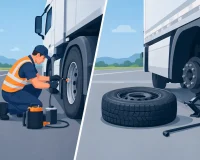
A tyre rarely fails without giving a few warnings first. Uneven wear, low pressure, sidewall damage and slow leaks can all turn into a costly roadside callout when a loaded truck, trailer or tipper is due to be working. When you plan fleet tyre inspections properly, you spot those warnings before they become downtime, missed deliveries or an unsafe vehicle on the road.
For Hunter operators, tyre checks need to work around real conditions: long highway runs, quarry access roads, rough job sites, heavy loads, changing weather and tight dispatch times. A good inspection plan is not paperwork for the sake of it. It is a practical routine that keeps vehicles moving and helps drivers leave the depot with confidence.
Plan Fleet Tyre Inspections Around How Your Vehicles Work
There is no single inspection interval that suits every fleet. A prime mover doing regular long-haul kilometres on the M1 will have different tyre demands from a tipper working around Maitland or an earthmoving truck travelling over sharp, loose site material. Start by grouping vehicles according to their work, load, route and operating hours.
High-kilometre trucks should receive frequent pressure and visual checks, with a more detailed inspection scheduled at set kilometre intervals. Vehicles working on construction, agricultural or quarry sites may need closer checks for cuts, punctures and casing damage, even if they do fewer road kilometres. Trailers deserve the same attention as the truck. A neglected trailer tyre can quickly damage a tyre, wheel or guard and put the whole job behind schedule.
Build tyre inspections into existing fleet routines wherever possible. Drivers can complete a quick walk-around before leaving, while workshop staff or mobile tyre technicians can carry out scheduled deeper checks at the depot or job site. The right schedule is the one your team will actually follow every week.
Set clear triggers for extra inspections
Scheduled checks are essential, but some events should automatically trigger another tyre inspection. This includes a hard impact with a pothole or kerb, a puncture repair, an overload event, a wheel change, a report of vibration, or any vehicle returning from severe off-road work.
Do not wait for the next planned service if a driver reports pulling to one side, unusual road noise, loss of pressure or heat around a wheel. These symptoms can point to problems that become more expensive the longer the vehicle stays in service.
What Every Heavy Vehicle Tyre Inspection Should Cover
A proper fleet inspection should be consistent. If each driver or staff member checks different things, faults are easily missed and tyre records become unreliable. Use one practical checklist across the fleet and make sure the results are recorded against the correct vehicle and axle position.
The inspection should cover four key areas:
- Tyre pressure: Check pressures when tyres are cold where possible, and use the pressure suited to the load, tyre size and application. Underinflation builds heat, increases fuel use and accelerates shoulder wear. Overinflation can reduce the contact patch and make the tyre more vulnerable to impact damage.
- Tread depth and wear pattern: Measure tread across the tyre, not just in one place. Centre wear, shoulder wear, cupping and feathering each point to different issues, including incorrect inflation, alignment problems, worn suspension parts or wheel imbalance.
- Damage and embedded objects: Look for nails, screws, stone drilling, cuts, cracks, bulges and exposed cords. Check both sidewalls, the tread face and the area between dual tyres. A small object may not be causing a rapid leak yet, but it can quickly become one under load.
- Wheels, valves and fitment: Inspect wheel rims for cracks, corrosion or impact damage. Check valve caps and extensions, wheel nut indicators where fitted, and signs of movement around the bead. Also make sure dual tyres have adequate spacing and are not rubbing each other.
Record tyre position as well as the fault. Saying a tyre is worn is less useful than noting that the outer drive tyre on the left-hand side has heavy shoulder wear and has been removed for assessment. Accurate records help identify repeat faults before they affect more vehicles.
Put Drivers at the Centre of the Routine
Drivers are the first people to notice a tyre issue, but they need a simple process and permission to report it. Asking a driver to complete a complicated report at the start of a shift is unlikely to produce useful information. A fast pre-start walk-around, backed by clear instructions, is more effective.
Drivers should know what requires immediate attention: a flat or visibly damaged tyre, exposed cords, a bulge, a hot wheel, a loose-looking wheel component, or a tyre making contact with another part of the vehicle. They should also report gradual concerns, such as recurring pressure loss or steering vibration, before the truck is committed to a long run.
Make reporting easy. It may be a paper sheet at the depot, a fleet app or a direct call to the person responsible for maintenance. What matters is that the report is acted on. If drivers raise issues and nothing happens, inspections soon become a box-ticking exercise.
Avoid the common pressure mistake
Many tyre failures begin with pressure settings that were correct for a previous load but not for the job being done now. A truck that alternates between empty running, pallet work and heavy bulk loads cannot be managed on guesswork.
Use the tyre manufacturer’s load and inflation guidance, then confirm pressures regularly with a reliable gauge. Pressure should be checked across the whole combination, including steer, drive, trailer and spare tyres. A spare that has been sitting low for months will not help much during a roadside emergency.
Use Inspection Data to Make Better Tyre Decisions
Fleet tyre inspections deliver the biggest return when the information is used, not just filed away. Review tyre records at regular intervals and look for patterns. Are steer tyres wearing faster on one side? Are certain trailers regularly losing pressure? Are punctures common on a particular route or job site? Are drive tyres being removed early due to heat damage?
These patterns can point to the real cause. Repeated irregular wear may mean the vehicle needs an alignment or suspension check. Frequent punctures may justify a different tyre pattern, stronger casing, changed site route or better debris control around the yard. Consistent low-pressure findings might mean valve extensions need attention or drivers need a clearer pre-start process.
Tyre rotation can also be worthwhile, but only when it suits the tyre type, wear condition and vehicle application. Rotating tyres simply because a calendar says so can move a problem rather than fix it. A technician should assess whether the tyre is suitable for a new position and whether matching dual tyre diameters is maintained.
Schedule Mobile Support Before a Failure Stops the Job
Taking a truck off the road for tyre maintenance can seem inconvenient, particularly when there is freight to move or a job site deadline to meet. But planned service is far more manageable than an unexpected blowout on the highway, a damaged casing or a missed shift while a vehicle waits for workshop availability.
Mobile tyre support lets fleet inspections, pressure checks, repairs, fitting and rotations happen at your depot or work site. That reduces unnecessary travel and keeps your drivers focused on the work they are paid to do. For fleets across Newcastle, the Hunter Valley and surrounding routes, it can also mean issues are handled before a truck heads into a remote run.
Hunter Mobile Truck Tyres can support scheduled fleet tyre checks as well as urgent 24/7 callouts, giving operators one practical point of contact when a tyre needs attention. The goal is straightforward: planned inspections when conditions are calm, fast help when they are not.
Give Every Fault a Clear Next Step
An inspection only prevents downtime if every fault has an outcome. Mark tyres as safe to remain in service, needing monitoring, requiring repair, or needing immediate removal. Avoid vague notes such as “check later”. They leave too much room for a serious defect to stay on the vehicle.
For repairs, confirm that the damage is repairable and that the tyre casing remains safe for its intended work. Some punctures can be professionally repaired; sidewall damage, severe heat damage and exposed cords generally demand removal. Saving a tyre is worthwhile only when it does not create a bigger risk for the driver, load or business.
Keep the plan practical, check the results and adjust it as fleet work changes. A few consistent minutes before a shift and scheduled professional inspections can save hours of roadside delay when your trucks need to keep earning.