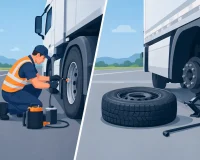
A puncture on a loaded truck is not a small problem. It can put a driver on the shoulder, hold up a delivery, delay a site crew and turn a straightforward run into expensive downtime. Truck tyre patching may be a safe, cost-effective way to get moving again, but only when the tyre damage, tyre condition and operating demands all make repair the right call.
For heavy vehicles, guessing is not good enough. A repair needs to protect the driver, the load and everyone else on the road. The right response is a proper inspection by an experienced truck tyre technician, followed by an honest decision: repair it correctly, fit a replacement, or arrange a tyre solution that gets the vehicle safely back into service.
When truck tyre patching is a suitable option
A truck tyre can often be repaired when the puncture is in the repairable area of the tread and the tyre has not been run flat or badly damaged internally. A clean, relatively small penetration from a nail, screw or similar road debris is the common example. If the casing remains sound and the damage is contained to the central tread area, a professional repair can return useful service from the tyre.
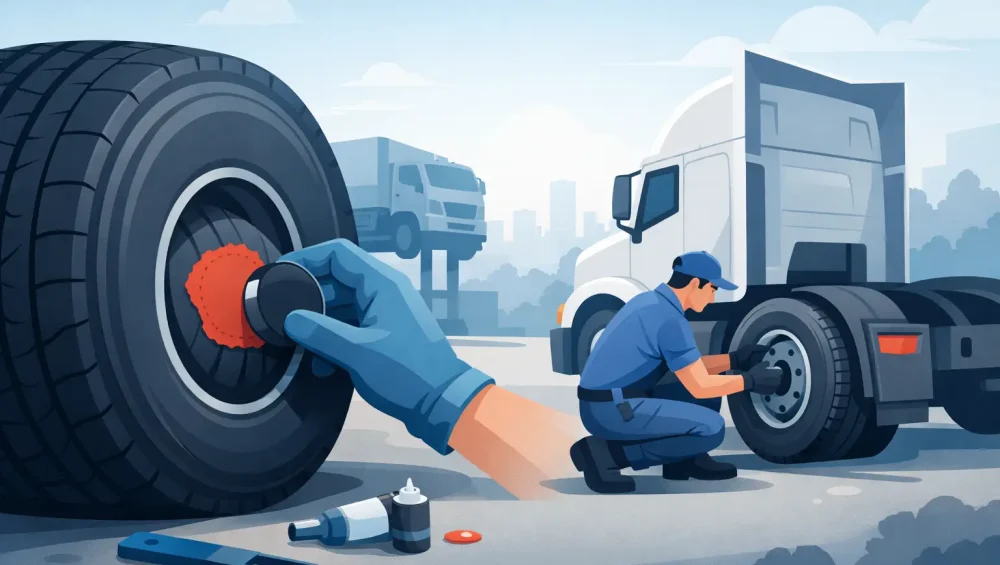
The key word is professional. A proper repair is not simply pushing a plug into the hole from the outside and hoping for the best. The tyre needs to be removed from the wheel, inspected inside and out, and assessed for hidden damage. The technician can then prepare the injury correctly and use an approved repair method suited to the tyre and its intended work.
This matters even more on steer tyres, drive tyres, trailer tyres and tyres carrying heavy loads. Heat, pressure, distance and load weight all place serious stress on a truck tyre. What looks like a minor puncture on the outside may have caused internal liner damage if the tyre was driven while underinflated.
The tyre must be inspected from the inside
External damage does not tell the whole story. A tyre that has travelled any distance with low pressure can suffer sidewall flexing, heat build-up and internal separation. These faults are not always visible from the outside, yet they can make a repair unsafe.
An internal inspection checks for evidence of run-flat damage, moisture entry, damaged cords, loose material, liner cracking and separation. If those signs are present, the safest and most economical decision over the long term is usually replacement. Saving money on a patch is never worth risking a roadside failure, a damaged rim or a missed job later in the week.
When a truck tyre should not be patched
Not every puncture is repairable, and a reliable tyre service will tell you that clearly. Damage in the sidewall or shoulder area is usually a replacement job because this section flexes heavily while the vehicle is moving. Repairs in these high-stress areas do not offer the same dependable outcome as a tread-area repair.
A tyre also needs replacement if there is a large cut, a tear, exposed steel belts, damaged bead area, major impact damage or signs it has been driven flat. Multiple close punctures can also be a concern, particularly where repairs would weaken the same section of casing.
Blowouts are different again. Once a tyre has failed violently, the casing may be beyond recovery and surrounding components may need checking. In that situation, the priority is to secure the vehicle, inspect the wheel and fit the correct replacement tyre so the truck, trailer or tipper can get back on the road with confidence.
It also depends on the tyre’s remaining condition. A puncture repair may be technically possible, but it may not make sense if the tyre is already near the end of its tread life, has irregular wear or has a history of pressure-related damage. A good technician weighs the repair cost against the value and expected remaining life of the tyre.
Why roadside plug repairs are not the full answer
A temporary roadside plug can occasionally help in an immediate situation, but it should not be treated as a permanent heavy-vehicle repair. It cannot confirm what is happening inside the casing, and it does not address any concealed damage caused by low pressure or heat.
For a working truck, a temporary fix should lead to a proper assessment as soon as possible. That is particularly true for long-haul work, loaded trailers, earthmoving applications and vehicles regularly travelling on the M1, Hunter Expressway, Golden Highway or regional access roads. A tyre failure in those conditions can cost far more than arranging the right repair at the start.
The practical approach is simple: if a tyre is losing air, stop safely, avoid running it flat and get a qualified mobile tyre technician to inspect it. Acting early gives the tyre the best chance of being safely repaired and helps prevent avoidable casing damage.
Protect the tyre before the puncture becomes a failure
Many costly puncture callouts begin with a small issue that was missed during a pre-start check. Drivers do not need to become tyre specialists, but regular visual checks and pressure checks make a real difference. Look for embedded objects, cuts, bulges, uneven wear, cracking, stones trapped between dual tyres and any tyre sitting lower than the others.
Correct pressure is especially important. Underinflation creates heat and excessive flexing, while overinflation can reduce contact area and contribute to uneven wear. Both can shorten tyre life and make a minor road hazard more likely to become a major failure.
Fleet operators also benefit from recording recurring punctures and wear patterns. If the same vehicle or route keeps damaging tyres, there may be a loading issue, wheel alignment problem, unsuitable tyre pattern or site hazard that needs attention. Fixing the cause can reduce callouts and improve tyre life across the fleet.
Mobile repairs keep your operation moving
When a truck is stuck at a depot, on a job site or beside the road, taking it to a workshop is not always practical. A mobile tyre service brings the inspection, repair equipment and replacement options to the vehicle. That means less waiting, less towing risk and a faster path back to productive work.
Hunter Mobile Truck Tyres provides on-site tyre support for trucks, trailers, tippers and commercial fleets across the Hunter region, including emergency callouts when a puncture or blowout cannot wait. Where truck tyre patching is safe, the focus is on completing the repair properly. Where it is not, the team can help with replacement tyres, fitting and practical advice on the next step.
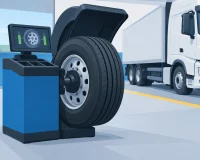
For fleet managers, mobile support also makes planned maintenance easier. Tyre rotations, pressure checks, wheel balancing and worn-tyre replacements can be organised around the fleet’s operating schedule rather than taking vehicles out of service for a workshop visit. That is time saved for drivers and fewer interruptions for dispatch.
What to do when you find a puncture
If you spot a nail, screw or cut, do not pull it out unless a technician advises you to. The object may be slowing the air loss, and removing it can turn a manageable puncture into a flat tyre. Park safely, keep the load and vehicle position in mind, and check whether the tyre is visibly low.
Avoid driving on an underinflated tyre to reach the next stop. Even a short distance can damage a casing that may otherwise have been repaired. Give the tyre service as much useful information as possible: vehicle type, tyre size, axle position, location, load status and whether the tyre has been driven while flat. It helps the technician arrive prepared.
A repairable puncture can be a quick recovery. But the safest result comes from treating every truck tyre as the critical load-bearing component it is. Stop early, inspect properly and choose the repair or replacement that keeps the next kilometre as reliable as the last.