A tyre bill can climb fast when a fleet is covering highway kilometres, hauling loads into worksites or running local deliveries six days a week. That is why a proper retread truck tyres review needs to look beyond the purchase price. The real question is whether the tyre delivers safe, dependable kilometres for the job at hand without creating costly downtime.
Retreads can be a smart commercial option for many operators. They are not a shortcut, and they are not right for every axle or every application. Their value comes down to casing condition, the quality of the retreading process, correct fitment, tyre maintenance and how the vehicle is actually worked.
Retread Truck Tyres Review: The Straight Answer
A quality retread can offer strong value on drive and trailer positions, particularly where a fleet has disciplined pressure checks, regular rotations and vehicles operating on predictable routes. Instead of discarding a sound casing after its original tread wears down, the casing is inspected, prepared and fitted with a new tread.
The upfront saving compared with a new premium tyre can be significant. For operators with several trailers, tippers or linehaul units, that difference adds up across a year. Retreads also make practical environmental sense because getting another life from a suitable casing reduces the raw material required for a replacement tyre.
But price should never be the only reason to choose one. A cheap retread fitted to a poor casing, or sent into an application it was not designed for, can cost more in roadside callouts, lost loads, missed slots and damaged customer confidence. Good retreads are a controlled tyre-management decision, not simply the lowest-priced option on the rack.
What Makes a Retread Worth Buying?
The casing is the foundation. It must be free from major impact damage, serious belt issues, excessive heat damage and repairs that make it unsuitable for another service life. A reputable retreader carries out detailed inspection before the tyre progresses. If the casing is not fit, it should be rejected.
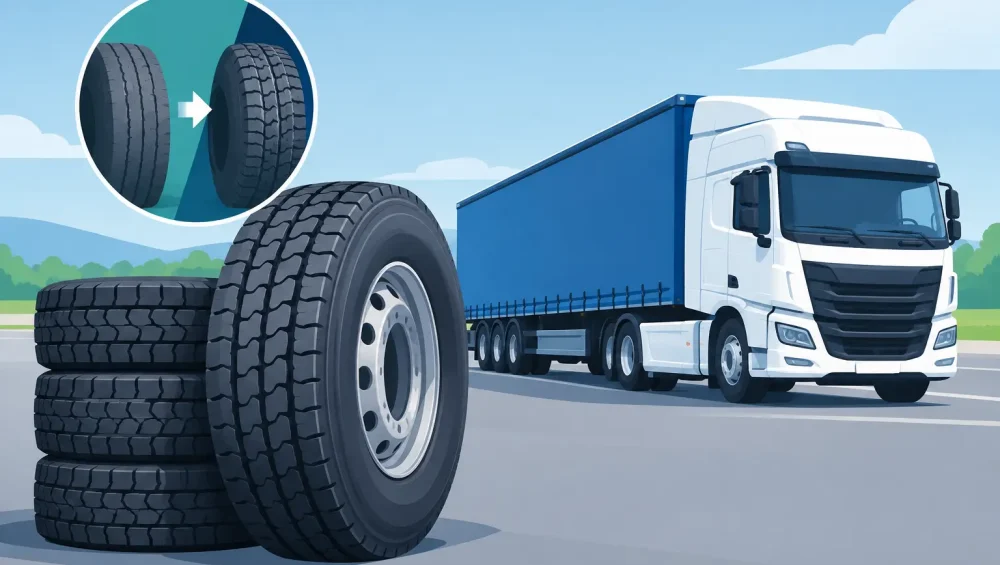
The retreading process matters just as much. The worn tread is removed, the casing is buffed and prepared, repairs are completed where appropriate, and new tread rubber is applied and cured. Quality control through each stage affects how evenly the tyre wears, how it handles heat and how reliably the tread stays bonded in service.
Tread pattern must also match the work. A highway trailer tyre needs different characteristics from a drive tyre working in quarry access roads, muddy paddocks or stop-start metro traffic. The wrong pattern can wear quickly, lose traction or increase fuel use. Before fitting retreads, consider the axle position, load, route surfaces, average speed and how often the truck runs empty versus loaded.
Where Retreads Often Make Commercial Sense
Trailer axles are a common place to consider retreads. Many trailers cover high kilometres on sealed roads and can benefit from a well-matched retread program, provided alignments, bearings and suspension are in order. An unevenly tracking trailer will destroy any tyre, new or retreaded.
Drive positions can also suit quality retreads, especially in fleets that maintain pressures and rotate tyres before irregular wear becomes severe. For mixed work, a deeper or more aggressive pattern may be needed to maintain grip on loose surfaces. A retread supplier should ask how and where the truck operates, rather than offering the same pattern for every vehicle.
For local fleets, construction vehicles and agricultural operators, retreads may be particularly worthwhile where tyres face frequent wear but travel patterns are known. A tipper that spends half its week on bitumen and half on site roads needs a different approach from a B-double running the M1 overnight.
Steer positions deserve more caution. Manufacturer advice, fleet policy, tyre specifications and the intended operating conditions should guide that decision. Many operators reserve premium new tyres for steering axles because steering tyres carry a direct responsibility for handling, braking stability and driver confidence. There is no one-size-fits-all rule, but this is not the position to make a decision on price alone.
The Cost Comparison Is Bigger Than the Invoice
A retread generally costs less to buy than a comparable new tyre, but the best measure is cost per kilometre. A tyre that costs less but wears unevenly, suffers repeated punctures or needs replacing early is not value. Likewise, a quality retread that provides steady service on the right axle can make a meaningful contribution to lower operating costs.
To compare options properly, track the kilometres achieved, tread wear, repairs, fuel performance and number of roadside incidents. It also helps to record tyre position and pressure history. This quickly shows whether an issue is caused by the tyre itself or by an underlying vehicle problem such as poor alignment, overloaded axles or neglected inflation.
Pressure is especially important. Underinflation creates heat, damages casings and shortens tyre life. Overinflation can reduce the contact patch and contribute to irregular wear. A retread relies on a sound casing, so protecting every casing from its first life gives the fleet more future options.
Safety Comes From Condition and Maintenance
Some operators hear the word retread and immediately think of tyre debris on the side of the road. In reality, roadside debris can come from a range of causes, including heat, impact damage, underinflation, overloads and tyres run beyond their safe condition. The useful question is not whether a tyre is retreaded. It is whether it has been correctly selected, inspected, fitted and maintained.
Every truck tyre should receive regular visual checks for cuts, bulges, exposed cords, stones, irregular wear and damage around the bead or sidewall. Drivers should report vibration, pulling, pressure loss or handling changes early. A small issue caught in the yard is far easier to manage than a blown tyre on a loaded truck at night.
Fleet managers should also keep an eye on tyre age and service history. A casing may look acceptable from the outside but still be unsuitable for retreading after a severe heat event or internal damage. Professional inspection is the safeguard here.
When New Tyres Are the Better Call
Retreads are not automatically the right choice for every job. New tyres may be the better investment for high-risk applications, critical steering positions, severe off-road work or vehicles where the casing has already reached the end of its usable life.
They may also suit operators who have no reliable tyre maintenance routine. That does not mean new tyres can be neglected, but a retread program works best when pressure, alignment and rotation are managed consistently. Without that discipline, the potential saving can disappear quickly.
If a vehicle is regularly travelling long distances at speed with maximum loads, tyre choice should be based on the operating conditions, tyre maker recommendations and the fleet’s risk controls. The best tyre decision is the one that supports safe, predictable operation, not the one with the lowest initial figure.
How to Get More Kilometres From Retreads
A retread program needs the same care as any premium tyre program. Check pressures when tyres are cold, inspect tyres before long runs and rotate them when wear patterns call for it. Keep wheel alignments and suspension in good order, and investigate abnormal wear rather than fitting another tyre and hoping for the best.
It also pays to work with a tyre provider that understands heavy vehicles. They should be able to assess the casing, recommend suitable tread patterns and fit the tyre correctly at your depot, site or roadside location. For Hunter operators, Hunter Mobile Truck Tyres can help keep tyre issues from becoming an all-day workshop delay, with mobile support for urgent replacements, repairs and fleet tyre checks.
The most useful closing test is simple: if a retread is built from a sound casing, matched to the axle and maintained properly, it can be a practical way to control tyre costs without compromising the job. If there is any doubt about casing condition, vehicle setup or tyre position, get it checked before the next run rather than waiting for a failure to make the decision for you.