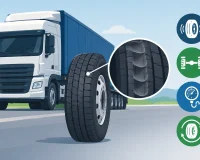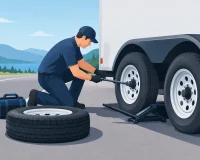
A tyre rarely fails without giving some warning first. Uneven wear, exposed damage, low tread and stones packed into grooves can all turn into a puncture, blowout or costly roadside delay. Taking a few minutes to inspect truck tyre tread before a shift can help protect your driver, load, schedule and bottom line.
For owner-drivers, that check is often done at the depot before daylight. For fleet managers, it needs to be part of a routine that drivers can actually carry out and report. The goal is simple: find a problem while the truck is parked, not when it is loaded and stopped on the M1, Hunter Expressway or a remote job site.
Why truck tyre tread checks matter
Tread is what gives a truck tyre grip, helps move water away from the contact patch and protects the casing underneath. As tread wears down, braking and steering performance can suffer, particularly on wet roads, loose surfaces and work sites. A tyre may still be holding air, but that does not mean it is fit for another hard run.
For heavy vehicles, the cost of missing tread damage goes well beyond the price of a replacement tyre. One failure can mean a missed delivery window, recovery costs, a damaged mudguard or trailer, lost productivity and a driver left waiting on the shoulder. On a tipper, earthmoving truck or long-haul combination, it may also affect load security and vehicle handling.
Legal tread depth is a minimum standard, not a target to run right up against. In general, tyres need at least 1.5 mm of tread depth across the required areas, but safe fleet management means planning replacements earlier where conditions, loads and operating routes demand it. A tyre working daily on rough access roads will not wear like one used mainly on sealed highway kilometres.
How to inspect truck tyre tread properly
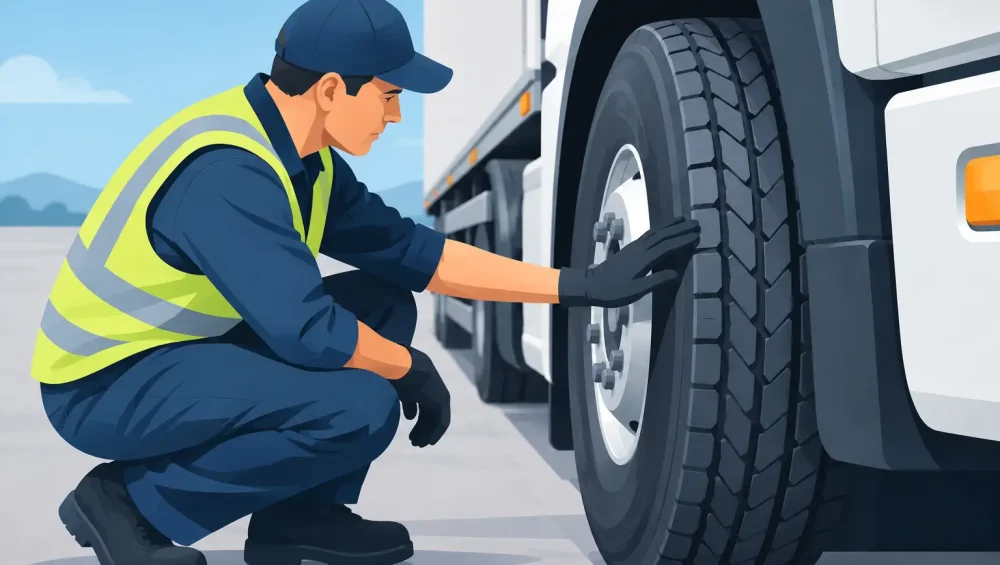
Start with the truck on level ground, with the brakes applied and enough light to see the full tyre face. A torch is worth keeping in the cab, especially for early starts, night work and roadside checks. Walk around the vehicle and inspect every tyre, including inner duals where access allows, trailer tyres and spares.
Check tread depth across the whole tyre
Do not judge tread by looking only at the outer shoulder. Check the inside, centre and outside of the tread. A tread-depth gauge gives the clearest reading and takes little time to use. If the wear bars are close to the tread surface, the tyre is nearing the point where action is needed.
Compare tyres across the same axle as well. A noticeable difference in tread depth or wear pattern can point to incorrect inflation, wheel alignment issues, suspension wear, brake drag or a tyre that has been overloaded. Replacing one tyre without addressing the cause may just lead to the same problem returning.
Look for uneven wear patterns
Even wear across the tread is what you want to see. Uneven wear tells you the tyre is working harder in one area than another.
Wear concentrated in the centre can indicate over-inflation. Worn shoulders often suggest under-inflation, while one-sided wear may point to alignment or suspension problems. Cupping, scalloping or patchy dips through the tread can be linked to balancing issues, worn shocks, loose components or tyre rotation being missed.
These signs are not something to ignore until the next service. Tyres are expensive assets, and an abnormal pattern can shorten casing life quickly. Record what you find and arrange a proper inspection before the vehicle is sent back onto a demanding run.
Check for cuts, cracks and objects in the grooves
Tread depth alone does not tell the full story. Look closely for nails, screws, wire, sharp stones, glass and metal fragments pushed into the grooves. If an object is embedded, do not pull it out on the side of the road. It may be the only thing slowing an air leak.
Also look for cuts that reach deep into the tread, cracking around tread blocks, chunking, missing rubber and signs of separation. Bulges in the tread or sidewall need urgent attention, as they can indicate internal damage. A tyre with a bulge is not a tyre to nurse back to the depot.
On quarry, agricultural and construction work, checking for stone drilling is especially worthwhile. Small rocks trapped in the tread can gradually work their way into the casing. Clearing loose debris safely before it causes damage is a simple habit that can save a tyre.
Inspect dual tyres as a pair
Dual-wheel sets deserve extra attention because faults can be easy to miss. Look between the tyres for stones, lodged debris, rubbing marks and signs that one tyre has been running flat or overloaded. A mismatch in inflation pressure or rolling radius can make one tyre carry more than its share of the load.
If one dual tyre is worn much more heavily than the other, has visible damage or has been run under-inflated, get it assessed. Continuing with an uneven pair can overwork the remaining tyre and create heat, handling and reliability issues.
Tread problems often start with pressure
Tyre pressure and tyre tread are closely connected. Under-inflation creates heat and wears the shoulders faster. Over-inflation can reduce the contact patch and wear the centre. Either way, the casing is put under stress and the tyre may not deliver the mileage you paid for.
Check pressures when tyres are cold, using a reliable gauge and the pressures suited to the tyre, axle load and operating conditions. The placard or tyre supplier recommendation is a starting point, but heavy vehicle applications can vary. A loaded long-haul truck, an empty trailer and a tipper working in and out of a site may require different pressure management.
A visual check is useful, but it is not enough. A truck tyre can be significantly low on pressure without looking obviously flat, particularly in a dual configuration. Build pressure checks into pre-start inspections and investigate repeated pressure loss straight away.
When tread wear means the truck should stop
Some tyre issues can wait for a scheduled service. Others should take the truck out of operation until a qualified technician has checked it. Stop and arrange assistance if you find exposed cords, a sidewall bulge, a deep cut, severe cracking, tread separation, a tyre running flat, or damage that has caused rapid air loss.
The same applies if vibration, pulling, repeated pressure loss or sudden uneven wear appears while driving. These are not normal signs of a hardworking truck. Continuing to operate can turn a repairable issue into a casing loss or a dangerous failure.
If you are parked roadside, move to a safe location where possible, keep clear of traffic and avoid working around a tyre that may have internal damage. Heavy vehicle tyres store serious energy. A professional inspection is the safer call.
Make tread checks part of fleet routine
The best inspection process is one that happens consistently. A quick driver walk-around before each shift, backed by documented tyre checks at service intervals, catches more faults than a rushed inspection after something goes wrong.
For fleets, record tread depths, pressures, repairs, rotations and unusual wear by vehicle position. That information helps identify recurring problems on a particular axle, route or vehicle. It also makes tyre replacement planning far easier, reducing the chance of being caught out with a truck off the road unexpectedly.
Rotation can extend usable tyre life in the right application, but it should be based on actual wear and tyre compatibility rather than guesswork. Steer, drive and trailer positions wear differently, and changing positions without checking condition can shift an existing issue somewhere else.
Mobile help when a tread issue cannot wait
A damaged or worn tyre does not always appear during workshop hours or near a depot. When a truck is down on the road, at a customer site or on a remote job, a mobile tyre response can keep the delay under control. Hunter Mobile Truck Tyres provides on-site tyre inspections, repairs, replacements and blowout recovery for heavy vehicles across the Hunter region and beyond.
If you find concerning tread wear, do not wait for it to become a breakdown. Have the tyre checked while the vehicle is safely parked, keep an eye on pressure and wear records, and give your truck the best chance of finishing the next run without drama.