A tyre failure rarely arrives at a convenient time. It happens loaded up on the M1, heading to a site before daylight, or parked in a depot with a delivery schedule already under pressure. Understanding the top causes of truck tyre failure helps drivers and fleet managers prevent costly roadside downtime before it starts.
For heavy vehicles, tyres carry far more than vehicle weight. They deal with load pressure, heat, rough shoulders, changing road surfaces and long operating hours. A small problem ignored during a pre-start check can quickly become a puncture, a shredded casing or a dangerous blowout.
Top Causes of Truck Tyre Failure
Incorrect tyre pressure
Incorrect inflation pressure is one of the most common and preventable reasons truck tyres fail. An underinflated tyre flexes excessively as it rolls. That flexing creates heat, damages the internal structure and increases the chance of a rapid failure, particularly on long runs or when the truck is carrying a full load.
Overinflation causes a different set of problems. The tyre becomes harder, has a smaller contact patch with the road and can wear heavily through the centre of the tread. It is also less forgiving over potholes, rocks and road debris. On tippers, trailers and vehicles travelling between sealed roads and worksites, that extra harshness can lead to casing damage.
Pressure needs to suit the tyre, axle position and actual load. The right figure for an empty truck may not be right once it is loaded. Check pressures when tyres are cold, use a reliable gauge and include spare tyres in the routine. If one tyre keeps losing pressure, do not keep topping it up and hoping for the best. It needs to be inspected for a puncture, valve issue, wheel damage or bead leak.
Overloading and uneven loads
Every tyre has a load rating. Exceed it and the tyre is forced to work beyond its design limits. Excess weight generates heat, strains the casing and makes a blowout more likely, especially in hot weather or over long distances.
Uneven loading is just as damaging. A trailer loaded heavier on one side puts extra pressure on the tyres carrying that side of the load. You may see rapid shoulder wear, bulging sidewalls or repeated failures on the same axle position. It can also affect handling and braking, making the vehicle harder to control when conditions turn rough.
Load distribution matters for every operator, from local delivery trucks through to earthmoving equipment and long-haul combinations. Stay within legal axle limits, secure the load correctly and treat unusual tyre wear as a warning that the weight is not being shared properly.
Cuts, punctures and road debris
Road debris is part of the job, but not every puncture is unavoidable. Nails, screws, metal fragments, sharp stones and broken material around depots or job sites can enter the tread slowly. The tyre might hold air for hours or days, then fail when heat and movement turn a small penetration into major damage.
Sidewall damage needs particular attention. Unlike some straightforward tread punctures, a cut or impact in the sidewall is often not safely repairable. Driving on it can lead to sudden failure. Kerb strikes, sharp rocks, deep potholes and running too close to road edges are common causes.
A quick walk-around at the start and end of each shift can pick up lodged objects, cuts, exposed cords and sidewall scuffs early. Remove only loose debris from the tread. If an object is embedded or the tyre is losing air, leave it in place and arrange a professional inspection. Pulling it out can turn a slow leak into a flat tyre on the spot.
Heat build-up on long runs
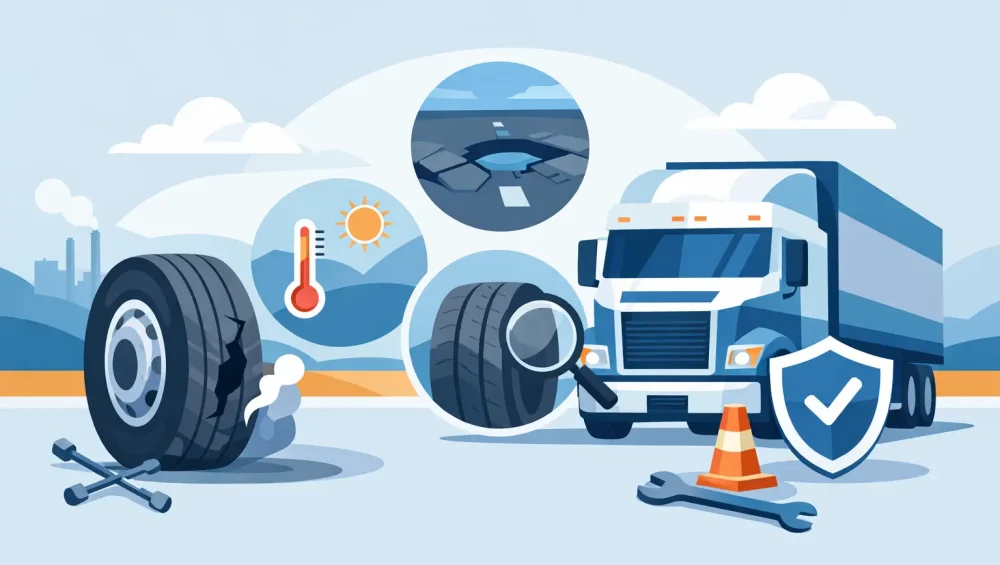
Heat is tough on truck tyres. High ambient temperatures, heavy loads, low pressures, high speeds and extended driving periods all increase operating temperature. Once internal tyre components overheat, damage can occur even if the outside of the tyre still looks acceptable.
Tyres on multi-axle trailers and inner dual positions can be especially easy to overlook. A failed or underinflated dual tyre may overload its partner, causing both tyres to run hot. By the time the driver notices smoke, vibration or a burnt-rubber smell, the damage may already be serious.
Plan checks around long trips, particularly during hotter months. After a safe stop, look for signs such as unusually hot tyres, rubber marks around the wheel area, bulges or a tyre that appears softer than the others. Never touch a tyre or wheel assembly that may be dangerously hot. Give it space and get qualified assistance.
Worn tread and irregular wear
A tyre does not have to be completely bald to be unsafe. Worn tread reduces grip in wet conditions and makes it harder for the tyre to clear water. On a heavy vehicle, that loss of traction can affect braking distance, cornering and stability.
Irregular wear tells a story. Centre wear often points to overinflation, while wear on both shoulders can suggest underinflation. One-sided wear may indicate wheel alignment, suspension or axle issues. Cupping, scalloping or patchy wear can come from worn shocks, loose components or wheel balance problems.
Replacing a worn tyre without finding the underlying issue often means the new tyre will wear out early as well. That is wasted money and more downtime. Regular rotation, wheel balancing and alignment checks help tyres wear evenly and give operators more value from every casing.
Wheel, valve and bead problems
Not every tyre problem begins in the rubber. Damaged rims, corroded wheel surfaces, cracked wheels, worn valve stems and poor bead seating can all cause ongoing air loss. Even a slow leak matters when the vehicle is travelling loaded, because pressure loss creates heat and weakens the tyre from the inside.
Wheel damage can occur after hitting potholes, kerbs or site hazards. It may not always be obvious from a distance. If a tyre repeatedly loses air after repairs, if there is visible rust around the rim, or if vibration appears at speed, the wheel assembly should be checked properly.
Correct fitting procedures matter here. A tyre that has been improperly fitted, or a wheel that has not been inspected before fitting, can create problems that show up later on the road.
Poor maintenance and missed inspections
Most major tyre failures have early warning signs. The issue is that busy operations can miss them. A rushed pre-start, a vehicle parked away from the depot, or a driver assuming somebody else checked the tyres can leave damage unnoticed until it becomes an emergency.
A practical maintenance routine does not need to slow the day down. Drivers should check tyre condition, visible damage and inflation as part of regular vehicle checks. Fleet managers should track wear patterns, tyre ages, repairs, rotations and recurring pressure loss. That record makes it easier to spot a wheel-end or suspension problem before it ruins several tyres.
For fleets working across the Hunter, regular mobile tyre support can reduce the need to send trucks or trailers off-route just for basic maintenance. Hunter Mobile Truck Tyres can inspect, repair or replace tyres on-site, helping keep vehicles where they need to be instead of waiting at a workshop.
Warning Signs You Should Not Ignore
A truck tyre should be taken out of service and assessed if you notice a bulge, exposed cords, deep cut, separated tread, repeated pressure loss or severe uneven wear. Vibration through the steering wheel or chassis, pulling to one side, a thumping noise and a sudden change in handling also deserve attention.
Do not attempt to continue driving simply because the tyre still has some air in it. The trade-off is never worth it. A planned callout or tyre replacement is far cheaper than a roadside blowout, damaged guard, delayed freight run or accident.
Reduce Failures Before They Stop the Job
The best tyre plan combines correct pressure checks, sensible loading, regular inspections and fast action when damage appears. It also needs to suit the work. A long-haul prime mover, a tipper on rough access roads and a farm trailer all face different risks, so tyre choice and maintenance intervals should reflect how the vehicle is actually used.
When a tyre issue does put a vehicle off the road, get it assessed early and keep the driver safe. A prompt mobile response can turn a major delay into a manageable interruption, letting you get back to the run with the right tyre, the right pressure and more confidence in the kilometres ahead.