A truck can look ready for another run while its tyres are already costing you grip, fuel and uptime. This truck tyre tread depth guide helps owner-drivers and fleet operators spot wear before it becomes a roadside problem, a failed inspection or an expensive blowout.
Tread depth is not just a roadworthy number. On a loaded truck, tipper or trailer, it affects braking in the wet, steering response, water clearance and how evenly the tyre carries the load. Checking it regularly is one of the quickest ways to protect your tyres and keep vehicles earning.
Why truck tyre tread depth matters
The grooves in a truck tyre are designed to move water, mud and loose material away from the contact patch. As the tread gets shallower, the tyre has less ability to clear water. That raises the risk of reduced traction and longer stopping distances, especially on wet highways, site access roads and uneven regional routes.
For heavy vehicles, a worn tyre also works harder. Heat builds up more easily, particularly where pressures are low, loads are high or the vehicle is travelling long distances. Add a hot Hunter summer day, rough shoulders or repeated stop-start work, and a tyre with limited usable tread can deteriorate quickly.
There is a financial side as well. Replacing a tyre too early wastes usable casing life. Running it too long can damage the casing, reduce retread options and turn a planned tyre change into an emergency callout. The best result is not simply getting the last possible millimetre from every tyre. It is changing tyres at the point that keeps the vehicle safe, compliant and productive.
The legal minimum is not your target
In Australia, tyres must have enough tread to meet applicable roadworthy requirements. A commonly recognised minimum is 1.5 mm of tread depth across the required area of the tyre, but operators should always confirm the current requirements that apply to their vehicle class, registration and work conditions.
Treat the legal minimum as a hard line, not a maintenance plan. By the time a tyre is close to that point, wet-weather performance is already significantly reduced and there is little margin left for uneven wear or road damage.
Many fleets set their own replacement threshold well above the legal minimum. The right threshold depends on tyre position, route, load, axle configuration, tyre type and the work being done. A steer tyre used on highway work may need replacement earlier than a drive tyre working in controlled, low-speed conditions. A trailer tyre can look serviceable at a glance yet still have dangerous shoulder wear or structural damage.
How to check tread depth properly
Use a quality tread-depth gauge rather than relying only on the tyre wear indicators. The indicators are useful warning markers, but a gauge gives you the information needed to make a sound maintenance decision.
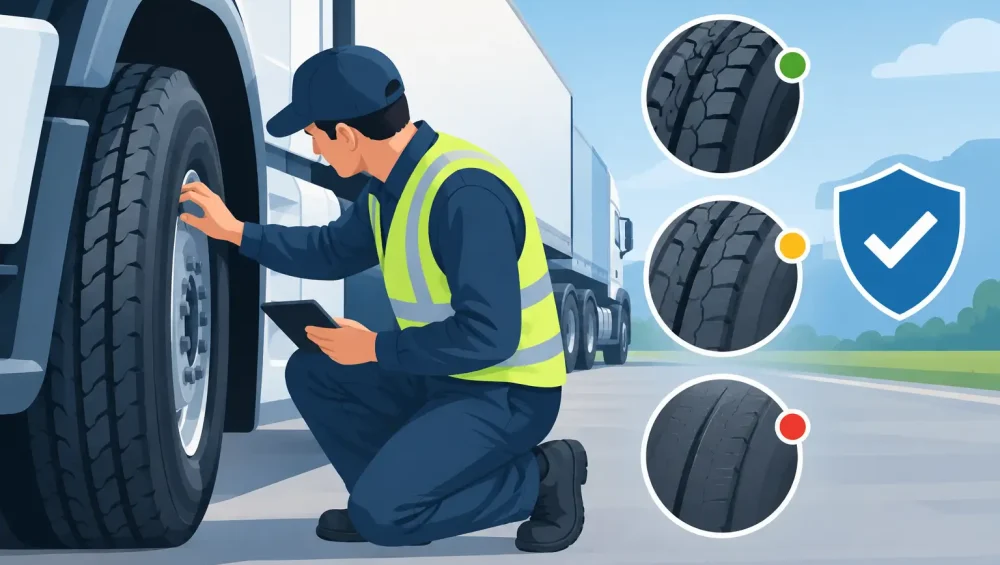
Park on level ground where possible, apply the brakes and inspect the tyre in good light. Measure the main grooves at several points around the tyre, including the inner, centre and outer sections of the tread. Do not take one reading and assume the rest of the tyre is the same.
Record the shallowest reading and compare it with previous checks. A tyre that has lost a small amount of tread evenly may be fine. A tyre that has suddenly worn on one edge needs attention now, even if the deepest groove still looks healthy.
Check each wheel position. Steer tyres, drive tyres and trailer tyres wear differently. Dual tyres deserve extra attention because a pressure mismatch or incorrect pairing can overload one tyre and cause rapid wear. For fleets, a simple recorded inspection schedule makes it easier to identify repeat issues before they spread across several vehicles.
Check for more than low tread
Tread depth tells only part of the story. During every inspection, look for cuts, exposed cords, bulges, stone drilling, cracking, irregular wear and objects lodged in the tread. Also inspect sidewalls and valve areas. A tyre may have plenty of tread remaining but still be unsafe due to internal damage or a deep sidewall cut.
Pay close attention after running on rough job sites, quarry roads, paddocks, construction areas or damaged road surfaces. These conditions can create punctures and casing damage that are not obvious during a quick pre-start check.
What uneven tread wear is telling you
Uneven wear is a message from the vehicle. Replacing the tyre without addressing the cause can mean the next tyre wears out just as fast.
Wear concentrated in the centre of the tread can indicate over-inflation. Wear on both shoulders can point to under-inflation, overloading or a tyre being worked beyond its intended application. One-sided shoulder wear often suggests alignment, suspension or axle issues. Cupping and scalloping can be linked to worn suspension components, imbalance or wheel-end problems.
On drive tyres, irregular wear can also be affected by torque, road surface and traction demands. On trailer tyres, scrub wear is often associated with axle alignment or turning forces. This is why tyre checks should be paired with pressure checks, wheel balancing where appropriate, and inspection of suspension and alignment components.
Do not keep topping up pressure and hoping the problem settles down. If the pattern is changing, get it assessed while there is still enough tread left to protect the casing and avoid an unplanned replacement.
Tread depth, pressure and load work together
A tyre’s tread life is closely tied to pressure and load. Low pressure increases flexing and heat, which accelerates shoulder wear and can contribute to tyre failure. Excess pressure can reduce the contact patch and increase centre wear. Neither option saves money.
Pressure should be checked cold and set for the actual axle loads, tyre size and operating conditions. The correct figure for an unloaded vehicle may not be suitable when it is hauling a full load. Operators running mixed work – such as highway freight during the week and site work on weekends – may need a tyre plan that reflects both conditions.
Tyres on the same axle should also be correctly matched. Significant differences in tread depth, rolling circumference or inflation can make one tyre carry more than its share of the load. That affects wear, handling and drivetrain performance.
When should a truck tyre be replaced?
Replace a truck tyre when it reaches the fleet’s nominated removal point, approaches the legal limit, has unsafe damage, or is wearing so unevenly that its future service is compromised. The exact timing depends on the job, but there are several situations where waiting is a poor decision:
- The tread is close to the legal minimum or wear indicators.
- The tyre has exposed cords, a bulge, major cut or suspected internal damage.
- One area of the tyre is much lower than the rest.
- Repeated air loss suggests a puncture, valve issue or rim problem.
- The tyre is overheating, separating or showing abnormal vibration.
For a steer position, take a conservative approach. Steering tyres play a direct role in stability, braking and directional control. For trailers and drives, assess the full tyre condition, axle setup and duty cycle rather than judging the decision on tread depth alone.
Build tread checks into your operating routine
A quick visual check before departure is worthwhile, but it should not replace scheduled measurement. Owner-drivers may check and record tread weekly, while high-kilometre fleets or vehicles working harsh sites may need more frequent inspections. Any tyre that has suffered an impact, puncture or pressure loss should be checked straight away.
Keep records by vehicle, axle and tyre position. Over time, those readings show which vehicles are wearing tyres too quickly and whether a change to pressures, rotation intervals, alignment or tyre specification is needed. That information turns tyre spend from a surprise expense into something you can manage.
If a tyre is borderline, damaged or wearing unevenly, do not risk a loaded run to see whether it lasts. Hunter Mobile Truck Tyres can inspect, repair or replace truck and trailer tyres on-site across the Hunter region, helping you deal with the issue where the vehicle is parked instead of losing hours getting to a workshop.
The safest tread check is the one done before the next load leaves. A few measured readings today can prevent a flat tyre, a delayed delivery and a much bigger bill down the road.