A fleet rarely breaks down at a convenient time. It happens on a loaded run, before a tight delivery window, or halfway through a shift when every truck is already committed. That is exactly why truck tyre service for fleets matters. When tyre work comes to your depot, roadside stop or job site, you lose less time, protect delivery schedules and keep more vehicles earning.
For fleet managers, owner-drivers and transport operators, tyre issues are never just tyre issues. A puncture can push out a delivery. Uneven wear can chew through fuel. One blown steer tyre can create a safety risk, a compliance headache and a costly day off the road. The right service setup is not just about replacing rubber. It is about keeping the whole operation moving.
What a truck tyre service for fleets should actually do
A proper fleet tyre service should solve two problems at once – immediate breakdowns and ongoing tyre performance. If it only handles emergencies, you are always reacting. If it only handles scheduled maintenance, you are exposed when something lets go on the highway or at a work site.
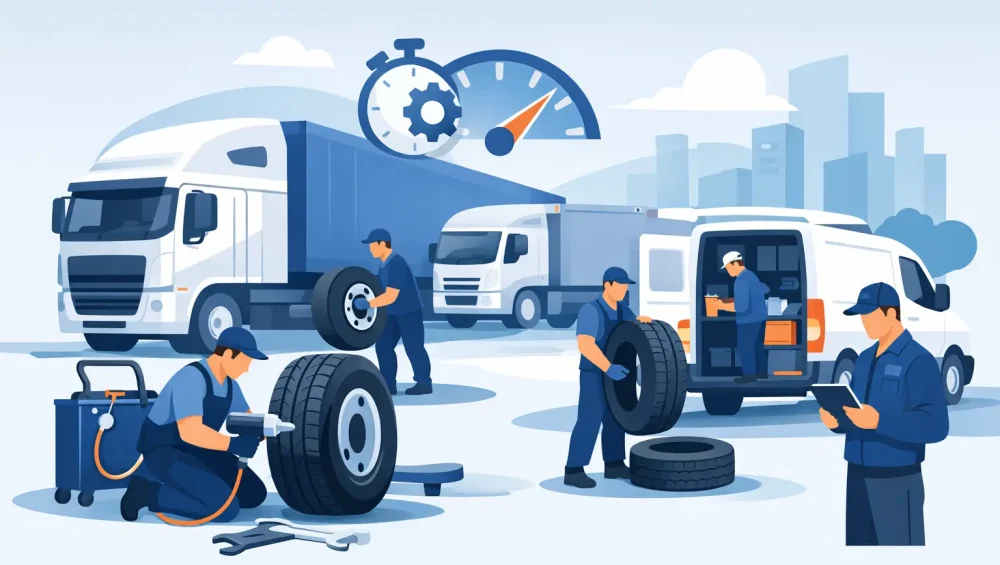
The better approach is mobile support that covers both. That includes emergency callouts, puncture repairs, on-site tyre fitting, pressure checks, rotations, balancing and practical advice on replacement timing. For busy fleets, that means less workshop travel, fewer scheduling headaches and faster turnaround when a vehicle has to get back on the road.
This is where mobile support makes a real difference. Pulling a heavy vehicle out of service just to visit a workshop costs more than the invoice. You lose driver hours, miss loading windows and create flow-on pressure across the rest of the fleet. On-site servicing strips out that wasted time.
Why fleets lose money when tyre management is reactive
Most tyre costs are not caused by the tyre itself. They come from what happens around it. A vehicle sitting idle. A late freight run. A missed slot at a customer site. Another truck being reshuffled to cover a preventable issue.
Reactive tyre management usually starts with good intentions. Operators run tyres until there is a visible problem, then call for help. Sometimes that is unavoidable. Road debris, bad luck and harsh site conditions happen. But when every tyre call is urgent, the business ends up paying the highest price for the least control.
Small issues build quietly. Underinflation shortens tyre life and increases rolling resistance. Irregular wear can point to alignment or load distribution problems. A casing that could have been monitored and replaced at the right time instead fails mid-run. None of that is unusual in fleet work, especially when vehicles are covering mixed routes between highway, regional roads and rougher access tracks.
That is why a strong service partner does more than show up with a replacement tyre. They help reduce repeat failures.
Mobile truck tyre service for fleets keeps vehicles working
A mobile truck tyre service for fleets is built around one simple goal – keep the vehicle where it needs to be, not sitting in a queue at a workshop. For transport businesses, earthmoving operators, agricultural fleets and trailer operators, that convenience is not a bonus. It is operational protection.
At a depot, mobile servicing lets you organise checks and replacements around your schedule. Trucks can be inspected before dispatch, trailers can be sorted between loads, and maintenance can happen without tying up the day. On the roadside, fast response matters even more. The longer a heavy vehicle is stranded, the bigger the risk to timing, safety and customer commitments.
For regional operators across the Hunter and surrounding like unter Valley, Newcastle, Beresfield, Tomago, Maitland, Rutherford, Hunter expressway, Singleton, Muswellbrook , golden highway, M1 , Dungog, 12 Mile creek, port Stephens, Nelson bay, tea gardens, Taree , bulahdelah, Morisset, Tuggerah , Wyong, bellbird and Cessnock for all trucks, tipper trucks, long haul tyres -freight corridors, access also matters. When a tyre problem happens outside a major centre, waiting for the wrong provider can turn one damaged tyre into half a day lost. A service that is already set up to work across highways, industrial areas and remote sites is worth more than a cheap quote that arrives too late.
What good fleet tyre support looks like day to day
The best fleet support is usually not dramatic. It is consistent. Vehicles are checked regularly. Pressures are corrected before they become a problem. Worn tyres are replaced before they fail under load. Drivers know who to call, and that call gets answered.
That consistency creates savings in places many operators overlook. Better tyre pressure helps fuel economy. More even wear stretches replacement intervals. Timely rotations can get more life from a set. Reliable emergency support reduces the temptation to make rushed decisions under pressure.
There is also a safety and compliance benefit. Heavy vehicles put tyres under serious stress, especially on long-haul work, stop-start metro runs, quarry access roads and overloaded schedules. A tyre that is marginal in the yard can become a much bigger issue at speed. Regular support lowers the chance of dangerous failures and helps operators stay on top of roadworthy standards.
Choosing the right truck tyre service for fleets
Not every provider is geared for fleet work. Some can replace a tyre, but not manage an ongoing requirement. Others may cover scheduled jobs but struggle with after-hours emergencies. Fleets need both.
Look for a provider that understands commercial pressure. That means answering quickly, turning up prepared, carrying suitable tyre options and working efficiently on-site. It also means being realistic about what your fleet needs. A local delivery fleet has different patterns from long-haul prime movers. Tipper trucks and earthmoving gear wear tyres differently again. Good advice should reflect the work, not a one-size-fits-all sales pitch.
Pricing matters, but so does response time. The cheapest service is not always the lowest-cost option if your truck is parked up for hours waiting. For fleet operators, value usually comes from reduced downtime, dependable callout support and tyre life that is properly managed.
A service partner should also be flexible with tyre supply. Some fleets want premium new tyres across the board. Others need a more mixed strategy, using selected new and quality used truck tyres where it makes commercial sense. There is no single answer for every operator. It depends on route type, payload, risk tolerance and budget.
When emergency support becomes a competitive advantage
Most businesses think about emergency tyre callouts as damage control. In reality, reliable emergency support can strengthen the whole operation. If your drivers know help is available 24/7, they can report problems earlier instead of trying to push through to the next stop. If your schedulers know a mobile technician can respond fast, they can make better decisions about recovery and reallocations.
That confidence matters in real-world fleet operations. One roadside blowout can disrupt a run. Several tyre issues across a month can eat into margins. But when support is fast, local and experienced with heavy vehicles, the impact is contained.
This is where businesses like Hunter Mobile Truck Tyres fit the needs of regional operators so well. The value is not only the repair itself. It is the ability to get skilled tyre help where the truck is, when the truck needs it, without creating more disruption than necessary.
The long-term case for planned fleet tyre management
If your fleet only calls for tyres when something goes wrong, there is usually room to tighten up the system. Planned tyre management does not need to be complicated. It starts with regular inspections, pressure monitoring, replacement timing and a clear process for emergency response.
For smaller operators, that may simply mean having a trusted mobile provider who knows your vehicles and responds quickly. For larger fleets, it may involve scheduled site visits, service records and a more structured replacement approach. Either way, the goal is the same – fewer surprises, better tyre life and more time on the road.
The gains are practical. Less unplanned downtime. More predictable maintenance costs. Better use of driver hours. Fewer jobs delayed because a truck is stuck dealing with something that could have been sorted earlier.
Tyres will always wear out. Roads will always throw up sharp debris, heat, potholes and bad luck. But a fleet does not have to absorb those problems the hard way. With the right mobile service behind you, tyre issues become faster to fix, easier to manage and less damaging to the day’s work.
If your trucks, trailers or heavy vehicles are losing time to tyre problems, the fix is usually straightforward – get support that comes to you, responds when it counts and treats uptime like the priority it is.