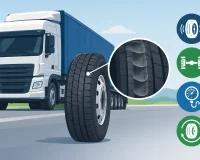
A delivery run can fall apart over one tyre. A slow leak at the depot, a puncture on the M1 or a blowout with a loaded trailer can put a truck on the shoulder, freight behind schedule and customers waiting. Delivery fleet uptime comes down to preventing those avoidable stops and responding fast when a tyre problem cannot wait.
For owner-drivers and fleet managers, tyres are not a minor running cost. They carry the load, affect fuel use, influence braking and determine whether a vehicle gets through its run safely. Looking after them properly is one of the most practical ways to keep deliveries moving, protect margins and avoid the cost of an unplanned vehicle off the road.
Why delivery fleet uptime is a tyre issue
Most delivery vehicles work hard without much spare time between runs. Stop-start driving, kerb contact, heavy loads, long highway kilometres and changing road surfaces all take their toll. A tyre may look serviceable during a quick walk-around but still have low pressure, uneven wear, a damaged valve or a puncture developing in the tread.
When that issue becomes a roadside failure, the cost is bigger than the replacement tyre. There is lost driving time, delayed freight, missed delivery windows, recovery costs and pressure on the rest of the fleet to cover the job. If the vehicle is carrying time-sensitive goods, the consequences can move quickly from inconvenient to expensive.
The right tyre plan does not mean replacing tyres early for the sake of it. It means inspecting them often enough to spot damage before it becomes a failure, choosing tyres that suit the work and having dependable support ready when the unexpected happens.
Start every shift with checks that matter
A proper pre-start check only takes a few minutes, but it needs to focus on more than whether the tyres are round and inflated. Drivers should look for visible cuts, exposed cords, sidewall bulges, embedded objects and stones caught between dual tyres. They should also listen for air leaks and check that valve caps are fitted.
Tyre pressure deserves special attention. Under-inflation creates heat, increases rolling resistance and accelerates shoulder wear. It can also make a loaded vehicle less stable and raise the risk of a casing failure. Over-inflation can reduce the tyre’s contact patch and contribute to harsh wear or reduced grip. Pressure should be checked cold against the correct recommendation for the tyre, axle load and work being carried out.
Tread depth is not just a compliance issue. Worn tread reduces wet-weather grip and makes punctures more likely to become serious. For vehicles travelling regional roads, accessing construction sites or working through rain and mud, replacing a tyre before it reaches the legal minimum is often the sensible call.
A simple defect-reporting process helps here. Drivers need a clear way to flag a slow leak, vibration, steering pull or visible damage before the vehicle leaves. Waiting until a scheduled service can turn a repairable puncture into a costly roadside change.
Match the tyre to the work, not just the price
The cheapest tyre available is not always the lowest-cost option over its working life. A delivery truck running metro routes has different needs from a tipper heading to site, a long-haul prime mover or a trailer working rough access roads. Load, speed, axle position, road condition and expected kilometres should all guide the choice.
A tyre with the right load rating and tread pattern can wear more evenly, offer better traction and resist damage in the conditions it faces every day. On the other hand, fitting an aggressive tread where it is not needed may increase road noise or fuel use. There is no one tyre that suits every fleet.
New tyres are often the right choice for steer positions, high-kilometre work and demanding loads. Used truck tyres can be a sensible value option in the right application when their condition, size, rating and remaining tread are properly assessed. The key is making the decision based on the vehicle’s job, not simply the upfront invoice.
Keep rotations and wheel balance on schedule
Uneven tyre wear is a warning sign, not normal wear and tear to ignore. Feathering, cupping, one-sided wear and rapid wear on one position can point to alignment issues, worn suspension components, incorrect pressures, wheel imbalance or overloaded axles. Replacing the affected tyre without dealing with the cause usually means the replacement will wear out early as well.
Regular rotation can help spread wear more evenly across suitable positions and get more usable life from the tyre set. Wheel balancing helps reduce vibration, protects tyre casings and makes the vehicle more comfortable to drive. These services are easy to delay when the fleet is busy, but delayed maintenance often turns into downtime at the worst possible moment.
For trailers, pay close attention to scrub wear. Tight turns, kerbing and axle alignment issues can remove tread quickly. A trailer tyre failure can delay the whole combination just as effectively as a steer tyre problem, so trailers need the same disciplined inspection and maintenance as the truck itself.
Have a plan for roadside tyre failures
Even well-maintained tyres can be damaged by road debris, sharp objects and sudden impacts. The difference between a short interruption and a lost shift is the response plan already in place.
Drivers should know who to call, give their exact location, identify the vehicle and tyre size, describe the damage and advise whether the truck is loaded. They should move to a safe location where possible, use hazard lights and follow site or roadside safety requirements. Trying to nurse a flat tyre to the next workshop can destroy the casing, damage the wheel and create a far bigger problem.
A mobile tyre service is particularly valuable because it brings the repair or replacement directly to the vehicle. Rather than arranging for a truck or trailer to be towed, losing more time travelling to a workshop and waiting in a queue, the job can be handled at the depot, roadside, rest area or work site where safe access is available.
Hunter Mobile Truck Tyres provides 24/7 mobile support for heavy vehicles across the Hunter region, with puncture repairs, emergency replacements, blowout recovery, tyre fitting and fleet tyre management focused on getting commercial vehicles back to work quickly. For operators running through Newcastle, the Hunter Valley, Muswellbrook, Taree or along the major highways, a local response can make a real difference when freight is waiting.
Use tyre records to stop repeat downtime
A fleet does not need complicated software to benefit from tyre records. Start by tracking each vehicle’s tyre size, brand, fitment date, position, pressure checks, repairs and replacement reason. Over time, those notes show where money and downtime are going.
If one vehicle is repeatedly wearing its inner shoulders, it needs inspection before another set is fitted. If a certain route produces frequent punctures, drivers may need to check tyres more often or the fleet may need a tougher tyre specification. If one trailer is chewing through rubber, axle alignment should be investigated.
Records also help fleet managers plan tyre purchases rather than buying in a rush after a failure. That gives more control over stock, tyre choice and cost. It also makes it easier to schedule maintenance around delivery commitments instead of cancelling runs to deal with preventable issues.
Make downtime response part of the job plan
Tyre maintenance works best when drivers, dispatchers and workshop staff all treat it as part of keeping freight moving. Drivers need time for pre-start checks. Dispatch needs to allow for safe repairs rather than pushing a damaged vehicle to continue. Fleet managers need to act on defects before they become breakdowns.
There are trade-offs. Pulling a truck out of service for a tyre inspection or rotation can feel difficult during a busy week. But planned downtime is controlled, short and far cheaper than a vehicle stopped unexpectedly with a loaded run. The aim is not to eliminate every tyre issue. It is to reduce the chance of failure, limit the impact when it happens and return the vehicle to safe operation without delay.
Keep the right tyre partner’s number in every cab, make tyre checks non-negotiable and act early on warning signs. That is how a delivery fleet stays reliable when the schedule is tight and every kilometre counts.