A tyre failure on the M1, Hunter Expressway or out on a job site does not care whether your fleet budget was tight that month. It stops the truck, holds up the load and puts pressure on the driver and scheduler. When weighing up truck tyres vs retreads, the best choice is not simply the cheapest tyre on the invoice. It is the tyre that suits the axle, load, route, casing condition and the amount of downtime your operation can afford.
For many Hunter Region operators, new tyres and quality retreads both have a place in the fleet. The key is knowing where each option earns its keep.
Truck tyres vs retreads: the practical difference
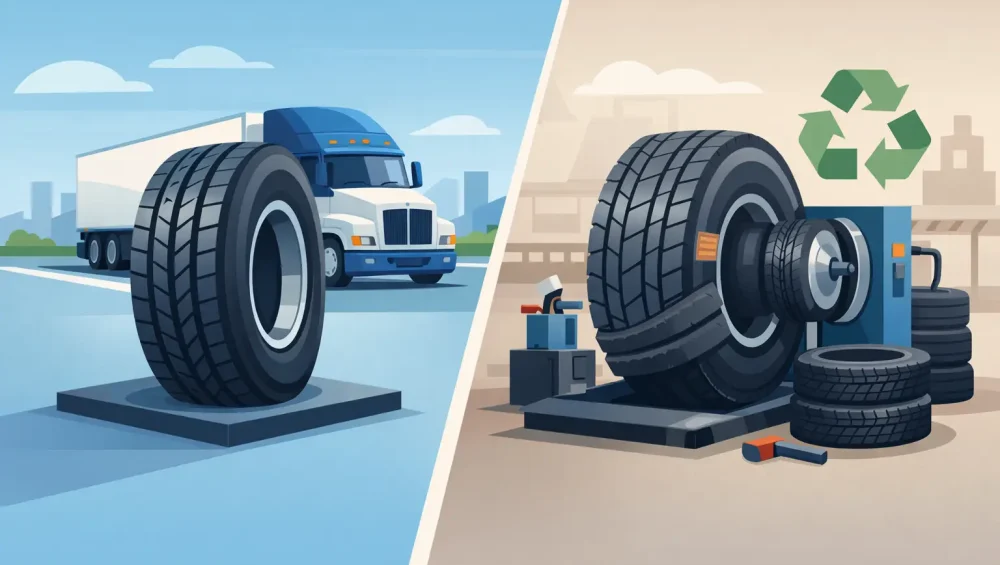
A new truck tyre is built from a completely new casing, belts, sidewalls and tread. It gives you a known starting point, full original tread depth and a casing that has not yet been through a working life.
A retread starts with a used tyre casing that has been carefully inspected, prepared and fitted with new tread rubber. A good casing can be retreaded to extend its service life, reducing the amount of material thrown away and lowering the cost of putting usable rubber back on the road.
That does not mean every worn tyre is suitable for retreading. The casing is everything. If there is serious sidewall damage, exposed cords, heat damage, poor repairs, casing distortion or damage from running flat, it may not be safe or worthwhile to retread. A retread is only as good as the casing beneath it and the quality of the retreading process.
When new truck tyres are the stronger option
New tyres are often the right call for steer positions, demanding long-haul work, high-speed highway running and vehicles carrying heavy or variable loads. Steer tyres have a direct effect on handling, braking and driver confidence, so many operators prefer a new premium tyre in this position.
They also make sense when a fleet needs predictable performance from day one. A new tyre provides maximum original tread depth and a fresh casing that may be suitable for retreading later, depending on how it is maintained. For fleet managers who take a whole-of-life approach, buying a quality new drive or trailer tyre can create value well beyond its first tread life.
New tyres can also be the safer choice where the vehicle has suffered repeated impacts from potholes, kerbing, rough access roads or construction-site conditions. If the casing history is unclear, there is no value in gambling. Fitting the right new tyre is often cheaper than dealing with a roadside blowout, damaged wheel, delayed delivery or missed shift.
The trade-off is upfront cost. A new truck tyre generally costs more than a comparable retread, particularly across a multi-axle truck or trailer combination. But the purchase price needs to be measured against mileage, fuel efficiency, casing potential and the risk profile of the job.
New tyres suit fleets that need certainty
If your truck spends long hours on the Golden Highway, M1 or major freight routes, new tyres can provide the consistency that keeps schedules on track. They are also a sound investment for newer vehicles and premium casings that you plan to manage carefully through rotations, pressure checks and future retreads.
When retreads make good business sense
Quality retreads are not a second-rate shortcut. In the right application, they are a sensible fleet tool. They can reduce tyre spend while making better use of valuable casings that still have plenty of structural life left.
Retreads are commonly considered for drive and trailer positions, where their cost advantage can be especially useful. Trailer tyres, for example, can cover significant kilometres without the same steering demands as a front axle. Depending on the route, load and tyre specification, a retread may provide reliable service at a lower initial cost.
For local haulage, agricultural work, tipper operations, regional freight and fleets with controlled routes, retreads can help keep operating costs under control. They are also a practical option for operators who want to maintain a consistent tyre program rather than replacing every tyre with new rubber regardless of position or condition.
The environmental benefit matters too. Retreading uses an existing casing rather than requiring a completely new tyre to be manufactured. For a fleet looking to reduce waste without cutting corners on safety, using approved retreads in suitable positions can be a responsible move.
That said, retreads need proper management. Correct inflation pressure, wheel alignment, axle loading and regular inspections all affect casing life. A retread fitted to a poorly maintained vehicle will not fix the underlying problem. It will wear early, build heat or fail just like any other tyre.
The decision comes down to the job
There is no one-answer rule for every truck. A prime mover hauling long distance at highway speed has different tyre requirements from a tipper running in and out of rough sites around Singleton or Muswellbrook. A trailer carrying regular pallet freight has different demands again from a farm truck operating on mixed sealed and unsealed roads.
Before choosing, consider the truck’s axle position, typical load, road surface, average kilometres and operating speed. Also look at whether the vehicle is prone to alignment wear, punctures or damage from debris. These factors often have a bigger effect on tyre value than the new-versus-retread label.
A practical approach for many fleets is to fit new tyres in critical steer positions, then use suitable quality tyres or retreads in drive and trailer positions where the application supports it. This is not a hard rule. Some demanding drive applications warrant new tyres, while some lower-risk work can run retreads very effectively. The right setup should be based on the vehicle, not a blanket policy.
Do not judge tyres by purchase price alone
The cheapest tyre can become the most expensive one if it leaves a loaded truck parked on the shoulder. Look at cost per kilometre, not just the price paid on fitting day. A tyre that lasts longer, wears evenly, protects its casing and avoids callouts may deliver stronger value even if it costs more upfront.
Tyre pressure is a major part of that equation. Under-inflation creates heat, increases rolling resistance and damages the casing. Over-inflation can reduce the contact patch and lead to uneven wear. Both can shorten tyre life and make a future retread impossible.
Rotation, balancing and alignment matter as well. Uneven shoulder wear, cupping, feathering and rapid drive-axle wear are warning signs that the tyre is being asked to compensate for a mechanical or setup issue. Replacing the tyre without addressing the cause simply starts the same costly cycle again.
For fleet operators, recording tyre positions, pressures, repairs and removals gives a clearer picture of what is happening across the fleet. You may find that one trailer axle is chewing through tyres, one route creates more casing damage, or a particular tyre pattern performs better for the work. Those details make purchasing decisions far more accurate.
Safety starts with casing and condition
Whether you choose new tyres or retreads, never compromise on inspection and fitment. Check tread condition, sidewalls, valve condition, wheel damage and pressure before a small issue turns into a major delay. A slow leak may look minor at the depot, but it can become a heat-related failure after hours under load.
Drivers should report vibration, pulling, repeated pressure loss, unusual road noise or visible tyre damage as soon as it appears. Waiting until the next service can turn a repairable issue into a roadside recovery. It can also damage the wheel, mudguard, suspension components or cargo schedule.
When a puncture or blowout does happen, getting the right help to the vehicle quickly protects both the driver and the operation. Hunter Mobile Truck Tyres provides mobile heavy vehicle tyre support across the Hunter region, with on-site fitting, puncture repairs, tyre checks and 24/7 emergency response to help get trucks and trailers moving again.
Build a tyre plan that matches your fleet
The strongest tyre program is usually a mix of sound buying decisions and consistent maintenance. Use new tyres where the application demands maximum confidence, protect quality casings so they remain retreadable, and use properly selected retreads where they deliver safe value. Keep pressures right, investigate irregular wear early and do not ignore a tyre simply because it still has visible tread.
Your tyres carry the load, the schedule and your reputation with every trip. Choose the option that keeps your truck working safely for the kilometres ahead, then give that tyre the maintenance it needs to earn its place on the fleet.