A tyre that needs air every few days is not just an annoyance when you are running freight, shifting equipment or hauling a loaded trailer. To diagnose tyre leaks early is to protect your schedule, your load, your fuel use and the safety of everyone around the vehicle. Small leaks can quickly become roadside failures when a truck is working long distances, carrying weight or travelling through rough site access.
For owner-drivers and fleet operators, the goal is not to become a tyre technician. It is to recognise the signs, make sensible checks and know when a mobile tyre professional needs to attend. Acting early can turn a minor repair into a short stop instead of an expensive recovery.
Why a slow tyre leak deserves immediate attention
Truck and trailer tyres operate under serious pressure and load. Even a gradual pressure loss changes the way a tyre flexes against the road. As pressure falls, the sidewalls work harder, heat builds up and the tread can wear unevenly. That heat is a major concern on highways, long-haul runs and fully loaded work.
A slow leak also affects more than one wheel position. A low tyre can place extra strain on tyres beside it, particularly on dual-wheel assemblies. On trailers, it can contribute to irregular wear that is easy to miss until the tyre has already suffered internal damage.
The trade-off is simple: stopping briefly to investigate may delay a job, but continuing with an underinflated tyre can lead to a blowout, damaged casing, wheel damage, missed delivery windows and a vehicle stranded where it is hardest to reach.
How to diagnose tyre leaks before they stop the job
Start with the basics at a safe location. Park on level ground where possible, apply the parking brake and keep clear of moving traffic. Never crawl under a vehicle or place yourself in danger on a roadside shoulder to inspect a tyre. If the tyre is badly deflated, damaged or hot, keep your distance and call for assistance.
Check pressures when tyres are cold
Use a reliable gauge and compare each tyre with the pressure specified for that vehicle, axle position and operating load. Check tyres before a shift or after the vehicle has been parked long enough to cool. Pressures taken straight after a run can be higher due to heat and will not give a true cold reading.
Record the reading if one tyre is lower than the others. Recheck it after several hours or the next morning. A repeat drop is strong evidence of a leak, even if the tyre still looks reasonably inflated. Visual checks alone are not enough on heavy vehicles, especially with duals where the inner tyre is harder to see.
Look closely at the tread and sidewall
A nail, screw, shard of metal or sharp stone in the tread is a common cause of slow air loss. Do not pull an object out at the roadside. It may be plugging the hole temporarily, and removing it can cause the tyre to deflate rapidly.
Look for cuts, cracking, bulges, exposed cords and signs that the tyre has been run low. A bulge or separated area in the sidewall is not a puncture repair job. It can indicate internal structural damage and the tyre should be assessed by a professional before the vehicle is moved.
Pay attention to irregular wear as well. Wear on both outer shoulders can point to chronic underinflation, while unusual wear on one edge may involve alignment, suspension or load distribution. The leak and the wear pattern can be related, but not always. A sound tyre can still wear poorly if the vehicle setup needs attention.
Test the valve and valve cap
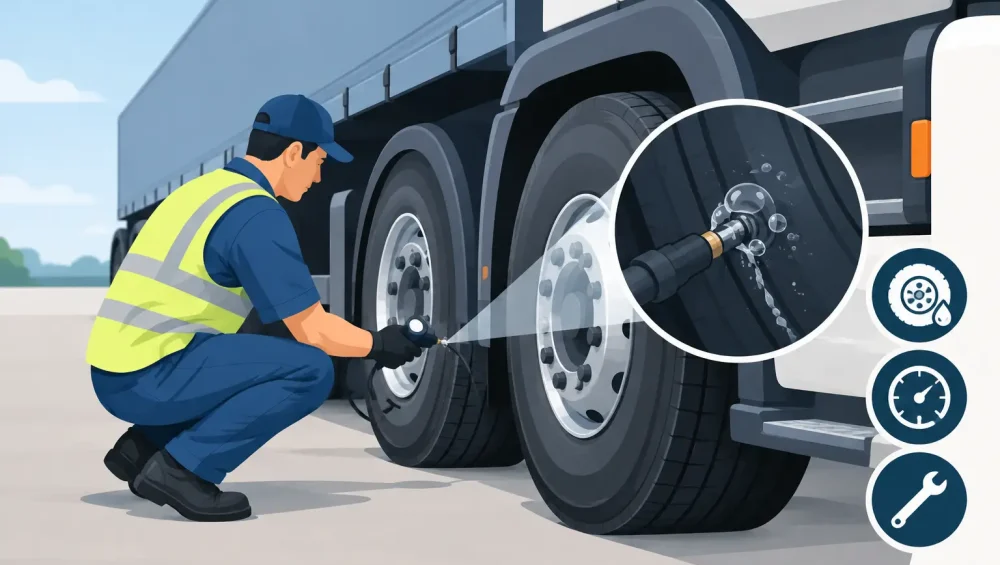
Valve leaks are small but common. Dirt, damaged valve cores, cracked stems and missing valve caps can all let air escape. Apply a small amount of soapy water around the valve stem and valve core area. Steady bubbles indicate air is escaping.
The valve cap matters more than many drivers realise. It helps keep moisture and grit out and provides a secondary seal. Replace missing or damaged caps as soon as possible, but do not assume a new cap fixes a leaking core or damaged stem.
Inspect the rim and bead area
The bead is where the tyre seals against the wheel rim. Corrosion, dirt, impact damage or an incorrectly seated tyre can cause a bead leak. Soapy water around the rim edge may reveal bubbling, though leaks can be difficult to find without proper equipment.
Bead issues are more likely on vehicles working around quarry roads, farm tracks, construction sites and rough yards. Mud and debris can work into the rim area, while pothole or kerb strikes can damage the wheel. This is not usually a roadside fix, as the tyre often needs to be removed, the rim inspected and the sealing surfaces cleaned or repaired.
Do not forget dual wheels and trailer tyres
Dual tyres can hide a problem until one tyre is doing far more work than the other. Check both tyres in every dual set, including the inner tyre. Compare pressure, tread condition and heat after a run. A noticeably hotter tyre can signal underinflation, overload, brake drag or another issue that needs investigation.
Trailer tyres deserve the same attention as drive and steer tyres. They may cover plenty of kilometres with less driver visibility, particularly on multi-axle trailers. Include them in routine pressure checks and walk-arounds, not only when a tyre looks flat.
Signs the leak may be more serious
Some tyre problems require immediate professional support rather than a quick top-up. Stop and arrange help if you notice a rapid loss of pressure, a bulge, exposed cords, a split sidewall, severe rim damage or a tyre that has been driven flat. The same applies if there is smoke, a burning rubber smell or excessive heat around the wheel.
Be cautious with heat. A hot tyre may be dealing with underinflation, but it can also be affected by an overloaded axle or mechanical issue. Do not put water on a hot wheel or tyre. Let it cool and arrange an inspection.
If you are on the M1, Hunter Expressway, Golden Highway or a busy regional route, personal safety comes first. Move to a safe place only if the vehicle can be driven safely. Set up warning devices where appropriate, stay well clear of traffic and get qualified mobile assistance rather than attempting a risky repair beside live lanes.
What a proper repair should involve
A quality puncture repair is more than inserting a plug from the outside. For a repairable tread puncture, the tyre needs to be removed and inspected internally. The technician can then confirm whether moisture, heat or low-pressure operation has damaged the casing.
A repair may be suitable when the injury is in an approved tread area and the tyre has not been run underinflated. It may not be suitable when damage is near the shoulder or sidewall, the puncture is too large, or internal damage is present. In those cases, replacement is the safer call, even if the tyre still holds air temporarily.
Wheel condition also matters. If corrosion or damage is causing a bead leak, repairing the puncture alone will not solve the real problem. A proper inspection prevents repeated callouts for the same wheel position.
Build leak checks into fleet routine
The best time to find a leak is at the depot, not halfway through a loaded run. Include tyre pressures, valve caps, visible tread damage and dual-wheel checks in pre-start inspections. Drivers should report pressure loss early, while fleet managers should keep records of repeated issues by vehicle and wheel position.
Repeated leaks on the same axle may point to site hazards, poor wheel condition, overload, alignment problems or incorrect pressure practices. Those patterns are valuable. They help you prevent tyre failures instead of simply reacting to them.
For operators across the Hunter region, Hunter Mobile Truck Tyres can attend trucks, trailers and heavy equipment on-site for puncture repairs, tyre replacement, pressure checks and urgent roadside support. Mobile service means the right inspection can happen where the vehicle is parked, broken down or working, helping keep unnecessary downtime under control.
A tyre that is losing air is giving you an early warning. Treat it that way: check it safely, record the pressure drop and get it assessed before a manageable leak becomes the reason a truck is off the road.