A flat drive tyre on the Golden Highway, a trailer blowout near Newcastle, or a slow puncture discovered at the depot can stop the whole job. This guide to mobile tyre callouts explains what happens when you need help on site, what information gets the right technician to you faster, and how to protect your truck, load and schedule while repairs are underway.
For an owner-driver, every hour parked up can mean a missed delivery and lost income. For fleet managers, one immobilised prime mover can disrupt runs, driver allocations and customer commitments. A mobile truck tyre service is built for that reality: qualified tyre support comes to the vehicle rather than making you limp to a workshop or organise a costly recovery.
When to request a mobile tyre callout
Call for mobile assistance as soon as a tyre problem makes the vehicle unsafe, unroadworthy or likely to cause more damage. A complete blowout is the obvious example, but it is not the only one. A tyre that is losing pressure quickly, a deep sidewall cut, exposed cords, a damaged wheel, or a tyre that has picked up a large object all need proper attention before the truck returns to work.
Do not assume a tyre can be driven on because it still holds some air. Running underinflated creates excessive heat, damages the casing and can turn a repairable puncture into a replacement. It also affects handling, braking and fuel use, especially with a loaded truck, tipper or trailer.
Mobile callouts also make sense when the vehicle is parked at a depot, farm, quarry, worksite or customer location. If moving it to a tyre shop means losing half a shift, on-site fitting or repair is often the more practical option. The right response depends on the tyre condition, access to the vehicle and whether a suitable replacement is available for your application.
Make the callout faster from the first phone call
The clearest information saves time. Before calling, stop in a safe place where possible, apply the parking brake and switch on hazard lights. Do not stand near live traffic or attempt to inspect a damaged tyre from the traffic side of the vehicle.
Tell the tyre technician your exact location, not just the nearest town. A highway kilometre marker, truck stop, business name, depot address, GPS pin or clear landmark makes a major difference on long regional routes. If you are on the M1, Hunter Expressway, Golden Highway or a rural access road, include your direction of travel and the nearest exit or intersection.
You should also provide the vehicle type, axle position and tyre size if you can read it from the sidewall safely. Let the technician know whether the truck is loaded, what sort of load it carries, and whether there are access limits such as soft ground, a narrow entry, site inductions or low-clearance areas. A photo can help identify the damage and confirm the tyre specification, but only take one if it is safe to do so.
Good details allow the mobile unit to arrive prepared with the right tyres, tools and repair equipment. That matters when you run specialised fitments, super singles, dual wheels, trailer tyres or heavy-duty steer tyres.
What happens during a mobile truck tyre callout
A proper callout starts with an inspection, not an automatic tyre change. The technician checks the tyre damage, remaining tread, wheel condition, valve area and likely cause of the failure. They will also consider whether nearby tyres have suffered impact damage or low-pressure wear.
If the puncture is in a repairable area and the casing is sound, a professional repair may get you back on the road without fitting a new tyre. If the sidewall is damaged, cords are exposed, the tyre has been driven flat, or the structural integrity is compromised, replacement is usually the safe choice. There is no shortcut worth taking with a heavy vehicle tyre carrying real load and highway speed.
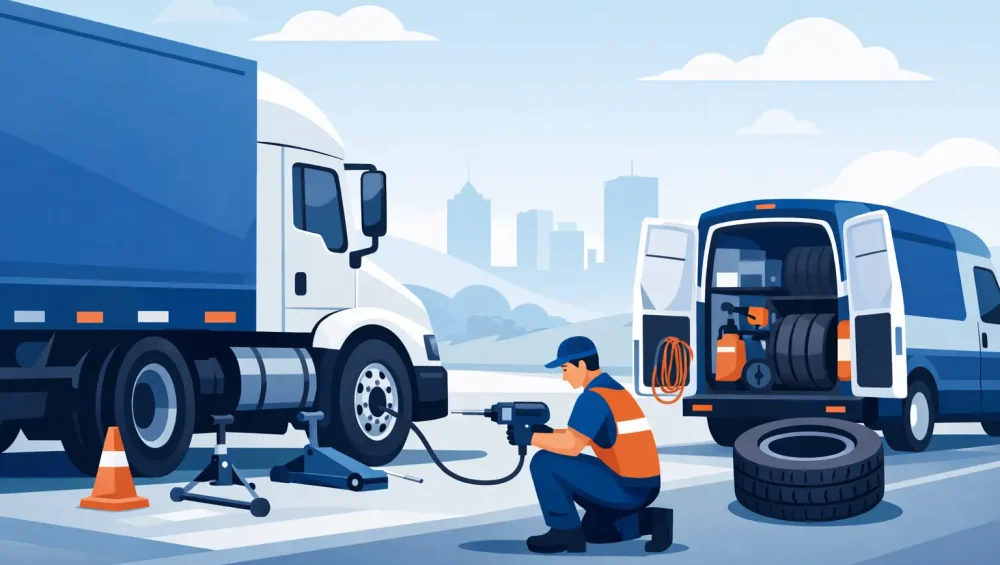
Where a replacement is needed, the technician removes the damaged tyre, fits the suitable tyre, inflates it to the correct operating pressure and checks for leaks. Depending on the job, wheel balancing, rotation or pressure checks across the axle may also be recommended. The goal is not simply to get a tyre on the rim. It is to send the vehicle away in a condition that is safe for the work ahead.
For vehicles with multiple tyres on an axle, matching matters. Differences in tyre diameter, tread depth, pressure or construction can place extra strain on the drivetrain and affect wear. In some situations, replacing one tyre is enough. In others, particularly on driven axles, the better long-term decision may be to fit a matched pair or assess the whole axle.
New, used or repaired: choosing the right option
The best option is not always the cheapest one at the roadside. It depends on your truck’s work, tyre position, load, mileage and the condition of the existing tyres.
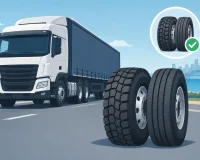
A quality new tyre is often the right choice for steer positions, high-kilometre long-haul work and vehicles where reliability is the priority. It gives predictable performance and maximum usable life when correctly maintained. For a trailer, low-speed site vehicle or a tight operational budget, a suitable used truck tyre may be a practical option when its condition and intended use stack up.
Repairs can provide excellent value where the puncture is minor and the tyre has not been run flat or structurally damaged. But a plug-only roadside fix is not a substitute for a proper inspection and repair process. If there is doubt about the tyre’s safety, replacement is the sensible call.
A reliable mobile tyre provider should explain the options plainly. You need to know what can be repaired, what needs replacing and why, without being pushed into work that does not suit the vehicle or budget.
Keep drivers safe while waiting for roadside help
The roadside is one of the highest-risk places to deal with a heavy vehicle. Your first job is to reduce the risk around the truck, not to rush into changing a wheel.
Park as far from traffic as conditions allow, use hazard lights and set up warning devices where safe and required. Keep passengers and drivers away from traffic lanes, unstable ground and the damaged wheel area. If the truck is carrying a load that changes the risk, such as machinery, livestock, oversize freight or a time-sensitive delivery, tell the callout technician early.
Avoid removing wheel nuts or attempting a repair unless you have the right equipment, training and safe space to do it. Truck wheels, tyre assemblies and stored air pressure carry serious hazards. A mobile technician has the lifting gear, torque equipment and experience to complete the work properly.
Preventing the next tyre emergency
Some tyre failures cannot be avoided. Road debris, sharp site material and sudden impacts happen. Many callouts, though, start with warning signs that were present days or weeks earlier.
Pressure checks are the simplest defence. Incorrect pressure causes heat, uneven wear and reduced tyre life, while also increasing the chance of a failure under load. Check pressures when tyres are cold, use a reliable gauge and make sure drivers know the correct operating pressures for their load and tyre configuration.
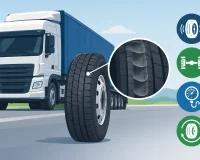
Regular walk-around checks should look for cuts, bulges, embedded objects, irregular wear and damage around valves or rims. At the depot, pay attention to tyre wear patterns across the fleet. Shoulder wear, centre wear and scalloping can point to pressure issues, alignment concerns, suspension wear or an overloaded axle.
Fleet tyre management turns these checks into useful decisions. Recording tyre position, tread depth, pressure history and repairs helps you plan replacements before a tyre becomes a roadside problem. Rotation and balancing can also extend service life when they suit the vehicle’s tyre setup and operating conditions.
Mobile tyre support that keeps work moving
A good callout service does more than respond when a tyre fails. It gives drivers one reliable point of contact when they are parked on a road shoulder, stuck at a job site or held up at the depot. That confidence matters on runs through the Hunter Valley, Newcastle, Muswellbrook, Maitland and beyond, where the nearest workshop may not be close or open when trouble strikes.
Hunter Mobile Truck Tyres provides 24/7 on-site support for truck, trailer, tipper and long-haul tyre issues, with emergency replacement, puncture repairs and ongoing fleet tyre assistance. When the vehicle is off the road, call early, share clear location and tyre details, and let an experienced mobile technician get the job moving safely again.
The best time to organise tyre support is before a small pressure loss becomes a stranded truck. Keep your tyre provider’s number handy, make regular checks part of the pre-start routine, and act quickly when a tyre shows signs of trouble.