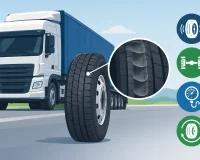
A truck tyre can look fine at the start of a shift and still be losing air fast enough to cause trouble before the next stop. That is why this guide to truck tyre pressure monitoring focuses on practical checks that protect your load, your schedule and the people sharing the road with you. For owner-drivers and fleet operators, correct pressure is not a minor maintenance detail. It is one of the quickest ways to reduce premature tyre wear, fuel use and roadside downtime.
Why pressure monitoring matters on heavy vehicles
Truck tyres carry serious weight over long distances, rough access roads, highway runs and changing weather. When a tyre is underinflated, its sidewalls flex more than they should. That generates heat, wears the shoulders and weakens the casing. Keep running it under load and a repairable issue can become a failed tyre, damaged wheel or full blowout.
Overinflation creates a different problem. The contact patch becomes smaller, centre tread can wear too quickly and ride quality suffers. On a tipper, trailer, rigid truck or long-haul combination, that reduced footprint can also affect grip on wet roads, loose surfaces and uneven job sites.
Pressure affects more than the tyre itself. A soft tyre increases rolling resistance, which can add to fuel costs across a fleet. It can also place extra strain on companion tyres in a dual fitment because the correctly inflated tyre ends up carrying more of the work. One neglected tyre can quickly turn into a costly axle-end problem.
Start with the right pressure, not a guess
There is no single pressure that suits every truck. The right cold inflation pressure depends on the tyre size, load rating, axle configuration, vehicle application and the actual load being carried. A loaded tipper working around a quarry will not necessarily need the same settings as an empty trailer being repositioned across town.
Use the vehicle manufacturer’s tyre placard and tyre manufacturer load-and-pressure data as your starting point. If the truck has changed wheel or tyre specifications, has unusual axle loads, or regularly operates above or below standard payloads, get professional advice before setting a fleet-wide rule.
Check tyres when they are cold, ideally before the vehicle has been driven or after it has been parked long enough to return to ambient temperature. Driving naturally raises tyre pressure through heat. Do not let air out of a hot tyre simply because the reading is above its cold setting. That can leave it dangerously underinflated once it cools.
A quality, calibrated truck tyre gauge is essential. Cheap or damaged gauges can create a false sense of security, particularly when you are checking higher-pressure commercial tyres. If you use a workshop compressor, make sure the gauge on the line is accurate too.
Guide to truck tyre pressure monitoring: two methods that work
The best monitoring setup depends on how many vehicles you run, where they operate and how tightly you need to control downtime. Most operators use either scheduled manual checks, a tyre pressure monitoring system, or both.
Manual checks for a reliable daily routine
Manual pressure checks are straightforward and remain the foundation of good tyre care. A driver or yard hand uses a calibrated gauge to check each tyre, records the readings and adjusts pressure before departure. This is particularly effective for small fleets, local operators and vehicles that return to base regularly.
The advantage is that a hands-on check often identifies other issues at the same time. You may spot a nail, sidewall cut, damaged valve, uneven tread wear, cracked rim or a tyre rubbing against debris. A pressure reading alone cannot tell the whole story.
The trade-off is consistency. Manual checks only work when they are done properly and recorded. Kicking tyres, looking at sidewalls from a distance or checking only the steer tyres is not enough. Pressure loss is often hard to see, especially on dual wheels.
For vehicles working every day, make cold-pressure checks part of the pre-start process. At a minimum, check before long trips, after a load change, after rough-site work and any time the truck feels different on the road.
TPMS for early warning on the move
A tyre pressure monitoring system, commonly called TPMS, uses sensors to track pressure and often tyre temperature while the vehicle is operating. The system can alert the driver when a tyre falls outside a set range, giving them a chance to pull over safely before a slow leak becomes a roadside emergency.
TPMS can be a strong option for long-haul trucks, multi-vehicle fleets and trailers that spend extended periods away from the depot. It gives fleet managers better visibility, especially where a vehicle may not receive a thorough inspection at every stop.
However, TPMS does not replace physical inspections. Sensors can be damaged, batteries can fail and alert thresholds must be set correctly for the application. It also cannot identify every casing issue, cut or developing wheel fault. Treat it as an early-warning tool, not permission to skip daily tyre checks.
What drivers should look for beyond the gauge
Pressure readings matter, but the visual check is where many faults are caught. Walk around the truck and trailer before heading off. Look closely at both tyres in each dual assembly, including the inner tyre that is easy to miss.
Watch for irregular wear. Shoulder wear may point to low pressure, while centre wear may indicate overinflation. One-sided wear can be linked to alignment, suspension or axle issues. If one tyre in a dual set is wearing differently from its mate, do not assume it is only a pressure problem. Have the wheel assembly inspected before it causes a more serious failure.
Also check valve caps and valve extensions. A missing cap may seem minor, but caps help keep dirt and moisture out of the valve core. Listen for air leaks around valves, rims and repair areas. After hitting potholes, kerbs, debris or rough haul roads, inspect the tyre and wheel as soon as it is safe to do so.
Heat is another warning sign. At a safe stop, a tyre or hub that feels noticeably hotter than similar positions may need attention. Never put yourself at risk around hot brakes, traffic or moving equipment. If in doubt, stop operating and arrange a professional inspection.
Build pressure checks into fleet maintenance
The strongest fleet tyre programs do not wait for a blowout. They use pressure records to identify patterns. If the same tyre position needs air every week, there is likely a leak worth finding. If one truck repeatedly shows shoulder wear, its operating pressure, load distribution or wheel alignment may need review.
Keep a simple record for each vehicle: date, tyre position, cold pressure, tread condition, repairs and any adjustment made. It does not need to be complicated, but it needs to be usable. Over time, those notes help you decide when rotation, balancing, alignment checks or tyre replacement will save money.
For mixed fleets, set a clear responsibility. Drivers should complete pre-start checks and report faults immediately. Fleet managers should make sure correct pressure specifications are available for every truck and trailer. Maintenance teams or mobile tyre technicians should investigate repeat pressure loss rather than continually topping up the same tyre.
This approach is particularly useful for operators moving between Newcastle, the Hunter Valley, the M1 and regional job sites where a workshop visit can take a vehicle out of service for hours. Catching a slow leak at the depot is always better than finding it as a flat tyre on the roadside.
When a pressure issue needs immediate action
Do not keep driving just to finish the run if a tyre is visibly flat, rapidly losing air, damaged, badly overheated or showing sidewall separation. Pull over in a safe location, secure the vehicle and get the tyre assessed. Continuing on an underinflated commercial tyre can destroy the casing and increase the risk of a dangerous failure.
If you are managing several vehicles, have a clear callout process so drivers know who to contact after hours and what details to provide. Vehicle location, tyre size, axle position, damage type and whether the truck is loaded can help the right replacement or repair equipment arrive without delay.
Hunter Mobile Truck Tyres provides on-site truck tyre pressure checks, repairs, replacements and emergency support across the Hunter region, helping operators deal with tyre problems where the vehicle is parked, loaded or stranded. That mobile support can keep a minor pressure fault from becoming a missed delivery or an expensive recovery.
A few minutes spent checking cold pressures before the wheels start turning can protect a full day’s work. Make the check routine, act on unusual readings early, and give every tyre the attention it needs before it asks for it on the side of the road.