A trailer tyre failure rarely happens at a convenient time. It happens with a loaded plant trailer on the M1, a stock trailer heading out before daylight, or a work trailer sitting on the shoulder with a job waiting. Knowing how to choose trailer tyres means looking beyond what fits the rim. The right tyre needs to carry the load safely, handle the route and keep your trailer moving without chewing through your budget.
For owner-drivers, tradies, farmers and fleet operators, tyres are not a cosmetic upgrade. They are part of the load-carrying system. Get the specification wrong and you risk rapid wear, heat damage, poor handling, blowouts and costly downtime.
Start with the trailer’s real loaded weight
The most common mistake is choosing tyres based on the trailer’s empty weight or what it is legally allowed to carry on paper. What matters is the weight the tyres will actually support when the trailer is loaded for work.
Check the trailer’s ATM, GTM and axle ratings on its compliance plate. The Aggregate Trailer Mass is the maximum permitted weight of the whole trailer when unhitched. The Gross Trailer Mass is the weight carried by the trailer wheels when connected to the tow vehicle. Your tyre capacity must safely cover the load on the axles, not just look close enough.
Do not assume the load is shared perfectly across every tyre. Equipment placement, uneven freight, drawbar weight and road camber can put more pressure on one side or axle. Build in a sensible capacity margin rather than selecting tyres that only just meet the minimum figure.
For example, a tandem-axle trailer with four tyres may appear to divide its load evenly four ways. In real conditions, it often does not. A tyre with too little load capacity runs hotter, flexes more and becomes far more likely to fail under sustained highway work.
Match the load index and speed rating
Every tyre has a load index and speed rating marked on the sidewall. These ratings tell you how much weight the tyre can carry and the maximum speed it is designed to handle when inflated correctly.
The load index is not optional. It needs to meet or exceed the requirement for your trailer, axle setup and expected load. If you regularly run a loaded car trailer, tipper trailer, machinery float or enclosed commercial trailer, stepping up to a higher-capacity tyre is often the smarter call.
Speed rating matters too, especially for long hauls between Newcastle, the Hunter Valley, the Central Coast and beyond. A tyre may handle the weight at low speed around a farm or worksite but not be suitable for sustained highway travel. Heat builds quickly at speed, particularly when pressures are low, the load is heavy or the road surface is hot.
Never mix tyres with different load ratings on the same axle. If one tyre is the weak link, it can fail first and leave the remaining tyre carrying even more load.
Choose a tyre built for trailer duty
Not every tyre that fits a trailer rim is a good trailer tyre. Passenger-car tyres can be unsuitable for heavier trailers because their construction and sidewall strength may not cope with constant load, cornering forces and extended towing.
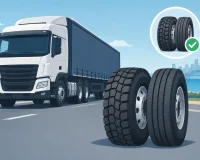
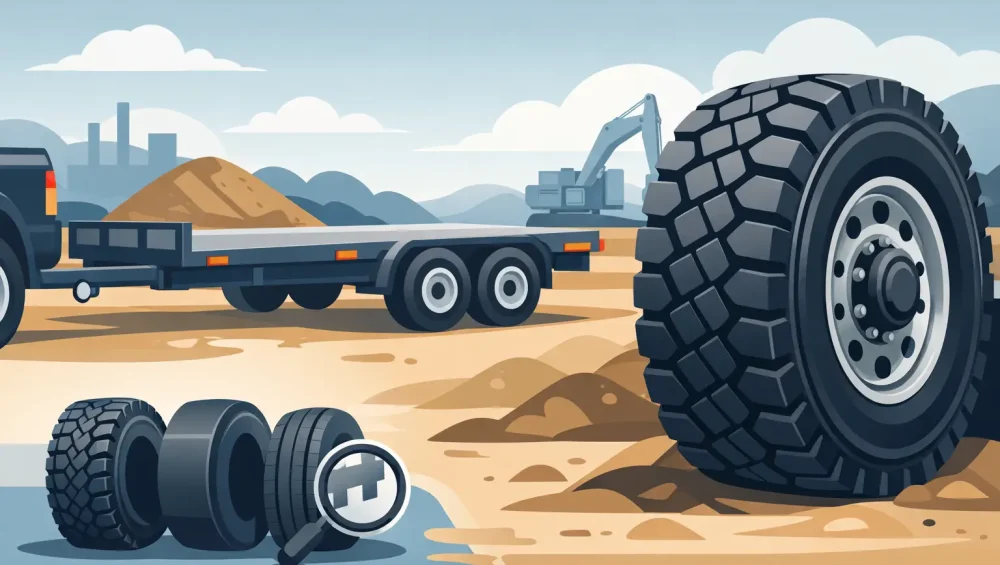
Depending on the trailer and its use, you may need a trailer-specific tyre, a light truck tyre or a commercial-grade tyre. Trailer-specific patterns are designed for straight-line stability and load carrying. Light truck tyres can suit certain trailers that travel over rough access roads, gravel, paddocks or construction sites, provided the size, load capacity and fitment are correct.
The right choice depends on the job. A box trailer used for occasional trips to the tip may need something very different from a tandem plant trailer carrying machinery every week. Paying for an aggressive all-terrain pattern makes little sense if the trailer spends nearly all its time on sealed roads. On the other hand, a highway-focused tyre may not be the best fit for a trailer regularly dragged through loose gravel, mud or rocky sites.
Keep the size and construction compatible
Use the tyre size specified by the trailer manufacturer unless a qualified tyre professional confirms an alternative size is suitable. The figures on the sidewall describe the tyre’s width, profile, construction and rim diameter. Changing any of these can alter clearance, overall diameter, load capability and handling.
A larger-looking tyre is not automatically stronger. A tyre with the wrong diameter can foul guards or suspension when loaded. It can also change the way the trailer sits behind the tow vehicle, affecting stability and braking behaviour.
Check that all tyres on an axle match in size, construction and tread pattern. Differences in rolling circumference make tyres work unevenly and can create problems on braked trailers, tandem axles and dual-wheel setups. Where possible, fit matching tyres across the entire trailer for predictable handling and simpler rotation planning.
Also confirm the rim itself is rated for the tyre and load. A quality tyre fitted to an unsuitable, damaged or overloaded wheel is still a risk.
Set the pressure for the load, not the guesswork
Correct pressure is one of the cheapest ways to extend trailer tyre life. Underinflation is a major cause of heat build-up, shoulder wear and blowouts. An underinflated tyre flexes excessively as it rolls, and that repeated flexing generates heat inside the casing. Once heat damage takes hold, the tyre can fail without much warning.
Overinflation is not the answer either. It can reduce the contact patch, wear the centre of the tread and make the trailer more prone to bouncing over rough roads. The correct pressure is the pressure recommended for that tyre, wheel and load combination.
Check pressures when tyres are cold, before the day’s run. Do not bleed air from a hot tyre after highway travel. Pressure rises naturally as a tyre heats up, so use the cold setting as your reference point.
For working trailers, make pressure checks part of the pre-start routine along with lights, chains, brakes and load restraints. This takes minutes and can prevent hours of lost time roadside.
Look closely at wear, damage and tyre age
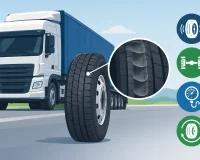
Tread depth matters, but it is not the only thing to inspect. Trailer tyres can look healthy from a distance while developing cracks, bulges, separations or damage around the bead and sidewall. Trailers often sit for long periods, and tyres can age before the tread is worn out.
Before a long trip, look for uneven wear, cuts, exposed cords, cracking, nails, flat spots and bulges. Uneven wear may point to an alignment issue, bent axle, worn suspension component, incorrect pressure or a load that is not sitting squarely on the trailer.
Check the tyre’s date code as well. Rubber deteriorates over time due to heat, sun exposure and storage conditions. A tyre that has spent years parked outdoors may be less reliable than its tread depth suggests. This is particularly relevant for caravans, horse floats, boat trailers and seasonal equipment trailers.
Used trailer tyres can be a practical option in some low-use situations, but only when they have been properly inspected for age, repairs, casing condition and load suitability. For heavily loaded or high-kilometre work, new quality tyres usually provide better confidence and more predictable service life.
Consider where and how the trailer travels
Your route should influence the tyre choice. A trailer that only travels short distances around town has different demands from one that runs long highway stretches, steep grades, regional roads and worksite tracks.
Think about your usual conditions: load weight, trip distance, cruising speed, surface type, ambient heat and how often the trailer is used. A trailer used daily needs a tyre chosen for durability and heat resistance. One used infrequently needs close attention to ageing and pressure loss between jobs.
If your trailer regularly carries shifting loads, such as machinery, gravel, produce or livestock, load distribution becomes even more important. Secure the load properly and keep heavy weight low and balanced. Tyres cannot compensate for a poorly loaded trailer.
Don’t ignore alignment, bearings and brakes
Replacing tyres without fixing the cause of the wear wastes money. If one tyre wears faster than the others, pulls to one side or shows a scalloped pattern, have the trailer inspected. Bent axles, worn bearings, dragging brakes and tired suspension can destroy a new set of tyres far earlier than expected.
A proper tyre check should include wheel condition, valve condition, wheel nut tension and signs of hub or bearing trouble. Heat around a hub after a run can indicate a mechanical issue that needs attention before it damages the tyre or leaves you stranded.
For commercial operators, recording tyre pressures, rotations, repairs and replacement dates makes it easier to spot repeat problems. That is where fleet tyre management pays off – less guesswork, fewer roadside surprises and better value from every tyre fitted.
Choose trailer tyres with support behind them
The cheapest tyre is rarely the cheapest option if it fails under load or wears out early. Buy tyres based on their load rating, intended use, build quality and the support available when something goes wrong.
Hunter Mobile Truck Tyres can help assess trailer tyre wear, match the right tyre to your load and carry out on-site fitting or urgent replacement when downtime is costing you work. Whether you are at a depot, on a job site or stuck roadside across the Hunter region, getting the specification right now is far easier than dealing with a blowout later.
Before the next loaded trip, check the sidewalls, check the pressures and make sure the tyres under your trailer are genuinely rated for the work ahead. That small check can be the difference between arriving on schedule and losing a day on the side of the road.