A puncture at the wrong time can stop a loaded truck, delay a delivery and put the rest of the day behind schedule. But are tyre repairs legal on heavy vehicles in NSW? Yes, a tyre can be legally repaired in many cases, but only where the damage, repair method and finished tyre meet roadworthiness requirements. A quick plug pushed into a damaged casing is not the same thing as a professional repair suitable for a working truck.
For owner-drivers and fleet operators, the practical question is not simply whether the tyre still holds air. It is whether it is safe, compliant and fit to carry its intended load at highway speed, through rough access roads or around a busy worksite. Getting that call wrong can lead to another breakdown, expensive casing damage or a serious safety risk.
When tyre repairs are legal in NSW
A truck tyre repair can be legal when the tyre remains structurally sound and the repair is completed to the applicable tyre repair standards and the manufacturer’s requirements. The tyre must still be roadworthy once it is back in service. That means it needs adequate tread, no dangerous damage, correct fitment for the rim, and a load and speed rating appropriate for the vehicle and its work.
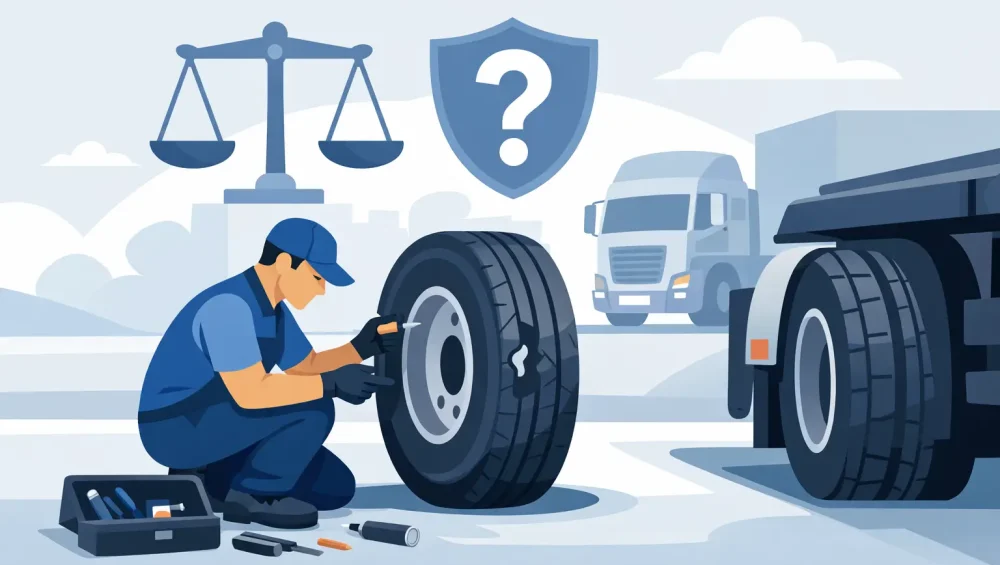
In practice, a repairable puncture is usually a clean, localised injury in the tread area. A nail or screw through the central tread can often be assessed, removed and repaired professionally from the inside. The technician needs to inspect the inside of the casing, not just the hole visible from outside. This matters because running flat, even for a short distance, can damage the internal structure and turn what looked like a simple puncture into a replacement job.
A proper repair normally involves more than sealing the path of the puncture. The injury is prepared, sealed and reinforced from inside the tyre using an approved repair system. This helps restore the tyre’s air retention and protects the casing from moisture reaching the steel belts or cords.
When a repair is not the legal or safe option
Some tyres are beyond repair from the moment a technician sees them. Sidewall and shoulder damage are the biggest warning signs. These areas flex heavily while the tyre is rolling, so a repair may not reliably withstand the load, heat and repeated movement of a heavy vehicle.
Replacement is generally the safer route where there is a split, bulge, exposed cords, bead damage, severe uneven wear, extensive cracking or evidence the tyre has been driven while deflated. A tyre with separated belts, major impact damage from a pothole or kerb, or damage caused by a blowout should also be removed from service.
The same applies when tread is already too low or the casing is no longer suitable for the job. Repairing a puncture in a worn-out tyre does not make it roadworthy. It only delays the inevitable and can leave your truck exposed to a defect notice, failed inspection or roadside breakdown.
For heavy vehicles, the decision can be stricter than it would be for a passenger car. A loaded rigid, prime mover, trailer or tipper places enormous stress on every tyre. Heat builds quickly on long runs, especially through the Hunter, along the M1, on the Golden Highway or when working through stop-start haulage routes. The repair has to suit the actual operating conditions, not just get the vehicle moving again.
What makes a truck tyre roadworthy?
Roadworthiness is the key test. A repaired tyre must still comply with the tyre requirements that apply to the vehicle, including minimum tread depth, sound construction and suitability for the axle and load. Heavy vehicle operators also have duties under the Heavy Vehicle National Law to ensure vehicles are safe to operate. That responsibility does not disappear because a tyre was repaired rather than replaced.
A roadworthy repaired tyre should have no visible cord exposure, lumps, dangerous cuts or separation. It must be correctly inflated, correctly matched to the rim and not rubbing against suspension, guards or another tyre in a dual set-up. The tyre’s size, load index and speed rating must remain suitable for the vehicle.
Tread depth deserves attention too. The legal minimum is not a maintenance target. Waiting until tread reaches the limit gives you less wet-weather grip, less resistance to punctures and fewer options when a repair is needed. For fleet work, replacing tyres before they become marginal is often cheaper than paying for downtime, callouts and damaged freight.
Steering axle tyres need extra caution
A steer tyre carries a special level of risk because it affects directional control. If a steering axle tyre has suffered significant damage, experienced a blowout, or shows signs of internal distress, replacement is usually the responsible choice. Depending on the tyre manufacturer, vehicle application and relevant repair standards, some injuries may not be suitable for repair on a steering axle at all.
Do not make a decision based on appearance alone. A qualified tyre technician can inspect the casing, identify hidden damage and advise whether the tyre can be safely returned to service, moved to another permitted position, or needs replacing.
Temporary roadside fixes are not a final repair
A roadside plug or sealant may help create a short-term solution in limited circumstances, but it should never be treated as confirmation that the tyre is legally repaired for ongoing heavy-duty use. It does not reveal internal casing damage, and it may not meet the requirements of an approved permanent repair.
This distinction matters when a truck is carrying freight, towing a trailer or travelling long distances. The cost of a professional inspection is small compared with the cost of a failed tyre on a live road, a missed delivery window or damage to guards, airlines and other equipment.
If a puncture occurs on the road, reduce speed safely, avoid continuing to drive on a deflated tyre and stop where it is safe to do so. Continuing on a flat can destroy a casing that may otherwise have been repairable. It can also damage the wheel and leave you with a much bigger recovery bill.
Check the full tyre, not just the puncture
A good repair decision includes a full tyre assessment. The technician should check the tread condition, shoulder wear, sidewalls, bead area, valve, wheel condition and inflation pressure. On dual wheels, the matching tyre must also be checked. One under-inflated or badly worn tyre can overload its partner and cause another failure soon after the first repair.
Fleet managers should also look at why the puncture happened. Repeated repairs on the same route may point to site debris, unsuitable tyre selection, incorrect pressure, overloaded axles or poor rotation practices. Fixing the cause helps prevent repeat downtime.
For example, a truck working construction access roads may need different tread design and pressure management from a vehicle running sealed highway freight routes. There is no one-size-fits-all answer. The legal repair may still be a poor operational choice if the tyre is nearing the end of its service life or is not suited to the work ahead.
Keep records and protect your operation
For commercial vehicles, keep a clear record of tyre repairs, replacements, pressure checks and recurring damage. This supports your maintenance planning and makes it easier to spot tyres that are costing more than they are worth. It also gives fleet operators evidence that tyre safety is being actively managed.
A simple inspection routine before a shift can catch cuts, embedded objects, low pressure and uneven wear before they become roadside emergencies. Drivers should report changes in handling, vibration, pulling, heat or visible tyre damage straight away. Small problems are far easier to manage at the depot than beside a highway with a loaded trailer.
When you need help, Hunter Mobile Truck Tyres can assess punctures and tyre damage on site across the Hunter region, helping get your truck, trailer or fleet moving with the right repair or replacement decision. The best outcome is not just getting air back into the tyre. It is putting a safe, roadworthy wheel back under your vehicle so the next kilometre is one less thing to worry about.