A trailer tyre lets go at the worst possible time: loaded up, running at highway speed, or miles from the nearest workshop. Knowing how to handle trailer tyre failure protects you, other road users, the load and the running gear. The priority is never a quick roadside fix. It is getting the combination stopped safely, making the scene visible, and arranging the right tyre support before a small failure becomes a major delay.
Recognise the signs before the tyre fails
Not every trailer tyre failure arrives with a bang. A tyre may be losing air slowly, separating internally or running hot long before it goes flat. Drivers should take seriously any new vibration through the vehicle, a trailer that feels like it is pulling to one side, banging from behind, or a burning-rubber smell at a stop.
Check your mirrors regularly. A low trailer tyre can make the trailer sit unevenly, throw up dust or rubber, and allow the sidewall to flex excessively. On multi-axle trailers, the remaining tyre on that side can be overloaded quickly. Keep an eye out for shredded rubber, smoke, a visibly low wheel, or a damaged mudguard.
If a tyre pressure monitoring system gives an alert, respond early. Pulling over for a controlled inspection is far better than continuing until the casing breaks apart and damages brakes, airlines, wiring or the trailer body.
How to handle trailer tyre failure on the road
A sudden puncture or blowout can make the trailer unstable, particularly when it is fully loaded. Keep both hands on the wheel, hold a steady line and avoid stamping on the brakes. Hard braking or a sharp steering correction can cause the trailer to sway, pull the vehicle off line, or worsen a developing jack-knife situation.
Ease off the accelerator and let the combination slow progressively. If it is safe, use gentle braking only after the trailer has settled. Signal early and move to the widest safe shoulder, truck bay, rest area or off-road location available. Do not stop around blind corners, on narrow bridges, at the base of a hill or where traffic has little room to pass.
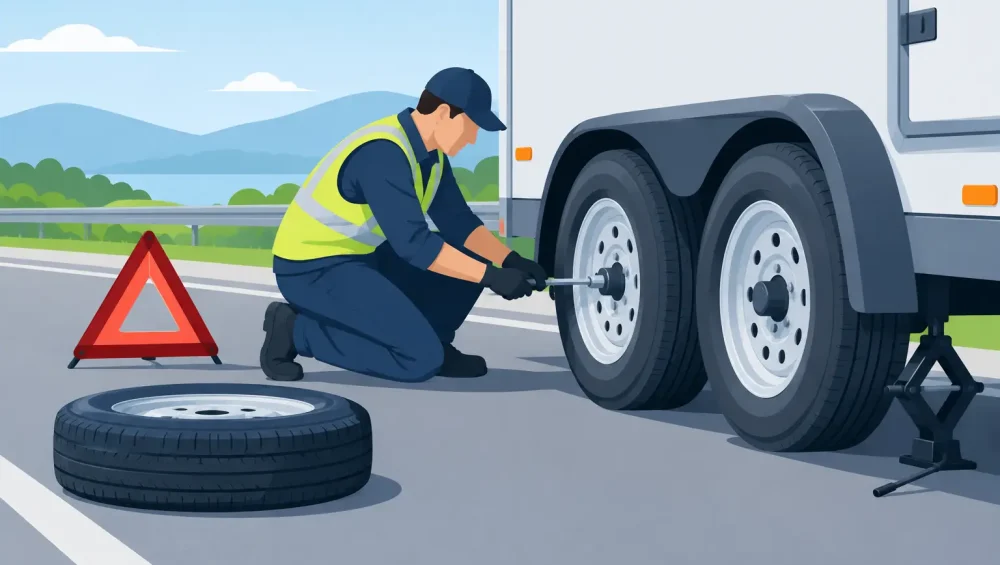
Once stopped, apply the park brake, select neutral or park as appropriate, switch on hazard lights and assess the location before getting out. On a busy road, stay well clear of passing traffic. Wear high-visibility clothing and use warning devices where safe and required. If the trailer is obstructing a live lane, or there is a serious hazard to traffic, contact emergency services.
Do not continue driving just because the trailer still rolls. A flat tyre can destroy the wheel, overload the opposite tyre, damage suspension components and turn a repairable puncture into a costly roadside recovery.
Check the tyre and wheel without taking risks
A visual inspection can help you explain the problem to a mobile tyre technician, but it must be done from a safe position. Look for obvious tread separation, sidewall tears, nails, screws, a damaged valve, wheel-rim damage or rubber wrapped around the axle area.
Do not put your face close to a tyre that has been run flat or appears badly damaged. Heavy vehicle tyres store significant energy. Never attempt to inflate a damaged tyre, remove foreign objects, or work on a wheel that is hot from brake or bearing trouble.
Heat changes the situation. If you can smell hot brakes, see smoke, or find an unusually hot hub, treat it as more than a tyre issue. Keep people clear, avoid touching the area and arrange urgent assistance. Replacing the tyre without identifying a seized brake, failed bearing or alignment fault can leave you stranded again a few kilometres later.
Take clear photos if conditions allow. Note the tyre size, tyre position, trailer registration, exact location and whether the trailer is loaded. That information helps the service provider arrive with suitable equipment and the right replacement tyre.
Decide whether to fit a spare or call mobile tyre support
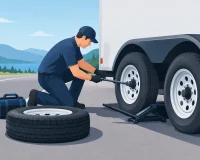
A spare tyre can save time, but only when the location, load and equipment make the job safe. You need firm, level ground, room away from moving traffic, a correctly rated spare, suitable wheel tools and safe jacking points. A loaded trailer or roadside shoulder is not the place to take chances.
Before fitting a spare, inspect it properly. A spare with low pressure, aged sidewalls, cracking or the wrong load rating is not a solution. It can fail under load and create a second emergency. The wheel nut torque, tyre pressure and dual-tyre matching requirements also matter on commercial trailers.
For many operators, especially on the M1, Hunter Expressway, Golden Highway or remote work sites, calling a 24/7 mobile truck tyre service is the safer and faster option. A qualified technician can assess the casing, fit a suitable tyre, check the wheel and inspect for related damage on-site. That keeps drivers out of harm’s way and reduces the chance of an incorrect repair delaying the job further.
Hunter Mobile Truck Tyres provides on-site emergency tyre support across the Hunter region for trailers, trucks, tippers and long-haul vehicles, helping operators get moving again without towing the vehicle to a workshop.
Protect the load and the rest of the trailer
Trailer tyre failure is not only about the damaged wheel. A sudden deflation can shift weight across the axles, place extra load on adjacent tyres and affect how the trailer tracks. After stopping, check that the load restraint has not moved and that doors, curtains, ramps or tailgates remain secure.
If the trailer is carrying machinery, livestock, bulk materials or an uneven load, do not attempt to move it until the tyre issue is resolved. The right response depends on the trailer type and load. A lightly loaded box trailer may be straightforward, while a loaded tipper, plant trailer or refrigerated trailer needs a more cautious assessment.
If one tyre in a dual set has failed, inspect its mate carefully. It may have been overloaded, damaged by debris or run at the wrong pressure. Mixing tyres with very different diameters, tread depths or load ratings on the same axle can also create handling and wear problems. The quickest repair is not always the cheapest if it leaves another weak point behind.
What causes trailer tyres to fail?
Road debris causes plenty of punctures, but recurring failures usually point to a maintenance or operating issue. Underinflation is one of the biggest causes. It builds heat in the casing, wears the shoulders and can lead to rapid structural failure. Overinflation can reduce the contact patch and increase centre wear, while overloading places excessive stress on every tyre.
Other common causes include aged tyres, poor wheel alignment, worn suspension bushes, bent rims, brake drag, failed bearings and impact damage from kerbs or potholes. A tyre may look acceptable from the outside while internal belt damage is developing, particularly after it has been run flat.
Tyre age also matters. Trailers can spend long periods parked, then be sent out fully loaded. UV exposure, weather cracking and flat spots can weaken tyres that still have visible tread. For fleet operators, recording tyre age, pressure checks, repairs and replacements makes it easier to spot patterns before they cost a day on the road.
Prevent the next trailer tyre breakdown
The most effective protection is a short pre-start check before every run. Walk around the trailer and look at each tyre, not just the one nearest the cab. Check pressure when tyres are cold, inspect tread and sidewalls, look for nails and cuts, and make sure valve caps are fitted. Compare tyre wear across each axle. Uneven wear is a warning that should be investigated rather than ignored.
For higher-kilometre trailers and fleets, schedule pressure checks, wheel rotations and tyre inspections around your operating conditions. Quarry work, agricultural sites, long-haul freight and local stop-start delivery work all wear tyres differently. The correct tyre type and pressure setting depend on load, axle configuration, road surface and travel distance.
Keep a serviceable spare where practical, but do not treat it as your entire breakdown plan. Save the details of a reliable mobile tyre provider before you need one. When failure happens after hours or away from base, fast information and a clear location can make the difference between a short interruption and a missed delivery.
A trailer tyre failure is stressful, but it does not have to become a dangerous or expensive mess. Stop safely, protect the scene, avoid roadside shortcuts and get the tyre, wheel and related running gear checked properly. That approach gets your trailer back to work with far less risk to your driver, load and schedule.